What Is Ethical Coffee? A Complete Guide to Conscious Sipping
Standing in the coffee aisle, you’re faced with a wall of choices. Fair Trade, Organic, Rainforest Alliance… what do these labels even mean? You just want a delicious cup of joy, but finding truly ethical coffee can feel complicated, expensive, and it’s hard to know who to trust. You worry that your daily ritual might be harming people or the planet, and you’re ready for a better way to start your morning.
We believe nothing should come between you and a coffee that’s crafted with compassion. It’s about more than just a sticker on a bag; it’s a commitment to the people and the land behind every bean. This is about finding an exceptional coffee that delivers more smiles and less settling-for you, and for the farmers who make your favorite ritual possible.
In this guide, we’ll demystify the world of conscious sipping. We’ll break down the jargon, help you feel confident in your choices, and provide simple, actionable tips for buying a premium coffee that aligns with your values. Get ready to taste the difference quality and compassion can make.
What Does ‘Ethical Coffee’ Really Mean? Beyond the Buzzword
In a world of buzzwords, “ethical coffee” stands out. But what does it truly mean? It’s more than just a label on a bag; it’s a profound commitment to the social and environmental well-being woven into every step of the coffee journey. It’s a promise of compassion from the farm to your favorite cup.
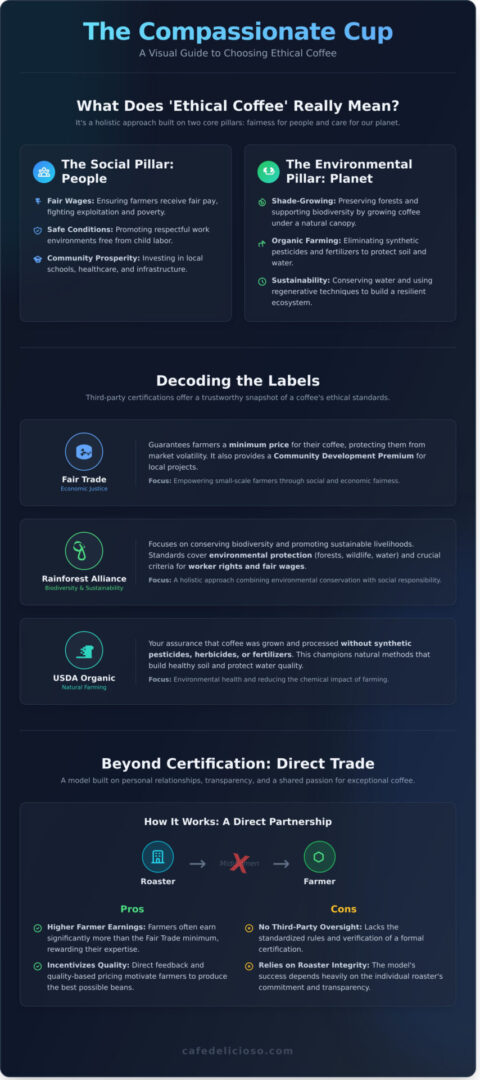
Unlike commodity coffee, where the lowest price often dictates the terms, ethical coffee operates on a spectrum of responsible practices. It isn’t about one single certification but a holistic approach built on two core pillars: fairness for people and care for our planet. It’s about ensuring that every delicious sip you take contributes to a better, more sustainable world.
The Social Pillar: People and Prosperity
At its heart, this pillar is about human dignity. It ensures that the talented farmers and workers who cultivate our exceptional beans receive fair wages and work in safe, respectful conditions. This commitment extends beyond the farm gate, fostering prosperity through investments in community projects like local schools and healthcare. Many of these principles are outlined in globally recognized Fair trade coffee standards, which create a framework for transparency and help fight exploitation and child labor in coffee-growing regions.
The Environmental Pillar: Planet and Sustainability
Exceptional coffee can only come from a healthy planet. This pillar focuses on sustainable farming methods that protect and even restore the natural environment. This includes practices that create a positive impact, such as:
- Shade-growing to preserve natural forests and support biodiversity.
- Organic and pesticide-free farming to keep harmful chemicals out of the soil and water.
- Water conservation techniques to protect precious local resources.
- Regenerative agriculture to improve soil health and create a resilient ecosystem for generations to come.
Decoding the Labels: Your Guide to Ethical Certifications
Think of the certifications on a bag of coffee like nutritional labels on your food. They offer a quick, trustworthy snapshot of what’s inside-verified by an independent third party to ensure the brand’s claims are backed by real standards. These seals are a fantastic starting point for making a conscious choice. They give you confidence in your purchase and help you find an exceptional ethical coffee that aligns with your values. While no single label tells the whole story, understanding the most common ones is a powerful first step.
Fair Trade: The Global Standard for Fairness
Recognized around the world, the Fair Trade seal is a powerful symbol of economic justice. It guarantees farmers a minimum price for their beans, protecting them and their families from volatile market swings. More than that, it provides an additional Community Development Premium-funds that farmer cooperatives invest directly into local projects like schools, healthcare, and infrastructure. Its primary focus is empowering small-scale farmers through social and economic fairness.
Rainforest Alliance: Champions of Biodiversity
You can easily spot this certification by its iconic green frog seal. The Rainforest Alliance is dedicated to conserving biodiversity and promoting sustainable livelihoods. Its standards focus heavily on environmental protection, from preserving forests and protecting wildlife to conserving water sources. Beyond the planet, it also includes crucial criteria for worker rights, fair wages, and promoting climate-smart agriculture, ensuring a holistic approach to sustainability.
USDA Organic: A Commitment to Natural Farming
The USDA Organic seal is your assurance that the coffee was grown and processed without synthetic pesticides, herbicides, or fertilizers. This certification champions natural farming methods that build healthy soil and protect water quality. While its main focus is environmental, these practices significantly reduce the overall environmental impact of coffee. It’s an important piece of the puzzle that often complements social certifications like Fair Trade to create a truly responsible cup.
Beyond Certification: The Rise of Direct Trade Coffee
While certifications play a vital role, a different model is changing the landscape of ethical coffee: Direct Trade. This approach is built on a simple, powerful idea-roasters build personal relationships and buy beans directly from the farmers who grow them. It replaces complex supply chains with a partnership founded on mutual trust, transparency, and a shared passion for exceptional coffee. This direct connection ensures that more of your money goes to the people who deserve it most.
How Direct Trade Works in Practice
At its heart, Direct Trade is about connection. Instead of relying on middlemen, roasters and farmers work hand-in-hand. This collaborative process typically involves:
- Personal Relationships: Roasters visit farms, meet the families, and understand the local environment firsthand.
- Quality-Based Pricing: Prices are negotiated directly based on the quality of the harvest, not the unpredictable fluctuations of the commodity market.
- Unmatched Transparency: Roasters gain a clear view of farming practices, from soil health to labor conditions.
- A Direct Feedback Loop: Farmers receive valuable feedback on their crops, empowering them to produce even better beans year after year.
Pros and Cons of the Direct Trade Model
This model offers incredible benefits but isn’t without its challenges. Because it isn’t governed by a single entity, the impact can vary. Here’s a transparent look:
- Pro: Farmers often earn significantly more than the Fair Trade minimum, rewarding their hard work and expertise.
- Pro: It creates a strong incentive for farmers to focus on producing the highest quality specialty coffee.
- Con: It lacks the third-party oversight and standardized rules of a formal certification.
- Con: The model’s success relies heavily on the integrity and commitment of the individual roaster.
Café Delicioso’s Approach: Compassion in Action
At Café Delicioso, our commitment to compassion is the heart of our sourcing. We partner directly with the Cocapec cooperative in Brazil’s renowned Alta Mogiana region. This isn’t just a transaction; it’s a genuine partnership that ensures farmers receive fair, stable payment and provides support for regenerative farming practices. It’s how we guarantee that every bag of our authentic Brazilian coffee is crafted with integrity and love for the people behind the beans. Learn more about our compassionate sourcing.
How to Choose Ethical Coffee: A Practical Checklist
Your daily coffee ritual holds incredible power. Every bag you buy is a vote for the kind of world you want to live in. Making a conscious choice is a bold statement-one that ensures your cup of joy is crafted with compassion from farm to finish. Navigating the world of ethical coffee can feel complex, but this simple checklist will empower you to make choices that create more smiles and less settling for everyone involved.
Look for Transparency and Traceability
Go beyond a single logo on the bag and look for a real story. Truly ethical brands are proud of their partnerships and eager to share the details. Vague terms like ‘sustainably sourced’ mean little without proof. Instead, look for specifics that demonstrate a genuine connection:
- Origin Details: Does the bag name the specific farm, cooperative, or region?
- Relationship Story: Do they share information about their sourcing practices and farmer relationships? You can learn more about our direct-trade model here.
- Bean Information: Single-origin coffees often provide the clearest line of sight to the producer.
Explore Your Local Roasters
Your neighborhood roaster can be your greatest guide. They often build direct, personal relationships with the farmers and cooperatives they buy from. Don’t hesitate to start a conversation! Ask them about their sourcing philosophy and the story behind their favorite beans. This not only deepens your coffee knowledge but also supports a local business dedicated to quality and integrity.
Understand the Price You Pay
It’s true-thoughtfully sourced coffee can cost more. But that price reflects the true cost of producing an exceptional product with dignity. It ensures farmers receive a living wage for their hard work and enables investment in regenerative farming practices that protect our planet. Framing it as an investment in people, quality, and sustainability makes every sip more meaningful. Your commitment to ethical coffee helps build a better, more delicious future for all.
Making a Difference, One Cup at a Time
Navigating the world of coffee can be complex, but the path to a better cup is clear. It begins with looking for transparency from brands, understanding the meaning behind certifications, and listening to the stories of the people who grow our favorite beans. Every bag of ethical coffee you purchase is more than just a transaction; it’s a vote for a more compassionate and sustainable industry. It’s a statement that you believe in fair wages, healthy environments, and exceptional quality.
When you choose consciously, you’re not just buying coffee. You’re supporting families, empowering communities, and protecting the land for future generations. This choice transforms a simple daily pleasure into a powerful act of good, proving that small decisions can create significant, positive change.
Your Coffee Ritual, Reimagined
Imagine your morning coffee as more than just a caffeine boost. It’s a moment of connection-a bridge to the farmers and families thousands of miles away who poured their hearts into their craft. Choosing ethically sourced beans adds a profound layer of meaning to your daily routine, turning your personal cup of joy into a shared one. It’s a ritual built on respect, quality, and compassion.
The Future of Coffee is in Your Hands
Consumer demand is the single most powerful force for change. By choosing brands that prioritize people and the planet, you send a clear message to the entire industry that integrity matters. You encourage others to abandon harmful shortcuts and embrace responsible practices. It’s about creating a world with more smiles and less settling, where every cup is a testament to what we can achieve together. Taste the difference compassion makes in every cup.
More Smiles, Less Settling: Your Journey to Conscious Coffee
Your journey into conscious sipping proves that every choice matters. Remember that ethical coffee is more than a buzzword; it’s a tangible commitment to fair wages for farmers, sustainable practices for our planet, and a transparent story from bean to cup. By understanding certifications and supporting direct trade, you hold the power to demand a more compassionate coffee industry with every bag you buy.
At Café Delicioso, we live these values every day. Our coffee is crafted with compassion, sourced directly from farmers in the Alta Mogiana region of Brazil who use pesticide-free, regenerative farming practices. We believe in an exceptional cup of joy that is born from a deep love for the people, the land, and the process.
Are you ready to taste the difference? Shop our ethically sourced Brazilian coffee and taste the compassion. Your daily ritual is an opportunity to make a positive impact. Make it count.
Frequently Asked Questions
Is ethical coffee always more expensive?
Not always. While paying fair wages and investing in better farming practices can increase costs, it’s truly an investment in value. By building direct relationships with farming cooperatives, we can often reduce the role of middlemen. This makes premium, responsibly sourced coffee more accessible. Choosing ethical coffee means you are prioritizing quality and compassion, ensuring you get more smiles in every cup without settling for less.
Does ethical coffee taste better than conventional coffee?
We believe it does! Ethical practices and exceptional flavor go hand in hand. When farmers are paid fairly and empowered with sustainable methods, they are better equipped to grow higher-quality beans. This meticulous care, from nurturing the soil to hand-picking the ripest cherries, translates directly into a more delicious and complex flavor profile. You can truly taste the love and dedication in every sip.
What is the difference between ‘ethical’ and ‘sustainable’ coffee?
While they often overlap, they have different primary focuses. ‘Ethical’ is centered on people-ensuring fair wages, safe working conditions, and thriving communities for farmers and workers. ‘Sustainable’ is centered on the planet-protecting biodiversity, conserving water, and using regenerative farming methods. The most compassionate coffees embrace both, showing a deep love for the people who grow the beans and the land they call home.
If a coffee isn’t certified, can it still be ethical?
Yes, absolutely. For many small farms and cooperatives, the cost of official certification can be a significant barrier. Many specialty roasters build direct trade relationships, paying premium prices far above the market standard to ensure fairness. The key is transparency. Look for brands that proudly share the story of their sourcing, including the specific farm or cooperative they partner with.
Which certification is the ‘best’ for ethical coffee?
There isn’t one single “best” certification, as each highlights different values. Fair Trade is excellent for ensuring fair prices and labor conditions. Rainforest Alliance focuses heavily on biodiversity and environmental conservation. USDA Organic guarantees the coffee is grown without prohibited synthetic pesticides. The best certification is the one that aligns most closely with the values you want to support with your purchase.
How can I be sure a company’s ethical claims are true?
Transparency is the most important sign. A trustworthy company will be proud to share specific details about where their coffee comes from-the region, the cooperative, and the story of the people behind the beans. Vague claims are a red flag. When a brand is truly passionate about its partners and its process, it will want to share that story with you. An authentic story is the heart of true ethical coffee.