Coffee Without Pesticides and Mold: The Ultimate Guide to a Cleaner Cup
That first sip of morning coffee should be pure joy, not a source of hidden worry. But between confusing headlines about ‘mycotoxins’ and questions about farming practices, it’s easy to wonder what’s really in your cup. The search for a truly clean coffee without pesticides and mold can feel overwhelming. You deserve a coffee ritual that energizes your day and nourishes your body, without a hint of anxiety. More smiles, less settling.
This is your ultimate guide to finding that perfect cup. We’re here to cut through the confusion and give you the confidence to choose a premium coffee that is as pure as it is delicious. We’ll explore what terms like ‘ochratoxin A’ actually mean, why ‘organic’ might not be the whole story, and how to identify brands that are crafted with compassion for both people and the planet. Get ready to transform your daily coffee into a moment of true, worry-free delight.
Key Takeaways
- Understand how farming and processing methods directly impact the purity of your coffee, from the farm to your final cup of joy.
- Learn to identify key certifications and sourcing details on the label that guarantee you’re choosing a true coffee without pesticides and mold.
- Discover the specific questions to ask and the quality indicators to look for, empowering you to shop with complete confidence.
- Elevate your daily ritual by selecting a premium, compassionate brew that aligns with your health and your values.
The Hidden Concerns in Your Coffee: Pesticides & Mold Explained
Your daily cup of joy should be just that-pure joy. We believe nothing should come between you and an exceptional coffee experience, which is why you may be seeking information about potential contaminants. While the vast majority of coffee is perfectly safe, it’s empowering to understand what goes into producing your favorite beans. The conversation around clean coffee often centers on two key topics: agricultural pesticides and naturally occurring mold.
Our goal isn’t to create worry, but to provide you with the clarity to make conscious choices. By understanding these concerns, you can confidently select a premium coffee without pesticides and mold that aligns with your values and well-being. More smiles, less settling.
Why Pesticides Are Used in Conventional Coffee Farming
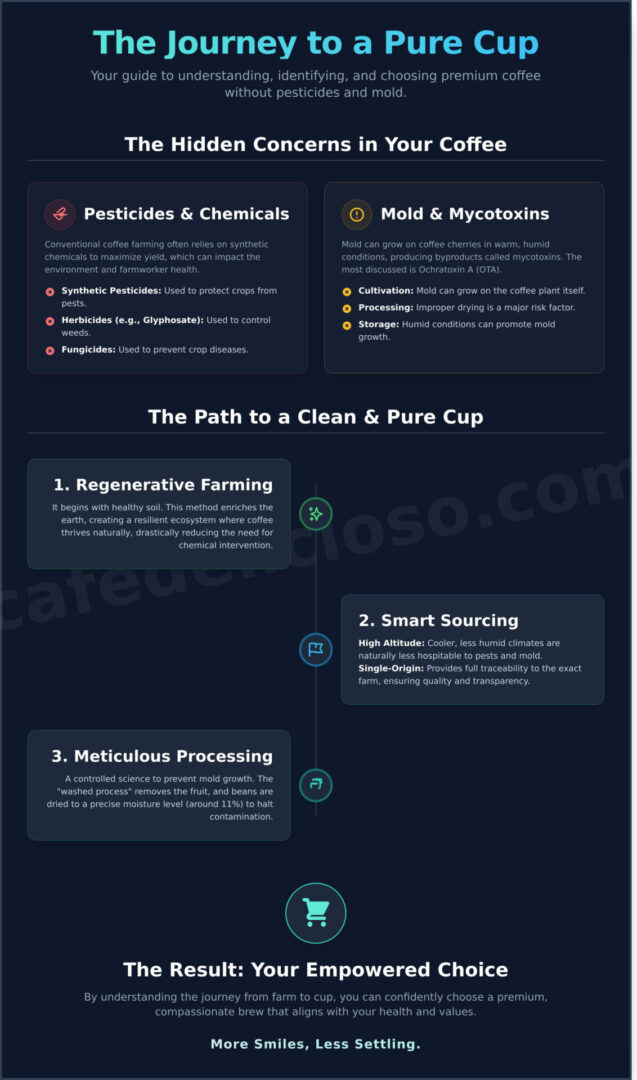
Coffee is one of the most popular beverages in the world, and to meet this incredible demand, many conventional farms rely on chemical inputs. As one of the most traded agricultural commodities, coffee plants are often treated with a range of synthetic pesticides, herbicides (like glyphosate), and fungicides to protect crops from pests and disease, thereby maximizing yield. This heavy reliance on chemicals can have a significant impact on the local environment and the health of the dedicated farmworkers. This is a key reason why conscientious farming methods, like Organic coffee production, have become so important, focusing on natural and sustainable practices that honor both the people and the land.
Understanding Mold and Mycotoxins in Coffee
The second concern for many coffee lovers is mold and its byproducts, known as mycotoxins. The most discussed mycotoxin in coffee is Ochratoxin A (OTA), a compound produced by certain molds that can grow on coffee cherries during cultivation, processing, or storage-especially in warm, humid conditions. It’s important to know that trace levels of mycotoxins are common in many staple foods, including grains, nuts, and dried fruits. However, for those dedicated to a clean and vibrant lifestyle, minimizing exposure is a worthwhile goal. Proper processing and careful sourcing are essential steps in ensuring you get a truly clean cup, making the search for a quality coffee without pesticides and mold a vital part of a health-conscious ritual.
How Clean Coffee is Made: From a Healthy Farm to Your Cup
While it’s important to be aware of contaminants, the solution isn’t about fear-it’s about making intentional choices. Creating an exceptional cup of coffee starts long before the beans are ever roasted. It’s a journey of compassion and care, rooted in practices that honor both the land and your morning ritual. Brands like Café Delicioso prove that a pure, delicious brew is the natural result of a process built on integrity from the very start.
The Foundation: Pesticide-Free & Regenerative Farming
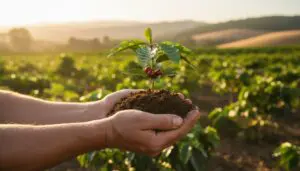
It all begins with the soil. Regenerative farming is a philosophy of giving back to the earth, creating a healthy, resilient ecosystem where coffee plants thrive naturally. Instead of depleting the land, this method enriches it. Healthy soil grows stronger plants that are better equipped to resist pests, drastically reducing the need for synthetic chemicals. This stands in stark contrast to conventional methods that can increase the risk of pesticide residues in coffee. This is our “Love for the Land” in action-a commitment that benefits the entire environment and ensures your coffee is as pure as nature intended.
Processing with Care to Prevent Mold Growth
Once the perfect coffee cherries are harvested, the next critical stage is processing. Mold and mycotoxins can develop when beans are improperly dried or stored in humid conditions. Conscientious producers prevent this with meticulous care. Methods like the “washed process” carefully remove the fruit from the bean before drying, reducing the risk of fungal growth. The beans are then dried to a precise moisture level-typically around 11%-to halt any potential contamination. This isn’t left to chance; it’s a controlled science dedicated to delivering coffee without pesticides and mold.
Nature’s Advantage: High Altitude & Single-Origin Beans
Where coffee is grown matters. Specialty Arabica beans cultivated at high altitudes have a natural advantage. The cooler temperatures and lower humidity create an environment less hospitable to pests and mold, making it easier to grow exceptional coffee without chemical intervention. Furthermore, choosing single-origin beans provides unparalleled traceability. Unlike anonymous blends where beans from countless sources are mixed, single-origin means we know the exact farm and the specific practices used. This transparency is your ultimate assurance of quality, connecting you directly to a process you can trust.
Your Buyer’s Guide: How to Choose Pesticide and Mold-Free Coffee
Your daily coffee is more than a drink; it’s a cherished ritual. Finding a brand you can trust is essential to protecting that moment of joy. Navigating the world of clean coffee can feel complex, but with the right knowledge, you can confidently choose an exceptional coffee without pesticides and mold. This guide empowers you to look beyond the marketing and focus on what truly matters: quality, transparency, and a commitment to your well-being.
Decoding Labels: Look for Meaningful Certifications
Certifications are a valuable starting point on your search for a cleaner cup. They act as a trusted, third-party verification of a brand’s claims. Here are the key labels to look for:
- USDA Organic: This is your best guarantee that the coffee was grown without synthetic pesticides, herbicides, or fertilizers. It’s a powerful indicator of cleaner farming practices.
- Rainforest Alliance & Smithsonian Bird-Friendly: These certifications focus on environmental sustainability, biodiversity, and ethical treatment of workers. Healthier ecosystems often lead to healthier coffee beans with less need for chemical intervention.
However, it’s important to know that these certifications don’t explicitly test for mold. Think of them as a strong first step, not the final word.
Demand Transparency: Read the Brand’s Sourcing Story
A conscientious brand is proud of its coffee and eager to share its story. Look past vague marketing terms and search for concrete details on their website. An authentic brand will tell you about:
- The Origin: The specific region, cooperative, or even the farm where the beans were grown.
- The Process: How the beans were processed (e.g., washed, natural), as this impacts both flavor and purity.
- The People: Their relationship with the farmers who grow their exceptional coffee.
If a brand isn’t open about where its coffee comes from, it might be a sign they have something to hide. True transparency builds lasting trust.
Check for Third-Party Lab Testing
This is the gold standard for clean coffee. The most dedicated brands go the extra mile by investing in independent lab tests to screen for a wide range of contaminants. These tests verify that the coffee is free from harmful levels of pesticides, heavy metals, and mycotoxins. The FDA provides detailed information on mycotoxins in food, which are compounds produced by molds that can be present in agricultural goods. A company that voluntarily tests and shares its results is confident in its product and committed to your health, making it easy to find a delicious coffee without pesticides and mold. At Café Delicioso, we believe this level of care is what you deserve in every single cup.
Café Delicioso: Our Commitment to a Pure and Compassionate Cup
The journey to a cleaner, more vibrant cup of coffee ends here. At Café Delicioso, we believe nothing should come between you and your daily ritual of joy. It’s more than a beverage; it’s your moment of peace, your spark of creativity. That’s why we’ve built our entire philosophy around providing an exceptional coffee experience that is as pure and ethical as it is delicious. We’ve taken the principles of clean coffee to heart, creating a brew that you can trust completely, from the soil to your cup.
Pesticide-Free Promise from Alta Mogiana, Brazil
Our commitment begins at the source, high in the celebrated mountains of Alta Mogiana, Brazil. We exclusively source our single-origin 100% Arabica beans from this renowned region, where the unique climate and rich soil create an incomparably smooth flavor. Here, we partner with dedicated farmers who share our Love for the Land, employing regenerative techniques that enrich the soil and protect biodiversity. Our strict no-pesticides promise isn’t just a guideline-it’s a guarantee. This results in a cleaner, more flavorful coffee that’s better for your body and the planet.
Meticulous Processing for a Mold-Free Guarantee
Creating a truly exceptional coffee without pesticides and mold requires more than just careful farming-it demands an unwavering dedication to the entire process. From the moment the ripe coffee cherries are hand-picked, we implement meticulous protocols. Our beans are carefully washed and dried to the precise moisture level required to prevent mold growth. They are then stored in climate-controlled environments to maintain purity. Finally, every batch undergoes rigorous quality control and testing, ensuring that the cup you brew at home is consistently clean, safe, and delicious. This is our promise of quality without compromise.
More Than Clean, It’s Crafted with Compassion
For us, purity is about more than what we leave out; it’s about what we put in. Every bag of Café Delicioso is a reflection of our core values: your wellness, exceptional taste, and our profound ethical responsibility. We believe a better coffee experience leads to more smiles and less settling. It’s a difference you can taste in the bold, smooth notes and feel in the peace of mind that comes with every sip. We invite you to experience the passion and care we pour into every single roast.
Still have questions? We believe in complete transparency. Check out our FAQ page for more answers.
Embrace a Cleaner, More Compassionate Coffee Ritual
Your daily coffee ritual is more than just a caffeine boost-it’s a choice for your well-being and the planet. As we’ve explored, understanding the risks of hidden contaminants and learning how to select high-quality beans are the first steps toward a better brew. Making the switch to coffee without pesticides and mold means you’re not just avoiding harmful substances; you’re embracing a superior taste experience and supporting farming methods that heal the earth.
At Café Delicioso, this is our passion. We believe nothing should come between you and a truly exceptional cup of joy. That’s why our coffee is crafted with compassion, sourced directly from the high-altitude Alta Mogiana region of Brazil. Our beans are grown using regenerative, pesticide-free farming-a commitment born from our ‘Love for the People and the Land.’ We invite you to experience the difference that purity and purpose can make in your morning.
Taste the difference. Experience a truly clean and delicious cup of coffee.
You deserve a coffee that is as good for you as it tastes. More smiles. Less settling.
Your Clean Coffee Questions, Answered
Is all organic coffee automatically mold-free and pesticide-free?
Organic certification is a great first step, confirming the coffee was grown without synthetic pesticides. However, it doesn’t automatically guarantee it’s mold-free. Mycotoxins (from mold) can develop after harvesting if the beans are poorly processed or stored. That’s why choosing a brand that prioritizes meticulous handling from farm to cup-in addition to organic practices-is essential for ensuring your coffee is truly clean and pure.
Can you taste or see mold in your coffee beans?
Unfortunately, you cannot see or taste the microscopic mycotoxins that are the primary concern. If you see visible mold, the beans are badly spoiled and should be discarded immediately. A “musty” or dull flavor can be a warning sign, but its absence isn’t a guarantee of purity. The only way to be certain is to choose coffee from brands that use third-party lab testing to verify their beans are clean.
Does the way I brew my coffee affect the levels of pesticides or mycotoxins?
The roasting process is what significantly reduces mycotoxin levels, often by over 80%. While brewing with hot water may have a very minor effect, it’s not a reliable way to eliminate contaminants. The most important factor by far is the quality of the beans you start with. When you begin with an exceptional, lab-tested bean, you can focus on brewing for flavor, not for filtration.
Is decaf coffee more likely to have mold or chemical residues?
It can be, but it doesn’t have to be. Often, lower-quality beans, which are more susceptible to mold, are used for decaffeination. Additionally, some processes use chemical solvents. To avoid this, look for decaf that uses a chemical-free method like the Swiss Water Process and is made from high-quality, specialty-grade beans. This ensures your decaf is just as pure and delicious as its caffeinated counterpart.
What are the most common mycotoxins in coffee and are they really dangerous?
The most common are Ochratoxin A and Aflatoxin B1. While regulatory bodies have set “safe” limits for them, we believe your daily ritual should be free from worry. For those with sensitivities, even low levels of exposure can be a concern. Sourcing a specialty-grade coffee without pesticides and mold that has been lab-tested for purity is the most trustworthy way to protect your well-being and enjoy your brew with confidence.
How much more expensive is high-quality, pesticide-free coffee?
Premium, clean coffee does typically cost more. This price reflects a genuine commitment to quality and compassion-it supports farmers who use responsible, regenerative methods and covers the costs of meticulous processing and third-party testing. Think of it as an investment in your health—a philosophy that can extend to other wellness choices, such as finding trusted health supplements from an online pharmacy like Farmacia Snella. It’s the difference between just coffee and a true cup of joy.