Best Coffee for Automatic Drip Brewers: A Guide to Better Mornings in 2026
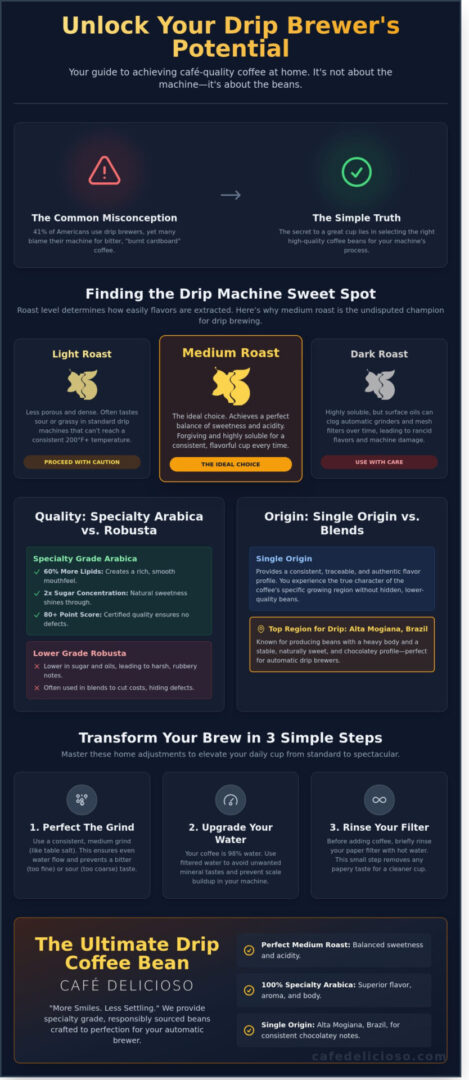
Your expensive automatic drip machine is not the reason your morning cup tastes like burnt cardboard or lukewarm water. The National Coffee Association reported in 2024 that 41 percent of Americans still rely on a drip brewer daily, yet most of us struggle to find the best coffee for automatic drip brewers that actually tastes fresh. It’s frustrating to start your day with a bitter aftertaste when you really just want a reliable cup of joy. You already know that a great morning ritual sets the tone for your entire day; however, finding the right balance between convenience and cafe quality often feels like a guessing game.
You deserve more smiles and less settling in 2026. This guide will help you identify the perfect beans by breaking down exactly how roast levels and bean origins impact your machine’s extraction process. We’ll move past the confusion of labels to find affordable, premium beans that deliver a bold, smooth flavor every single time. You’ll learn why specific Brazilian Arabica beans are the gold standard for consistent brewing and how to transform your kitchen into your favorite local cafe with just a few simple adjustments to your selection process.
Key Takeaways
- Learn why medium roast beans are the ideal choice for automatic machines to achieve a perfect balance of sweetness and acidity.
- Understand how the mechanics of gravity extraction and showerhead design influence your grind size and water choice for a cleaner cup.
- Discover why Cafe Delicioso is the best coffee for automatic drip brewers by offering specialty grade beans from the Alta Mogiana region.
- Explore the benefits of choosing single origin beans over blends to experience authentic regional flavors without hidden defects.
- Master simple home adjustments to water quality and filter selection that transform standard drip brewing into a premium cafe experience.
Understanding the Automatic Drip Brewing Process
Automatic drip brewing is a gravity based extraction method that defines the morning routine for millions. The process seems simple: water heats up, flows through a showerhead, and saturates coffee grounds held in a filter. However, the physics inside that plastic or stainless steel housing are complex. Most home brewers rely on a fixed flow rate, meaning the machine dictates how long water stays in contact with the beans. This contact time usually lasts between 4 and 8 minutes. Because you cannot manually stir the grounds or adjust the water flow, the best coffee for automatic drip brewers must be forgiving and highly soluble.
The showerhead design in 85 percent of household machines features a limited number of holes, which can lead to uneven saturation. High quality beans with consistent density help mitigate this. When the water hits the bed of coffee, it needs to extract flavors evenly to avoid the bitter notes associated with over-extraction or the sourness of under-extraction. By choosing premium beans, you ensure that even a standard machine can produce a balanced, professional grade cup.
The Mechanics of Your Morning Cup
Water saturation determines the clarity of your coffee. In a basket filter, water often pools in the center while the edges remain dry for the first 60 seconds of the cycle. This creates a challenge for flavor consistency. Most certified home brewers aim for a temperature range between 195 and 205 degrees Fahrenheit. Unfortunately, many entry level models peak at only 185 degrees. This lower temperature fails to dissolve the complex sugars in the bean. Consistency remains the greatest strength of the drip method. It provides a repeatable experience that allows you to enjoy a “cup of joy” without the steep learning curve of manual methods. For a comprehensive overview of coffee brewing methods, it is clear that drip brewing offers the most reliable path to a daily ritual.
Why Bean Quality Matters More Than the Machine
Premium Arabica beans contain approximately 60 percent more lipids and almost twice the sugar concentration of lower grade Robusta beans. These oils are essential for a rich mouthfeel, especially when using paper filters that trap sediment. Specialty coffee is defined by a score of 80 points or higher on a 100 point scale. These beans are grown with “Love for the Land” and “Love for the Process,” ensuring they possess the inherent sweetness needed to shine in an automatic brewer.
At Café Delicioso, we believe in “More Smiles. Less Settling.” This means providing 100 percent Arabica coffee that is “Crafted with Compassion” and responsibly sourced. When you use the best coffee for automatic drip brewers, you compensate for the lack of manual control with superior raw ingredients. High quality beans from the Alta Mogiana region of Brazil offer a natural chocolatey profile that remains stable even if your machine’s temperature fluctuates. You can read more about our commitment to these standards on our mission page. Investing in better beans is the most effective way to upgrade your morning without buying a new appliance.
Choosing the Right Roast Profile for Drip Machines
The roast profile you choose determines how easily your machine can pull flavors from the bean. The Maillard reaction is the chemical magic behind this process. It occurs when heat transforms sugars and amino acids into hundreds of different flavor compounds. According to leading research on coffee, this reaction is what creates the toasted, savory, and sweet notes we crave. For automatic brewers, the goal is to find a roast that is soluble enough to extract quickly but stable enough to handle the machine’s fixed settings.
Light roasts often struggle in standard drip machines because they’re less porous. If your water temperature doesn’t consistently hit 200 degrees Fahrenheit, a light roast may taste sour or grassy. On the other end of the spectrum, dark roasts are highly soluble but come with a mechanical risk. Very dark beans often have visible surface oils. These oils act like glue in automatic grinders and permanent mesh filters. Over time, this residue turns rancid and clogs your equipment. Medium roasts are the undisputed sweet spot. They provide a perfect balance of acidity and sweetness, making them the best coffee for automatic drip brewers in a home setting.
The Case for Medium Roast Brazilian Coffee
Brazilian beans from the Alta Mogiana region are a benchmark for drip excellence. This specific region produces coffee with a heavy body and low acidity. You’ll enjoy consistent notes of creamy milk chocolate and toasted nuts. These flavors are remarkably stable. Even if your machine’s water temperature fluctuates during the brew cycle, these beans maintain their integrity. It’s a reliable way to ensure your morning starts with a smile rather than a bitter surprise. Choosing beans from a dedicated cooperative like Cocapec ensures you’re getting specialty grade quality that honors the land and the process.
Avoiding the Bitterness of Over Roasted Beans
It’s easy to mistake “strong” coffee for “burnt” coffee. If your beans look black and shiny like coal, they’ve likely been roasted past the point of flavor. This over-roasting often hides defects in low-quality crops. We believe nothing should come between you and your cup of joy. This is why selecting pesticide free beans is so important. Clean farming leads to a cleaner palate. When you choose high-quality, responsibly sourced beans, you don’t need a dark roast to find strength. You can taste the difference in quality without compromise by looking for a medium-dark profile that emphasizes caramelization instead of carbon. This approach ensures your best coffee for automatic drip brewers stays smooth, vibrant, and incredibly satisfying every single morning.
Single Origin vs Blends Which Wins for Your Morning Cup
Single origin coffee isn’t just a industry buzzword. It is a direct map of flavor. When you choose a single origin, you taste the specific soil, altitude, and climate of one geographic location. Most commercial blends combine beans from multiple countries or regions to create a generic, middle-of-the-road profile. Roasters often use these mixtures to hide defects or mask the taste of lower quality beans. This lack of transparency makes it difficult to know exactly what you are drinking or how it was produced.
Choosing 100 percent Arabica from a single source provides a level of consistency that blends rarely match. When you understand the drip coffee basics, you realize that the bean’s origin is the most influential factor in your final cup. A single source builds a bridge of trust between the farmer and your kitchen. It ensures that the coffee follows strict ethical production standards and environmental regulations. This transparency is the foundation of a truly premium experience.
High quality beans from a single cooperative, such as Cocapec in Brazil, offer a reliable flavor that does not change from bag to bag. This cooperative supports more than 2,000 local farmers, ensuring that every bean meets rigorous quality controls. This stability is vital for your morning ritual. You deserve a cup of joy that tastes exactly as you expect it to every single day.
The Benefits of Single Origin Brazilian Arabica
Brazilian Arabica from the Alta Mogiana region is famous for its smooth, chocolatey profile and low acidity. These beans grow in regenerative farming systems that prioritize soil health and local biodiversity. Healthy soil produces a more nutrient dense and flavorful bean. This makes it the best coffee for automatic drip brewers because the flavor remains stable even if your machine water temperature fluctuates slightly. You get a predictable, exceptional experience every morning. You can find more details about these specific regions on our coffee page.
Why Single Origin is Not Just for Baristas
Many coffee drinkers believe that single origin beans are too complex for home machines. That’s a myth. In reality, single origin coffee simplifies your search for the perfect flavor. You don’t have to guess which hidden notes will emerge from a muddy, multi-country blend. High quality beans from a single cooperative are specifically selected for their balance and strength. This makes them the best coffee for automatic drip brewers used in busy households. You get the same delicious, bold cup every time you press the start button. It turns a standard morning into a moment of genuine happiness. More smiles. Less settling.
Practical Tips for Better Drip Coffee at Home
Achieving a bold and strong statement in your morning routine requires more than just premium beans. Even the best coffee for automatic drip brewers can fall flat if the brewing environment isn’t optimized for excellence. A study by the Specialty Coffee Association found that 98.5 percent of a brewed cup of coffee is water, meaning the liquid you pour into the reservoir is just as important as the grounds in the basket. Tap water often contains chlorine and minerals like calcium that create a metallic aftertaste. Using a basic carbon filter removes 99 percent of these impurities, protecting your machine from scale buildup. This simple step prevents the heater failure that affects 70 percent of home brewers within the first three years.
Precision in your measurements will transform a mediocre cup into an exceptional experience. For a robust flavor profile that stays true to our Brazilian heritage, use the following guidelines:
- The Golden Ratio: Use 60 grams of coffee for every 1000 milliliters of water. This 1:16.6 ratio provides enough body to stand up to milk while maintaining the authentic notes of the bean.
- Cleanliness: Coffee oils go rancid within 48 hours when exposed to air. Scrub your carafe and filter basket with mild soap daily to prevent old residues from tainting your fresh pot.
- Descaling: Run a citric acid solution through your machine every 60 to 90 days to ensure the internal pumps maintain consistent water pressure.
Grind Size and Freshness
Medium grind is the essential sweet spot for drip extraction. If the particles are too fine, the water stays in contact with the grounds for too long, causing bitterness. If they’re too coarse, the water rushes through, leaving you with a sour, thin cup. For flat-bottom filters, aim for a texture similar to sea salt; for cone filters, go slightly finer, like granulated sugar. To ensure you experience more smiles and less settling, buy your beans in 12 ounce bags. This allows you to finish the coffee within 14 to 21 days of roasting, which is the peak window for aromatic intensity. You can find more details on proper storage in our guide on our coffee and sourcing.
Water Quality and Temperature
Your brewer must reach between 195 and 205 degrees Fahrenheit to extract the complex sugars and acids from the bean. Many entry-level machines fail to exceed 190 degrees, resulting in an under-extracted, flat taste. You can improve results by pre-heating your carafe with hot water before starting the cycle. Nothing should come between you and your cup of joy, so treat your water as a blank canvas. Clean, filtered water allows the specialty notes of the Alta Mogiana region to shine through without interference from local pipe minerals. Taste the difference in quality without compromise by starting with a clean machine and fresh ingredients.
Ready to elevate your morning ritual with an authentic Brazilian experience? Shop our premium beans and bring the café experience into your kitchen today.
Why Cafe Delicioso is the Best Coffee for Automatic Drip Brewers
Finding the best coffee for automatic drip brewers often feels like a choice between high prices or low quality. Our beans from the Alta Mogiana region in Brazil solve this dilemma. This specific area sits at altitudes between 900 and 1250 meters; this elevation creates a dense bean that holds its flavor during the longer extraction time of a standard drip cycle. Understanding why this is the best coffee for automatic drip brewers boils down to the bean’s density. While lower quality beans turn bitter under heat, our specialty grade selection maintains a smooth, chocolatey profile that flourishes in a home carafe.
We believe premium coffee should be a daily luxury, not a rare treat. By working directly with the Cocapec cooperative, we eliminate unnecessary middleman costs. This allows us to provide exceptional coffee for your household budget, costing less than 75 cents per cup when brewed at home. You don’t have to settle for stale grocery store options to save money. We provide the quality of a high end cafe with the convenience and affordability of your home kitchen.
Our Commitment to Quality and Ethics
We don’t just buy beans; we invest in a cycle of care. This is the heart of what we call being Crafted with Compassion. Our farmers utilize regenerative farming techniques that restore soil health and protect local biodiversity. We take our environmental responsibility seriously, ensuring 100 percent compliance with the 2024 EUDR standards for deforestation free production. Every batch is pesticide free, making it a conscientious choice for your family. Our love for the people, land, and process defines everything we do. You can learn more about how we support our farming communities on our mission page. When you choose our coffee, you are supporting a transparent supply chain that values human dignity as much as flavor.
Experience the Difference Today
Switching to our 100 percent Arabica beans is the simplest upgrade you can make to your morning routine. Most mass market brands use filler beans that result in a harsh, acidic aftertaste. In contrast, our Brazilian beans offer a naturally sweet profile with notes of toasted nuts and cocoa. It is time for More Smiles. Less Settling. in your daily life. Join our community of satisfied coffee lovers who have turned their morning caffeine hit into a genuine ritual of joy. Visit our shop today to select your favorite roast. Seize the day with a cup of coffee that tastes as good as it feels to buy.
Elevate Your Morning Ritual with the Perfect Brew
Finding the best coffee for automatic drip brewers comes down to balancing a precise roast profile with superior bean quality. You’ve seen how a medium-dark roast brings out the richest chocolate and nut notes in a standard machine. More importantly, the origin of your beans dictates the depth and clarity of every sip. At Café Delicioso, we provide 100 percent Pure Arabica beans sourced directly from the Alta Mogiana region of Brazil. These beans grow using regenerative farming techniques that restore the soil while ensuring a bold, clean flavor profile in your cup.
Our coffee is pesticide free and ethically sourced through partnerships that support over 2,000 local farmers. You don’t have to settle for a mediocre morning when professional-grade quality is so accessible. By choosing beans crafted with compassion, you’re investing in a better ritual and a healthier planet. It’s time to stop compromising on your daily caffeine and start enjoying the exceptional flavor you deserve. Shop our premium Brazilian coffee for your drip machine and taste the difference that heritage and care make in every carafe. Your best morning is just one brew away.
Frequently Asked Questions
What is the best grind size for an automatic drip coffee maker?
A medium grind that resembles coarse sea salt is the ideal choice for your machine. This specific texture allows water to flow through the grounds at a balanced rate for optimal extraction. If your grind is too fine, the water stays too long and creates bitterness; too coarse, and you get a weak, sour cup that lacks the authentic flavor of 100 percent Arabica beans.
Can I use espresso beans in my drip machine?
You can use espresso beans in a drip machine as long as you adjust the grind to a medium setting. Espresso beans are often used to make the best coffee for automatic drip brewers for those who prefer a bold, dark flavor profile. Just remember that espresso is a roast style and a brewing method, not a specific type of bean, so your favorite dark roast will work perfectly.
How much coffee should I use per cup in a drip brewer?
Use approximately 10 grams of ground coffee for every 6 ounces of water to achieve a balanced brew. This follows the industry standard ratio of 1:17, which ensures your cup of joy is neither too heavy nor too thin. If you don’t have a scale, this translates to about 2 level tablespoons of grounds per cup to ensure you experience exceptional coffee without compromise.
Why does my drip coffee taste bitter even with good beans?
Bitterness usually occurs because your water is too hot or your coffee grounds are too fine. If you want the best coffee for automatic drip brewers, keep your water temperature below 205 degrees Fahrenheit to avoid scorching the beans. Another common cause is a dirty machine; coffee oils can turn rancid within 48 hours and ruin even the most premium specialty beans.
Is single origin coffee better than a blend for automatic machines?
Single origin coffee offers a unique profile from one specific region, while blends provide a consistent, balanced flavor. For example, a single origin bean from the Alta Mogiana region in Brazil delivers incomparable chocolate and nut notes that stand out in a drip brewer. Blends are often crafted with compassion to ensure a reliable taste year round, making them a perfect choice for your daily ritual.
How often should I clean my automatic drip brewer?
You should descale your automatic drip brewer every 30 to 90 days depending on the mineral content of your water. Mineral buildup can slow the brewing process and lower the water temperature by as much as 15 degrees. Daily maintenance is also essential; wash the carafe and filter basket with warm, soapy water after every use to prevent oil buildup and ensure more smiles with every sip.
What is the ideal water temperature for drip brewing?
The ideal water temperature for drip brewing is between 195 and 205 degrees Fahrenheit. Most high quality brewers are designed to reach this range automatically to extract the full flavor profile of specialty beans. If your machine fails to reach at least 195 degrees, the resulting coffee will taste flat and under extracted because the water cannot pull the necessary oils from the grounds.
How should I store my coffee beans to keep them fresh for my daily brew?
Store your coffee beans in an airtight, opaque container kept at a room temperature of approximately 68 degrees Fahrenheit. Exposure to oxygen, light, and moisture will degrade the flavor of premium beans within 7 to 10 days. Avoid the refrigerator or freezer, as these environments introduce moisture and odors that can ruin the authentic taste of your favorite Brazilian roast and disrupt your morning routine.