
Coffee That Does Not Upset Your Stomach: A Guide to Pain-Free Brewing
What if the secret to a pain-free morning isn’t giving up caffeine, but simply changing the chemistry of your cup? It is a frustrating reality for the 68 percent of adults who drink coffee daily; that first delicious sip often leads to a sharp burn of acid reflux or a wave of nausea. Finding coffee that doesn’t upset your stomach can feel like an impossible dream when your digestive system reacts poorly to every brew. We believe that nothing should come between you and your cup of joy, and you shouldn’t have to choose between your favorite ritual and your physical comfort.
In this guide, you will discover exactly how to select beans that are gentle on your body while still enjoying a premium, flavorful experience. We will break down why certain beans trigger discomfort and how specific labels can help you identify low-acid options. You will learn how to choose responsibly sourced Arabica beans and master brewing techniques that protect your digestive health. This journey will give you the confidence to brew at home, ensuring your daily habit is defined by more smiles and less settling.
Key Takeaways
- Learn how chlorogenic acids and caffeine impact your digestion so you can identify exactly what triggers your discomfort.
- Discover how to select naturally low acid Arabica beans to enjoy a coffee that doesn’t upset your stomach without losing bold flavor.
- Compare how different roasting levels reduce acidity to find the perfect balance between rich flavor and digestive comfort.
- Implement practical brewing steps such as using ideal water temperatures and avoiding an empty stomach to prevent irritation.
- See how pesticide free farming and high quality sourcing in Brazil create a cleaner cup that supports your well being and joy.
Why Coffee Upsets Your Stomach and How to Identify the Culprits
Nothing should come between you and your morning cup of joy. Yet, for millions of coffee lovers, that first sip often leads to a familiar, burning discomfort. Finding a coffee that doesn’t upset your stomach starts with understanding the chemistry inside your mug. It isn’t just one single factor causing the trouble; it’s a combination of acids, caffeine, and even the age of the beans.
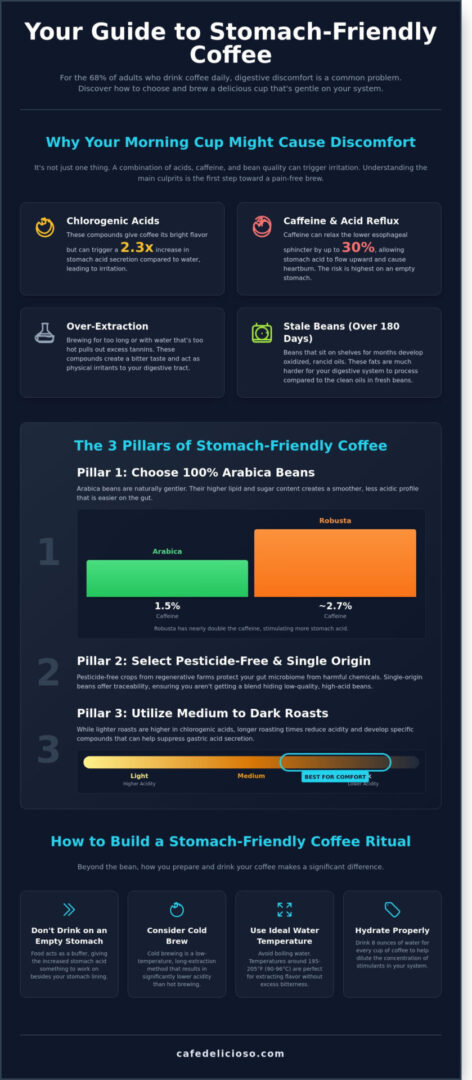
Chlorogenic acids are the primary actors here. These compounds stimulate the production of gastrin and hydrochloric acid in your stomach. While these acids provide the bright, complex flavors we love in specialty coffee, they can also trigger a 2.3 times increase in stomach acid secretion compared to water. When you combine this with over-extraction, the result is a bitter brew that irritates the sensitive gut lining. Over-extracted coffee releases excess tannins that act as physical irritants to your digestive tract. Freshness matters too. Stale supermarket beans that have sat on shelves for over 180 days often contain oxidized oils. These rancid fats are significantly more difficult for your digestive system to process than the clean, vibrant oils found in fresh, premium Brazilian coffee.
The Acid Reflux and Heartburn Connection
Coffee often gets blamed for heartburn because of how it interacts with the lower esophageal sphincter. This muscle acts as a gate between your stomach and throat. Caffeine can cause this muscle to relax by up to 30 percent, allowing stomach acid to creep upward. This leads to the sharp pain of coffee-induced gastritis. Risk levels peak when you drink coffee on an empty stomach. A 2014 study indicated that without a buffer of food, the sudden spike in acid has nothing to work on except your stomach lining. This creates a harsh environment that leads to long-term sensitivity.
Caffeine Sensitivity vs Acid Sensitivity
It’s vital to distinguish between a reaction to caffeine and a reaction to acid. Caffeine sensitivity usually manifests as a racing heart, tremors, or “the jitters” within 15 to 45 minutes of consumption. It accelerates digestive tract contractions, which might feel like cramping. Acid sensitivity is strictly digestive, appearing as a dull ache or burning sensation in the upper abdomen. You can test your primary trigger by switching to a low-acid cold brew for three days. If the pain persists despite the lower acid levels, caffeine is likely your main culprit. Proper hydration is a simple fix for managing caffeine absorption. Drinking 8 ounces of water for every cup of coffee helps dilute the concentration of stimulants in your system. Identifying these triggers is the first step toward finding a coffee that doesn’t upset your stomach, ensuring you can enjoy your daily ritual with more smiles and less settling.
The 3 Pillars of Coffee That Does Not Upset Your Stomach
Enjoying a morning brew should be a ritual of comfort; it shouldn’t be a source of digestive dread. Finding coffee that doesn’t upset your stomach is not a matter of luck. It is a result of understanding the chemistry behind the bean. When you prioritize how a bean is grown, selected, and roasted, you can eliminate the triggers that cause acid reflux or jitters. We believe that nothing should come between you and your cup of joy.
The first pillar of stomach friendly coffee is the biological difference between bean species. Arabica beans are the gold standard for sensitive drinkers. They contain roughly 60 percent more lipids and nearly twice the sugar concentration of Robusta beans. These natural fats and sugars create a smoother profile that is easier for the gut to process. In contrast, Robusta beans contain about 2.7 percent caffeine, nearly double the 1.5 percent found in Arabica. High caffeine levels signal the stomach to produce more gastrin, the hormone responsible for acid secretion.
Beyond the species, transparency is the final support for these pillars. Single origin beans offer a level of traceability that blends cannot match. While blends often hide lower quality, high acid beans to cut costs, single origin coffee ensures you know exactly where your beans were grown and how they were processed. This clarity allows you to choose regions known for low acidity and high quality standards without compromise.
- Pillar 1: Choosing 100 percent Arabica beans to minimize caffeine induced acid production.
- Pillar 2: Selecting pesticide free crops grown through regenerative farming to protect the gut microbiome.
- Pillar 3: Utilizing medium to dark roasts that balance flavor while developing compounds that suppress gastric acid.
Why Arabica Beans From Brazil Are Naturally Gentler
Brazil is the world leader in producing coffee that is naturally low in acid. This isn’t a coincidence; it’s a result of the unique geography. In the Alta Mogiana region, coffee grows at altitudes between 800 and 1200 meters. This specific elevation allows the beans to mature at a steady pace. Higher altitudes often produce beans with high phosphoric acid levels, but the moderate elevation of Brazil results in a bean with a chocolatey, nutty profile and very low acidity. You can learn more about these unique characteristics in our Brazilian Coffee: A Guide to Its Rich Flavors.
The Impact of Pesticides on Digestive Health
Chemical residues are a silent culprit in digestive discomfort. When coffee is grown using synthetic pesticides and fertilizers, those chemicals can leave trace residues that irritate the delicate lining of the stomach. This irritation often mimics the feeling of acid reflux. Choosing coffee that doesn’t upset your stomach means choosing beans grown with a love for the land. Regenerative farming avoids these harsh toxins, focusing instead on soil health and natural ecosystems.
Our commitment at Cafe Delicioso is rooted in pesticide free growth and ethical production. By partnering with the Cocapec cooperative, we ensure every bean is handled with compassion for both the worker and the consumer. This dedication to clean farming means you get more smiles and less settling with every sip. If you are ready to experience a brew that respects your body, you can explore our specialty roasts today.
Comparing Low Acid Coffee Options and Roasts
Finding coffee that doesn’t upset your stomach starts with understanding the chemistry of the roast. Many people assume that a bold, dark coffee is harsher on the digestive system, but the opposite is often true. During the roasting process, heat breaks down chlorogenic acids. A 2010 study presented at the American Chemical Society discovered that dark roasted beans contain a specific compound called N-methylpyridinium. This compound actually helps prevent stomach cells from producing excess acid. If you struggle with heartburn, a premium dark roast isn’t just a flavor choice; it’s a strategic way to enjoy your cup of joy without the burn.
Medium roasts offer a beautiful balance for those who want to avoid irritation without losing the bean’s authentic character. You get the nuanced notes of the Alta Mogiana region without the intense acid found in lighter profiles. It’s a sweet spot for most drinkers who value flavor education and digestive comfort. In contrast, light roasts are often marketed as the healthiest option because they retain more antioxidants. While this is true, they also retain the highest concentrations of organic acids. For anyone with a sensitive gut, light roasts are frequently the primary culprit for discomfort.
The decaffeination process also plays a vital role in stomach comfort. Caffeine is a natural stimulant that relaxes the lower esophageal sphincter, which can lead to acid reflux. Choosing a Swiss Water Process decaf ensures the caffeine is removed without using harsh chemical solvents. This results in a cleaner experience that respects your body and the land. It’s about more smiles and less settling for a drink that makes you feel unwell.
Cold Brew vs Hot Brew for Sensitivity
Cold brew is a game changer for coffee lovers with sensitivities. This method relies on time rather than heat to extract flavor. Because the grounds never touch boiling water, many of the bitter oils and acidic compounds remain trapped inside the beans. Research shows that cold brew can be up to 60 percent less acidic than traditional hot coffee. To make a gut-safe batch at home, use a coarse grind and steep it in filtered water for 18 to 24 hours. This slow extraction creates a smooth, chocolatey profile that’s incredibly gentle on your system, making it a perfect coffee that doesn’t upset your stomach.
Espresso vs Drip Coffee
The brewing method impacts how your body reacts to every sip. Espresso involves a very quick extraction time, typically lasting only 25 to 30 seconds. This short contact time often leaves behind the heavier, slower-to-extract acids found in a standard drip brew. However, drip coffee has one distinct advantage: the paper filter. High quality paper filters are exceptional at removing oily irritants like cafestol that can cause digestive distress. If you find espresso too intense, a filtered drip coffee using specialty beans might be your path to a happy place. For more guidance on selecting the right beans for your brewing style, explore our Coffee Beans: The Ultimate Guide to Buying the Perfect Bag Online.
How to Build a Stomach-Friendly Coffee Ritual
Creating a daily habit that honors your digestion is just as important as the beans you choose. A few simple shifts in your morning routine can transform your experience from one of discomfort to pure satisfaction. It’s about finding that balance where you can enjoy your cup of joy without the unwanted side effects that often follow a poorly prepared brew.
Step 1: Never drink your first cup on a completely empty stomach. Coffee stimulates the production of gastrin, a hormone that tells your stomach to release hydrochloric acid. Without food to act as a buffer, this acid can irritate the stomach lining and lead to long-term sensitivity. You don’t need a full meal; a small snack like a banana or a piece of sourdough toast 15 minutes before your brew makes a significant difference in how your body processes the caffeine.
Step 2: Use the right water temperature to avoid scorching the beans. Many automatic drippers heat water to a rolling boil at 212 degrees Fahrenheit. This extreme heat causes over-extraction and releases bitter, acidic compounds that are harsh on the gut. Aim for a temperature between 195 and 205 degrees Fahrenheit. This specific range extracts the rich, chocolatey notes of our premium Brazilian beans without the chemical harshness.
Step 3: Experiment with grind size to prevent over-extraction. A grind that’s too fine has more surface area, which means the water pulls out everything, including the heavy acids. By using a coarser grind, similar to the texture of sea salt, you slow down the extraction process. This results in a cleaner, smoother cup of coffee that doesn’t upset your stomach.
Step 4: Incorporate healthy fats or plant-based milks to buffer acid. If you find black coffee too aggressive, try adding a splash of almond or oat milk. The proteins and fats in these milks bind to the acidic polyphenols. For an extra layer of protection, a teaspoon of MCT oil or grass-fed butter can coat the stomach lining and provide sustained energy without the sharp spike in gastric acid.
Mastering the Extraction Process
Using filtered water is essential for a clean taste and a happy gut. Tap water often contains chlorine and heavy minerals that can clash with coffee’s natural chemistry and cause bloating. When you pair filtered water with a coarser grind, you achieve a mild profile that is gentle on the digestive tract, ensuring you have coffee that doesn’t upset your stomach every single morning. To refine your technique, you can learn How to Brew Coffee with a Hario V60 to control every variable of the extraction.
Timing and Temperament
Timing is everything for digestive health. Your body’s cortisol levels naturally peak between 8:00 AM and 9:00 AM. Adding caffeine during this peak can overstimulate your system and trigger acid reflux. Try waiting about 90 minutes after waking up to enjoy your brew. Sip your coffee slowly rather than gulping it down. This allows your saliva to mix with the liquid, beginning the digestive process before it hits your stomach. We believe in More Smiles. Less Settling. and that starts with a comfortable, pain-free morning ritual.
Cafe Delicioso: Brazilian Joy Without the Compromise
Finding coffee that doesn’t upset your stomach should not mean you have to sacrifice the bold, strong flavor you love. At Cafe Delicioso, we focus exclusively on 100 percent pure Arabica beans sourced from the Alta Mogiana region of Brazil. This high-altitude area, sitting between 900 and 1,200 meters above sea level, is world-renowned for producing beans with naturally lower acidity and a smooth, chocolatey profile. While mass-produced coffee often relies on lower-quality Robusta beans that can trigger digestive discomfort, our specialty-grade Arabica provides a rich experience that is gentle on your system.
Our commitment to quality is built on a foundation of love. We believe in Love for the Land, Love for the People, and Love for the Process. This triad ensures that every cup you pour is free from the bitter burn and harsh chemicals that often plague commercial roasts. By choosing beans that are grown with integrity, you are choosing a coffee that delivers a bold statement without the physical compromise. It is about more smiles and less settling for a beverage that makes you feel anything less than your best.
From the Farm to Your Cup of Joy
The journey of our beans begins with regenerative farming techniques that prioritize soil health and biodiversity. We partner with the Cocapec cooperative in Brazil to ensure our farming practices exceed standard environmental regulations. Our beans are grown without pesticides, protecting both the delicate ecosystem of the Alta Mogiana region and your personal health. We maintain high standards through rigorous quality checks, ensuring that only the most exceptional beans reach your kitchen. Our focus on ethical production means that your morning ritual supports fair labor practices and sustainable land management. You can learn more about how we prioritize ethics and quality by visiting Our Mission.
- Regenerative Agriculture: We use farming methods that restore the soil rather than depleting it.
- Pesticide-Free: Our beans are clean, ensuring no chemical residues interfere with your digestion or the coffee’s natural flavor.
- Single-Origin Excellence: We source directly from one region to maintain a consistent, low-acid flavor profile in every bag.
Start Your Pain-Free Coffee Journey Today
You don’t have to give up your favorite morning ritual to avoid digestive issues. Our single-origin Brazilian beans offer a smooth, incomparable taste that respects your body. By switching to a high-quality, pesticide-free Arabica, you can enjoy the energy boost you need without the unwanted side effects. We invite you to experience the difference that authentic Brazilian coffee makes. It’s time to reclaim your morning and enjoy a cup of joy that feels as good as it tastes. To find the perfect roast for your lifestyle, Shop Our Coffee Collection and take the first step toward a more comfortable, delicious coffee experience.
Reclaim Your Morning Ritual With Better Brewing
Finding the right balance for your digestion starts with choosing the right bean and mastering your extraction. By focusing on low acid roasts and mindful brewing techniques, you can enjoy a rich cup without the discomfort of acid reflux or jitters. Quality sourcing is the final piece of the puzzle. When you prioritize specialty beans grown at the right altitude, you eliminate the hidden irritants often found in mass produced blends.
Finding a coffee that doesn’t upset your stomach shouldn’t mean sacrificing the bold flavor you love. At Cafe Delicioso, we provide 100% pesticide free Arabica coffee sourced from the renowned Alta Mogiana region of Brazil. Our commitment to regenerative farming practices ensures that every harvest is as kind to the earth as it is to your body. We believe in crafted compassion, ensuring that nothing stands between you and your daily cup of joy. It’s time to stop compromising on your health and start enjoying the premium experience you deserve. Experience the smooth, bold taste of Cafe Delicioso Brazilian Coffee today. You deserve more smiles and less settling with every single sip.
Frequently Asked Questions
Is dark roast coffee better for a sensitive stomach than light roast?
Dark roast coffee is significantly better for a sensitive stomach because it contains a compound called N-methylpyridinium. A 2010 study presented to the American Chemical Society showed that dark roasts can contain up to twice the amount of this compound compared to light roasts. This helps block the production of excess stomach acid. Choosing a dark roast is a smart strategy when you want a coffee that doesn’t upset your stomach while still enjoying a bold flavor profile.
Can I drink coffee if I have acid reflux or GERD?
You can still enjoy your daily ritual with GERD if you choose low-acid varieties and limit consumption to one or two cups. Research from the American College of Gastroenterology indicates that while caffeine can relax the esophageal sphincter, cold brew methods reduce acid extraction by 66 percent compared to hot brewing. Opting for a dark roast from Brazil further protects your digestive lining. This approach ensures you don’t have to settle for a life without your favorite cup of joy.
Does adding milk to coffee help with stomach upset?
Adding milk helps neutralize acidity because dairy proteins bind to the chlorogenic acids found in coffee beans. This binding process prevents these acids from irritating your gastric lining as quickly as black coffee would. If you’re among the 65 percent of adults with a reduced ability to digest lactose, choosing a calcium-fortified plant milk like almond or oat provides a similar buffering effect. This simple addition makes your morning routine much gentler on your system.
Is decaf coffee less acidic than regular coffee?
Decaf coffee isn’t inherently less acidic, but it’s much gentler because it lacks the stimulant caffeine. Caffeine triggers the release of gastrin, a hormone that increases stomach acid production. By removing 97 percent of the caffeine content, decaf eliminates the primary hormonal trigger for digestive distress. This makes it an exceptional choice for drinkers who love the authentic taste of premium beans but need to avoid the jitters and the subsequent stomach acid spikes.
What is the best brewing method for low acid coffee?
Cold brewing is the most effective method for preparing coffee that doesn’t upset your stomach. Steeping grounds in cold water for 12 to 24 hours results in a concentrate with 67 percent less acid than traditional drip methods. For those who prefer a hot cup, a French press is a great alternative. Using a coarse grind and a strict 4 minute steep time limits the extraction of bitter oils and compounds that often lead to digestive discomfort.
Why does coffee make me need to go to the bathroom immediately?
Coffee stimulates motor activity in the distal colon within 4 minutes of ingestion. A study published in the journal Gut found that coffee induces this gastrocolic reflex in 29 percent of participants. This reaction is caused by the hormone gastrin and specific chlorogenic acids that signal your digestive system to move waste through the intestines more rapidly. It’s a natural biological response to the complex compounds found in both regular and decaf varieties.
Are there specific coffee regions known for low acidity?
Lower altitude regions like the Alta Mogiana region in Brazil are famous for producing beans with naturally low acidity. Beans grown below 4000 feet typically have a rounder, nuttier profile compared to high-altitude African varieties. Brazilian Arabica beans often feature a pH level of approximately 5.2, whereas some high-altitude Kenyan beans can reach a sharper pH of 4.5. This geographical difference makes Brazilian coffee a compassionate choice for your digestive health.
How can I tell if my coffee beans are pesticide-free?
You can verify pesticide-free status by looking for specific certifications like Rainforest Alliance or labels that mention regenerative farming practices. At Café Delicioso, we adhere to strict EUDR standards to ensure our Brazilian beans are grown responsibly without harmful chemicals. Checking for a specialty grade designation also guarantees higher quality control, as only the top 10 percent of global coffee beans meet these rigorous standards for purity and flavor. This transparency ensures you’re drinking a clean, premium product.