
Brazilian Coffee: A Complete Guide to the World’s Favorite Bean
Ever find yourself in the coffee aisle, wondering what truly sets one bean apart from another? It’s easy to feel a little lost with terms like ‘single-origin’ or ‘natural process,’ especially when all you want is a delicious, reliable cup to start your day. If you’ve been searching for a coffee that’s consistently smooth, comforting, and full of flavor, your journey ends here. The world of authentic brazilian coffee is calling, and it’s far more welcoming and straightforward than you might think.
This guide is your personal invitation to explore that world with confidence. We’ll uncover the secrets behind Brazil’s famous nutty and chocolatey flavor profile, journey through its key growing regions, and demystify the process from farm to roaster. By the end, you’ll not only feel empowered to choose the perfect beans but also know exactly how to brew them to unlock their exceptional character. Get ready to find your new favorite coffee ritual. More smiles, less settling.
Why is Brazil the Uncrowned King of the Coffee World?
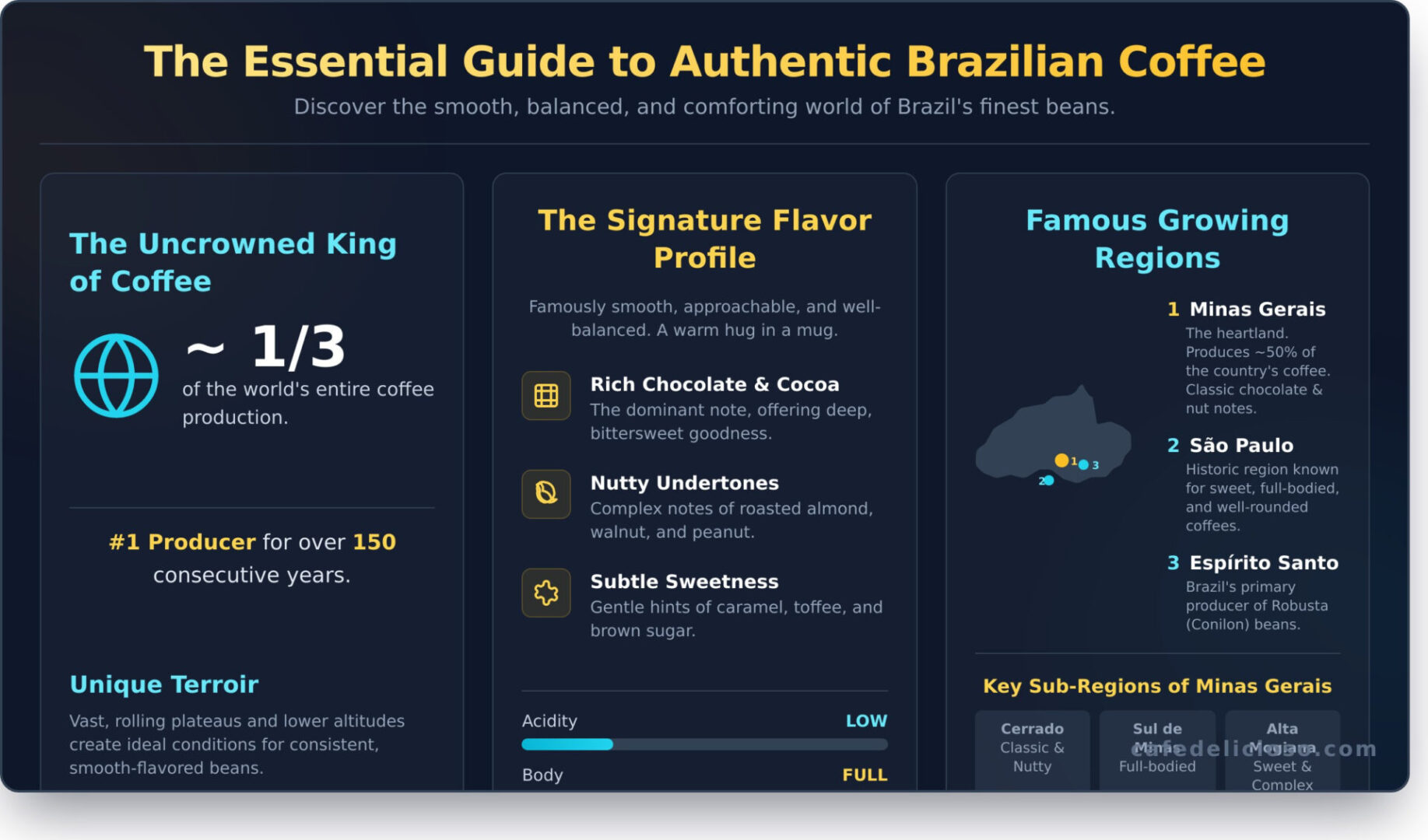
Ever wonder where your morning cup of joy comes from? There’s a good chance it started its journey in Brazil. Astonishingly, this South American powerhouse produces nearly one-third of the entire world’s coffee, a scale that’s hard to comprehend. But Brazil’s reign as the king of coffee isn’t just about sheer volume. It’s a rich story woven from a unique history, an ideal landscape, and an authentic passion for the bean.
From accessible, comforting blends that fill our daily mugs to exceptional, award-winning specialty lots, Brazil offers a coffee for every palate. This incredible diversity is the secret to its enduring global dominance.
A Rich History in Every Cup
Brazil’s love affair with coffee began in the 18th century, sparked by a legendary story of seduction and smuggled seedlings. This romance blossomed into an economic powerhouse, as coffee fueled the nation’s growth throughout the 19th and 20th centuries. This legacy cemented its status as the world’s largest producer of coffee for the last 150 years. Today, that focus on quantity has evolved into an inspiring pursuit of quality, with producers dedicated to crafting premium, specialty-grade coffee.
The Scale of Brazilian Coffee Production
Unlike the steep, volcanic mountainsides of other coffee-growing regions, much of Brazil’s coffee country is characterized by vast, rolling plateaus. This unique terroir, with its stable climate and lower altitudes, is perfect for efficient cultivation. While some massive estates use mechanical harvesters to meet global demand, countless small, family-owned farms continue to use traditional methods to produce incredible micro-lots. This blend of scale and specialty is what makes authentic brazilian coffee so consistently exceptional.
What Does Brazilian Coffee Taste Like? The Signature Flavor Profile
If you’re searching for a coffee that feels like a warm hug in a mug, you’ve found it. The signature flavor of Brazilian coffee is famously smooth, approachable, and exceptionally well-balanced. With its low acidity and pleasant sweetness, it’s the perfect daily driver and a fantastic gateway for anyone starting their specialty coffee journey. It offers more smiles, less settling. It’s no wonder roasters around the world trust these reliable beans as the foundational base for their most popular espresso blends, delivering a rich and consistent cup every time.
Classic Tasting Notes to Expect
When you brew a cup of authentic Brazilian coffee, you can expect a comforting and familiar flavor profile. These beans are celebrated for their deep, crowd-pleasing notes that create an incredibly satisfying experience. Look for:
- Rich Chocolate & Cocoa: The most dominant flavor, offering a deep, bittersweet chocolatey goodness that lingers on the palate.
- Nutty Undertones: Think of roasted almonds, walnuts, and even a hint of peanut. These notes add a wonderful complexity and depth.
- Subtle Sweetness: A gentle sweetness reminiscent of caramel, brown sugar, or toffee rounds out the cup, ensuring a smooth, pleasant finish without any bitterness.
Acidity, Body, and Mouthfeel
In the coffee world, “acidity” refers to the bright, tangy, or fruity “sparkle” in a brew. Brazilian beans are prized for their characteristically low acidity, a quality largely due to the country’s lower growing altitudes. While subtle flavor variations certainly exist across Brazil’s Major Coffee-Producing Regions, this smooth character remains a constant. This profile is a gentle contrast to the bright, wine-like acidity of many African coffees. This is complemented by a full, heavy body and a wonderfully smooth, creamy mouthfeel that coats your tongue.
Is Brazilian Coffee Strong?
This is a common question, and the answer depends on your definition of “strong.” If strong means bold and rich in flavor, then yes! However, if strong means bitter, harsh, or overpowering, then absolutely not. Brazilian beans are celebrated for their deep flavor that isn’t aggressive. The perceived “strength” is also heavily influenced by the roast level-a dark roast will always taste bolder than a light roast, regardless of the bean’s origin. Ultimately, it delivers a deliciously robust flavor without the jarring bitterness.
Journey Through Brazil’s Famous Coffee-Growing Regions
To say you love ‘Brazilian coffee’ is like saying you love ‘American wine.’ It’s a wonderful start, but the real magic is in the details. Brazil isn’t a single flavor; it’s a continent of coffee experiences, with each region offering a unique story in every cup. The country’s main coffee belt stretches across its southeastern states-a vast landscape of rolling hills and rich soil perfect for cultivating exceptional beans.
Understanding these regions is the key to finding the perfect brew for your palate. Let’s explore the heartlands of this coffee powerhouse.
Minas Gerais: The Heart of Production
This is the soul of Brazil’s coffee world. As the largest coffee-producing state, Minas Gerais is responsible for nearly half of the country’s entire output. The sheer scale of its production is incredible, as detailed in the latest Brazil coffee production statistics from the USDA. Within this powerhouse state, you’ll find legendary sub-regions:
- Cerrado de Minas: Known for its consistent, classic profile with comforting notes of chocolate and nuts.
- Sul de Minas: A region celebrated for its high-quality, full-bodied, and slightly citric coffees.
- Alta Mogiana: A renowned specialty region (and our personal favorite!) producing exceptionally sweet and complex beans.
São Paulo: Tradition and Taste
Rich in history, São Paulo is home to the Port of Santos, the legendary hub through which the world first fell in love with authentic Brazilian coffee. The state shares the prestigious Mogiana region with Minas Gerais, a terroir famous for its sweet, well-rounded, and full-bodied coffees that create a truly comforting and delicious cup.
Espírito Santo & Bahia: The Other Powerhouses
Beyond the traditional Arabica giants, other states add incredible diversity. Espírito Santo is the country’s primary producer of Robusta (known locally as Conilon), a vital bean for many espresso blends. To the north, Bahia represents the future. Its modern, tech-driven farms often use irrigation to produce unique specialty lots with surprising fruit-forward and floral notes, showcasing the endless innovation within Brazil.
From Cherry to Bean: How Processing Methods Shape the Flavor
Ever wonder why two coffees from the very same farm can taste completely different? The secret often lies in the journey from the farm to your cup. After the bright red coffee cherries are picked, they must be processed to remove the fruit and dry the bean inside. This single step is where so much of the flavor magic happens, and it’s a crucial part of what makes authentic brazilian coffee so diverse and satisfying.
In Brazil, farmers have perfected several methods over generations, each designed to bring out unique characteristics in the final brew. Let’s explore the three main techniques you’ll encounter.
The Natural (or Dry) Process
This is the most traditional and widespread method in Brazil, a true expression of its coffee heritage. Think of it like making raisins from grapes. The entire coffee cherry is simply laid out on large patios or raised beds to dry in the warm Brazilian sun. As the fruit dries, the bean inside absorbs its natural sugars, resulting in a cup with a heavy, syrupy body, low acidity, and deep, sweet notes of chocolate, nuts, and ripe berries.
The Pulped Natural (Honey) Process
A beautiful balance between two worlds. In this method, the outer skin of the cherry is removed, but the sweet, sticky layer of fruit pulp-known as mucilage or “honey”-is left on the bean as it dries. This technique captures much of the sweetness and body of a natural coffee while offering more clarity and a cleaner finish. The result is an exceptionally smooth cup with a creamy body and complex flavors of caramel, brown sugar, and stone fruit.
The Washed (or Wet) Process
For this method, both the skin and the sticky mucilage are completely washed off the bean with water before it’s dried. This process strips away the influence of the fruit, allowing the bean’s intrinsic character to shine through. While less common for brazilian coffee, it’s often used for specialty lots to produce a cup with a lighter body, brighter acidity, and crisp, clean flavors, often with delicate floral or citrus notes.
At Café Delicioso, our “Love for the Process” means we partner with farmers who use these methods with exceptional care, ensuring every bean is ready to become your perfect cup of joy. More smiles, less settling.
How to Brew and Enjoy Brazilian Coffee at Home
You’ve chosen your premium beans. Now comes the most rewarding part: transforming them into your personal cup of joy. The beauty of brazilian coffee lies in its versatility, but a few simple techniques can elevate your home-brewing ritual from good to exceptional. Let’s unlock those delicious flavors together.
Best for Espresso & Moka Pot
The classic profile of low acidity and a creamy body makes this coffee an ideal base for espresso. It pulls a beautifully balanced shot with a thick, rich crema and no harsh bitterness. This smooth, chocolate-forward character is why it shines in lattes and cappuccinos, creating a café-quality experience right in your kitchen.
Perfect for French Press & Drip Brewers
For those who love a full, satisfying cup, the French Press is a perfect match. This immersion method enhances the coffee’s signature heavy body and deep, nutty notes. Prefer a cleaner, more balanced brew for your daily routine? A standard drip machine will consistently highlight the sweet, chocolatey undertones, making it an effortlessly delicious choice every morning.
No matter your method, two details make all the difference: grind size and water temperature. Getting these right is simple:
- Grind Size: Match the grind to your brewer. Use a coarse grind for French Press, a medium grind for drip machines, and a fine grind for espresso.
- Water Temperature: The sweet spot for brewing is just off the boil, between 195-205°F (90-96°C). This extracts flavor without scorching the grounds.
Choosing Your Beans: What to Look For
To ensure an authentic experience, check the bag for key details. Look for a specific region, like Alta Mogiana, and the term ‘single-origin’ to taste the unique character of one place. Always check the roast date for maximum freshness and choose a roast level that suits your preference. Ready to start your journey? Experience the authentic taste of single-origin Brazilian coffee.
Remember, these are guidelines, not rules. The perfect cup is the one you love most. Don’t be afraid to adjust your grind or brew time. Experiment, explore, and find the ritual that brings you the most joy. More smiles, less settling.
Your Journey to Exceptional Coffee Starts Here
From its vast, sun-drenched landscapes to the signature flavor in your mug, Brazil’s coffee legacy is rich and inviting. We’ve explored what makes authentic brazilian coffee so uniquely satisfying-a smooth, low-acidity profile with delightful notes of chocolate and nuts, shaped by diverse regions and careful processing. Understanding this journey is the first step to truly appreciating this global favorite.
But reading about it is one thing; tasting it is everything. At Café Delicioso, we believe in More Smiles. Less Settling. That’s why we bring you 100% Pure Arabica beans from the renowned Alta Mogiana region, crafted with compassion through ethical and regenerative farming. This is coffee that tastes exceptional and feels right. Ready to elevate your daily ritual? Discover our ethically sourced, single-origin coffee from the heart of Brazil. Your perfect cup of joy is waiting.
Frequently Asked Questions About Brazilian Coffee
What is the difference between Brazilian and Colombian coffee?
The key differences are altitude and processing. Colombian coffee is typically grown at high altitudes and “washed,” giving it a brighter, more acidic flavor with fruity notes. In contrast, authentic Brazilian coffee grows at lower elevations and is often “natural” processed, where the bean dries inside the fruit. This method creates a smooth, full-bodied cup with low acidity and rich notes of chocolate and nuts. It’s a difference you can truly taste in every sip.
Is Brazilian coffee good for espresso?
Absolutely! Its naturally low acidity, full body, and sweet, nutty flavor profile make it a perfect base for espresso. These beans produce a thick, stable, and long-lasting crema that is highly sought after by baristas. The rich notes of chocolate and caramel create a balanced, smooth shot that is delicious on its own or as the foundation for lattes and cappuccinos. It’s the secret to an exceptional espresso experience, every time.
Why does Brazilian coffee have low acidity?
Two main factors contribute to its famously smooth, low-acidity profile: growing altitude and processing method. Most coffee regions in Brazil are at lower elevations, which naturally leads to beans with less acidity. Additionally, the common “natural” processing method, where the coffee cherry is dried whole around the bean, imparts sweetness and body while taming sharpness. This combination results in a gentle, well-rounded cup that is easy to enjoy.
What is the best roast level for Brazilian coffee beans?
To truly highlight its signature tasting notes, a medium or medium-dark roast is exceptional. A medium roast brings out the bean’s inherent sweetness and balanced notes of chocolate, caramel, and nuts. Pushing it slightly darker to a medium-dark roast enhances the body and deepens those rich, cocoa-like flavors, making it perfect for a bold, strong brew or espresso. Both profiles deliver a deliciously smooth and satisfying cup without bitterness.
Are all Brazilian coffees Arabica?
While Brazil is the world’s largest producer of Arabica beans, it is also a major producer of Robusta (known locally as Conilon). However, the vast majority of specialty and premium coffee exported to the US is 100% Arabica. At Café Delicioso, we exclusively source high-quality, single-origin Arabica beans, celebrated for their smoother, sweeter, and more aromatic flavor profiles. This ensures you always receive an exceptional coffee experience.
How can I be sure I’m buying ethically sourced Brazilian coffee?
Look for brands that value transparency. A truly conscientious roaster will proudly share details about the coffee’s origin, including the specific region, farm, or cooperative. Certifications like Fair Trade are good indicators, but direct relationships are even better. We believe in coffee “Crafted with Compassion,” which is why we partner directly with specific cooperatives to ensure fair wages and responsible farming practices from the ground up, delivering you a cup of joy you can feel good about.