Coffee Beans: The Ultimate Guide to Buying the Perfect Bag Online
Staring at a wall of coffee options online can feel overwhelming. “Single origin,” “natural process,” “light roast”-the jargon alone is enough to make you second-guess your choice. We believe nothing should stand between you and your perfect cup of joy. It’s time for more smiles and less settling for a brew that’s just ‘okay’.
This ultimate guide is here to change that. We’re pulling back the curtain on the world of specialty coffee beans, crafted with compassion from farm to cup. We’ll walk you through everything from roast levels and flavor profiles to what ‘ethically sourced’ truly means for the people and the land. You’ll learn how to read a coffee bag like a pro and understand the incredible journey behind every bean.
Get ready to confidently choose a bag that matches your unique taste and brings you genuine delight with every single sip. Your exceptional at-home coffee experience starts right here.
The Foundation: Understanding Coffee Bean Types
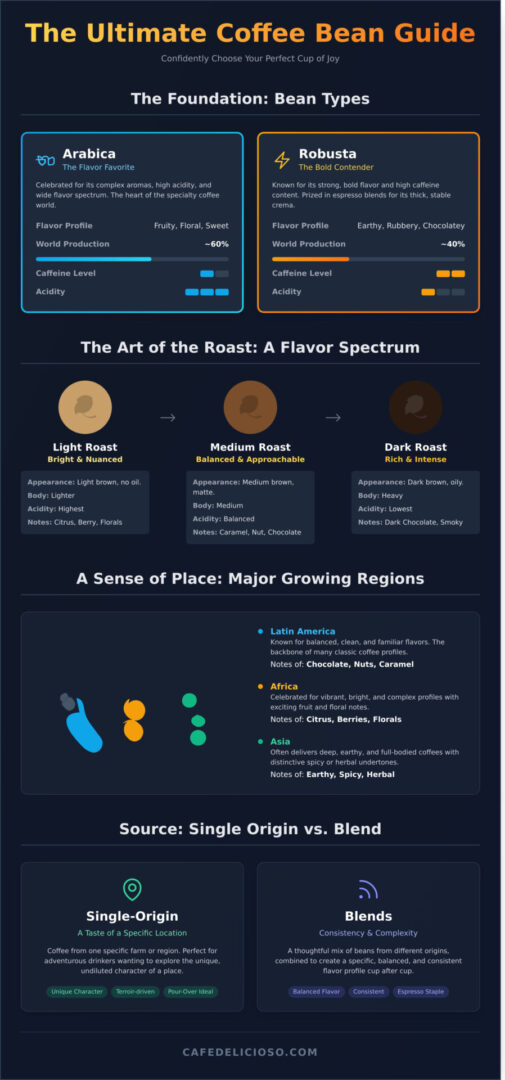
Your journey to a perfect cup of joy begins long before you grind or brew. It starts with the bean itself. Think of it like wine: a winemaker chooses between Cabernet and Pinot Noir grapes to define the final taste. For coffee lovers, the first and most crucial choice is between the two dominant Coffee bean types that shape the world’s coffee landscape: Arabica and Robusta.
Understanding the fundamental differences between these two is the key to unlocking the flavors you love. While hundreds of coffee varieties exist, these two powerhouses define nearly every bag of coffee beans on the shelf. For those seeking an exceptional, nuanced experience, the choice is clear. Most specialty coffee, crafted with compassion and care, focuses exclusively on one of these two stars.
Arabica Beans: The Flavor Favorite
Celebrated for its complex aromas and incredibly wide flavor spectrum, Arabica is the heart of the specialty coffee world. It’s naturally higher in acidity, which creates a bright, crisp, and clean taste on the palate. Representing over 60% of global coffee production, Arabica beans can offer delicate notes of fruit and florals or rich notes of chocolate and nuts. This is the bean for those who believe coffee is an experience, not just a routine.
Robusta Beans: The Bold Contender
Just as its name suggests, Robusta is a hardy and powerful bean. It’s characterized by a strong, bold, and more “classic” coffee flavor that many associate with a traditional morning brew. Robusta contains significantly more caffeine-often twice as much as Arabica-and is prized in espresso blends for its ability to produce a thick, stable crema. Its flavor profile is typically more straightforward, with deep earthy, rubbery, and dark chocolate notes.
The Art of the Roast: How Roasting Defines Flavor
Think of roasting as the magical process where coffee finds its voice. Before roasting, green coffee beans are dense and have a grassy smell, holding onto hundreds of potential flavor compounds. The roaster’s art is to apply heat precisely, transforming these beans and unlocking the exceptional aromas and tastes that make up your perfect cup of joy.
This transformation is a critical step in the journey coffee takes. In the full process from seed to cup, roasting is where the bean’s destiny is truly defined. The same bean can taste wildly different depending on its roast level. It’s important to remember that one roast isn’t better than another; it’s all about your personal preference. Finding your favorite is part of the delicious adventure!
A Quick Visual Guide to Roast Levels:
- Light Roast: Light brown, like cinnamon. No oil on the surface.
- Medium Roast: Medium brown, resembling milk chocolate. A matte, non-oily finish.
- Dark Roast: Deep, dark brown to nearly black. A noticeable oily sheen on the surface.
Light Roast: Bright and Nuanced
A light roast allows the authentic origin of the coffee to shine. These beans are roasted just long enough to develop their flavors without adding a heavy “roast” taste. Expect a lighter body, higher acidity, and vibrant tasting notes of citrus, berry, and florals. This profile is ideal for pour-over or filter methods that highlight its delicate and complex character.
Medium Roast: Balanced and Approachable
Often called the American standard, the medium roast is the happy medium. It offers a beautiful balance of acidity, aroma, and body, making it an incredibly popular and versatile choice. The bean’s original flavors are still present but are now complemented by deeper notes of caramel, nut, and milk chocolate from the roasting process. It’s a comforting and reliable choice for nearly any brewing method.
Dark Roast: Rich and Intense
For those who love a bold statement in their mug, the dark roast delivers. Roasted until the natural sugars caramelize and oils rise to the surface, these beans offer a heavy body, low acidity, and rich, intense flavors. The roast character dominates, featuring deep notes of dark chocolate, toasted nuts, and smoky caramel. This is the profile that creates a classic, strong, and satisfying brew.
A Sense of Place: Why Coffee Bean Origin Matters
Ever wonder why two bags of coffee can taste wildly different? The secret lies in their origin. Much like wine has ‘terroir’, coffee is a direct reflection of its home. The soil it grows in, the climate it weathers, and the altitude where it thrives all shape the final flavor in your cup. Understanding where your coffee beans come from is the first step toward discovering what you truly love. It transforms your daily coffee from a simple routine into an authentic global tasting journey.
The world of coffee is often divided into three main growing regions, each offering a distinct personality:
- Latin America: Known for balanced, clean, and familiar flavors. Think rich notes of chocolate, nuts, and caramel from places like Brazil and Colombia.
- Africa: Celebrated for vibrant, bright, and complex profiles. Here you’ll find exciting notes of citrus, berries, and sweet florals from Ethiopia or Kenya.
- Asia: Often delivers deep, earthy, and full-bodied coffees with spicy or herbal undertones, commonly found in beans from Indonesia and Vietnam.
Single-Origin Coffee: A Taste of a Specific Location
Single-origin coffee comes from one specific farm or region, offering an undiluted taste of that place. It’s the perfect choice for the adventurous drinker who wants to explore the unique character of a location. For example, beans from Brazil are celebrated for their smooth, chocolatey notes. This focus on a single source allows for exceptional quality, which not only produces an incredible cup but also contributes to the many researched health benefits of coffee, making your daily ritual both delicious and rewarding.
Coffee Blends: Consistency and Complexity
A blend is a thoughtful mix of coffee beans from different origins, roasted together to create a specific flavor profile. Roasters act as artists, combining beans to achieve a taste that is both balanced and consistent cup after cup. Blends can offer a more complex and well-rounded flavor than many single origins. This reliability is why they are often the backbone of a great espresso shot, ensuring that perfect, dependable foundation for your latte or cappuccino every single time.
How to Read a Coffee Bag: Decoding the Label
Walking down the coffee aisle can feel overwhelming, but a coffee bag is more than just packaging-it’s a story. Understanding its label empowers you to choose the perfect brew for your palate and ensures you never settle for a mediocre cup again. A great label tells you everything you need to know about the journey of the coffee beans inside, from the farm to the roaster.
Key Information to Look For
Think of these details as clues to the flavor hiding inside. They help you anticipate the experience and find what you truly love. You can see this story unfold on every bag of our responsibly sourced coffee.
- Tasting Notes: Often listed as three distinct flavors like ‘milk chocolate, almond, and citrus,’ these are not added flavorings. They are the subtle, natural notes the roaster has identified in the coffee. This is your best guide to the coffee’s taste profile.
- Origin/Region: This tells you the country or even the specific farm where the coffee was grown. Different regions are known for distinct flavors-for example, Brazilian coffees are often nutty and sweet, while Ethiopian coffees can be bright and fruity.
- Processing Method: How the coffee cherry is removed from the bean dramatically affects taste. Washed coffees are clean and bright, Natural coffees are fruity and sweet, and Honey processed coffees fall somewhere in between.
- Roast Level: Light roasts preserve more of the bean’s original flavor, while dark roasts bring out deeper, smoky, and chocolatey notes. Medium roasts offer a balanced profile.
The Most Important Factor: The Roast Date
Coffee is a fresh agricultural product. Its flavor peaks just days after roasting and begins to degrade over time. Always look for a ‘Roasted On’ date, not a ‘Best By’ date. For the most vibrant and aromatic cup, aim to buy beans that have been roasted within the last few weeks. Freshness is the secret ingredient to unlocking a truly exceptional cup of joy.
Whole Bean vs. Pre-Ground Coffee
For the ultimate coffee experience, always choose whole beans. Grinding your coffee beans just moments before you brew releases an incredible aroma and preserves the delicate flavor compounds that are lost quickly once ground. While pre-ground coffee offers convenience, it sacrifices the freshness that makes specialty coffee so special. Choosing whole beans is the single best step you can take toward brewing a better cup at home.
More Than a Buzz: Choosing Ethical and Sustainable Beans
Your daily coffee ritual is more than just a morning boost; it’s a connection to a global community. The story behind your coffee beans matters. Every bag you purchase is a choice-a chance to support the dedicated farmers who grow these exceptional crops and to protect the land they call home. Choosing responsibly sourced coffee transforms your cup of joy into a powerful statement of care and global partnership.
Navigating the world of ethical coffee can seem complex, but understanding a few key terms makes it simple to make a positive impact.
Understanding Sourcing Certifications
When you see these labels, here’s what they mean for the people and places behind your coffee:
- Fair Trade: This certification ensures that farmers receive a guaranteed minimum price for their coffee. It helps protect them from volatile market fluctuations and promotes community development, fair labor conditions, and environmental sustainability.
- Direct Trade: In this model, roasters like us bypass intermediaries to buy directly from farmers or cooperatives. This often results in farmers earning a premium well above market rates, fostering strong, long-term relationships and exceptional quality control.
- Organic: Certified organic coffee is grown without the use of synthetic pesticides, herbicides, or fertilizers. This practice is not only better for your health but also crucial for maintaining healthy ecosystems, clean water, and biodiversity on the farm.
The Café Delicioso Difference: Crafted with Compassion
At Café Delicioso, we believe exceptional coffee should never come at the expense of people or the planet. Our philosophy is simple: More Smiles. Less Settling. This commitment is woven into every bag of our premium coffee beans, which are responsibly sourced from the renowned Alta Mogiana region in Brazil.
We are proud to partner with farmers who use regenerative farming techniques, nurturing the soil and surrounding environment to ensure a healthy future. By focusing on ethical production and fair labor practices, we ensure that every delicious cup you brew is truly crafted with compassion. It’s a difference you can taste and feel good about. Discover our commitment to people and the planet.
Your Perfect Cup of Joy is Waiting
Your journey into the world of coffee is complete, but your adventure in taste is just beginning. You’re now equipped to look beyond clever marketing and understand what truly makes a great bag. From the distinct flavors shaped by origin and roast to the importance of ethical sourcing, you can now decode any label with confidence. Choosing the right coffee beans is no longer a guess; it’s a personal discovery.
This is the standard we hold ourselves to at Café Delicioso. We believe in coffee crafted with compassion-for the people, the land, and the process. That’s why we’re proud to bring you our authentic Brazilian coffee, ethically sourced from the renowned Alta Mogiana region. Our 100% pure Arabica beans are grown using pesticide-free, regenerative farming, ensuring every sip is pure, delicious, and responsible.
Find Your Cup of Joy. Shop Our Brazilian Coffee.
Stop settling for mediocre coffee. Your perfect morning ritual is just a click away.
Frequently Asked Questions About Coffee Beans
What is the difference between coffee beans and espresso beans?
This is a wonderful question! The truth is, there is no special “espresso” plant. Espresso is a brewing method, not a type of bean. Any coffee can be brewed as espresso. However, beans marketed for espresso are typically a darker roast, which creates a bold, rich, and less acidic flavor that performs beautifully under the high pressure of an espresso machine. It’s all about finding the roast that creates your perfect cup of joy.
How should I store my coffee beans to keep them fresh?
To protect the precious flavor of your coffee beans, store them in an opaque, airtight container at room temperature. A cool, dark pantry is the perfect home for them. It’s important to keep them away from their three biggest enemies: oxygen, light, and moisture. Avoid clear glass jars, as sunlight can quickly degrade the delicate oils that give your coffee its exceptional aroma and taste. Proper storage ensures every cup is a delight.
How long do coffee beans last after they are roasted?
For the most vibrant and delicious coffee experience, we recommend using your beans within four weeks of the roast date. While the beans won’t “spoil” in the traditional sense, they will begin to lose their complex and aromatic qualities after this peak period. Brewing with freshly roasted beans is the surest way to capture the authentic, lively character of the coffee and enjoy the best possible flavor in every single cup.
Is more expensive coffee always better quality?
While price can sometimes reflect a coffee’s rarity or unique processing methods, it is not the only indicator of quality. A truly exceptional coffee is defined by its freshness, ethical sourcing, and a roast profile that you personally enjoy. We believe in quality without compromise, making premium coffee an accessible joy. The best coffee for you is one that tastes wonderful and comes from a source you can trust and feel good about supporting.
Does freezing coffee beans ruin them?
We’re passionate about flavor, so we generally advise against freezing your coffee beans. The freezer environment is full of moisture, and condensation can damage the beans when they are thawed, dulling their delicate flavors. The freezing and thawing process can also fracture the cellular structure of the bean, muting its aromatic oils. For the best taste, it’s always better to buy smaller bags of fresh beans more frequently.
What are the best coffee beans for a beginner?
A fantastic starting point for a beginner is a medium-roast, single-origin coffee from Central or South America, like Brazil. These beans are celebrated for their balanced, smooth, and forgiving flavor profiles, often featuring comforting notes of chocolate, nuts, and caramel. They are incredibly versatile and taste amazing across various brewing methods, from drip to French press, making them a perfect and delicious introduction to the world of specialty coffee.