Coffee for People Who Do Not Like Bitter Coffee: A Guide to Smooth Flavors
Last Tuesday, Sarah reached for the heavy cream for the third time, desperate to mask the burnt, ashy taste of her morning mug. Like many of the 62 percent of Americans who drink coffee daily according to National Coffee Association data, she assumed that a harsh aftertaste was simply part of the deal. If you find yourself masking your drink with sugar or struggling with stomach sensitivity, you aren’t alone. Finding the right coffee for people who don’t like bitter coffee starts with realizing that bitterness isn’t a requirement; it’s often a result of over-roasting or low-quality beans.
We believe your cup of joy should be smooth, sweet, and easy on the palate without needing a gallon of milk to make it drinkable. At Café Delicioso, we live by the mantra: More Smiles. Less Settling. You deserve a premium experience that highlights the natural, nutty notes of high-quality Arabica beans from regions like Alta Mogiana, Brazil. This guide will show you how to identify low-acid roasts, adjust your brewing temperature to exactly 195 degrees Fahrenheit to avoid over-extraction, and finally enjoy a clean cup of black coffee. We’ll explore the specific flavor profiles and simple techniques that transform your morning ritual into a moment of pure comfort.
Key Takeaways
- Distinguish between harsh medicinal bitterness and the pleasant cocoa-like notes found in high-quality specialty beans.
- Discover why 100 percent Arabica beans from high-altitude regions are the perfect coffee for people who don’t like bitter coffee.
- Learn how precise roasting transforms natural bean sugars into smooth flavors while avoiding the burnt taste of mass-market brands.
- Fine-tune your home brewing routine by adjusting water temperature and grind size to unlock a naturally sweet and balanced profile.
- Find out how pesticide-free regenerative farming at Café Delicioso creates a clean cup that supports both the land and your well-being.
Understanding Why Coffee Tastes Bitter
Bitterness is often misunderstood as a sign of coffee strength. In reality, it is a sensory response to specific chemical compounds like phenylindanes that develop during the roasting process. Finding the perfect coffee for people who don’t like bitter coffee requires looking past the dark, oily beans often found on generic grocery shelves. There is a clear distinction between pleasant bitterness, similar to the 70 percent cacao found in premium dark chocolate, and the harsh, medicinal aftertaste caused by poor sourcing or preparation.
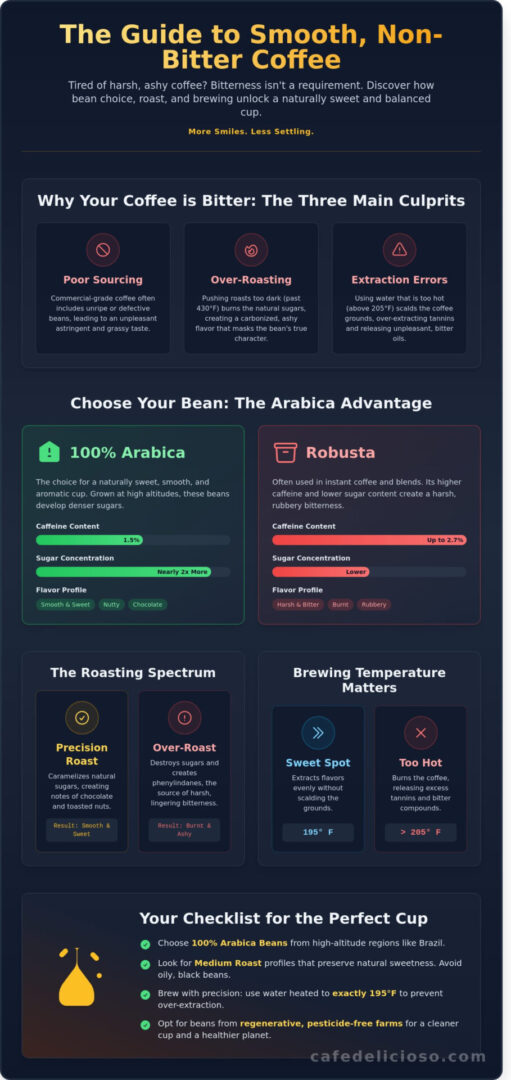
High quality Coffee should offer a balanced profile rather than a sharp bite. Three main factors usually ruin the experience. First, low quality beans often contain defects that produce off flavors. Second, over roasting destroys the natural sugars within the bean. Finally, improper extraction during brewing can pull too many tannins from the grounds. When beans are sourced from specialty regions like Alta Mogiana in Brazil, they carry a natural sweetness that resists bitterness. If a roaster pushes temperatures past 430 degrees Fahrenheit for too long, they destroy these delicate sugars; this results in a charred flavor that masks the bean’s authentic character.
- Low Quality Sourcing: Commercial grade beans often include underripe cherries that taste astringent and grassy.
- Over Roasting: Darker is not always better; extreme heat creates carbonization that tastes like ash.
- Extraction Errors: Using water that is too hot, typically above 205 degrees Fahrenheit, scalds the grounds and releases unpleasant oils.
The Role of Caffeine and Acids
Caffeine provides the energy we seek, but it is also a primary source of bitterness. In the roasting drum, chlorogenic acids transform into lactones, which provide a pleasant, bright acidity. However, extended roasting cycles turn these into phenylindanes, the specific compounds responsible for that lingering, metallic harshness. Robusta beans are naturally more bitter than Arabica beans because they contain nearly 2.7 percent caffeine by weight compared to the 1.5 percent found in Arabica varieties.
Bold Versus Bitter: Clearing the Confusion
Many drinkers confuse a bold cup with a bitter one. A bold cup refers to the body and mouthfeel, often described as a heavy or syrupy texture on the tongue. You can enjoy a strong, concentrated brew that remains smooth and sweet. This is the hallmark of specialty Brazilian beans. When shopping for coffee for people who don’t like bitter coffee, prioritize bags that list flavor notes like toasted nuts, milk chocolate, or caramel. These descriptors indicate a roasting profile that preserves the bean’s natural integrity and sweetness.
Quality coffee is about more than just a caffeine hit. It is an experience built on compassion and craft. By choosing Arabica beans grown in nutrient dense soil through regenerative farming, you ensure your morning ritual is a cup of joy rather than a chore. Avoid beans that look shiny or black. Instead, look for medium roasts that showcase the authentic character of the land. This approach ensures more smiles and less settling for mediocre, burnt flavors that hide the true potential of the bean. Experience the difference in quality without compromise by focusing on the origin and the roast profile of your next bag.
Choosing the Right Coffee Beans for a Smoother Cup
The journey to a non-bitter morning starts long before you turn on your brewer. It begins with the genetic makeup of the bean itself. Most commercial coffee falls into two categories: Arabica and Robusta. If you want to avoid that harsh, burnt aftertaste, you must prioritize 100 percent Arabica beans. This isn’t just a marketing label; it is a chemical reality. Arabica beans contain approximately 1.5 percent caffeine, while Robusta beans can reach up to 2.7 percent. Since caffeine is an alkaloid with an inherently bitter profile, choosing Arabica immediately reduces the bitterness in your cup. Additionally, Arabica contains nearly 60 percent more lipids and almost twice the sugar concentration of its counterparts, resulting in a naturally sweeter experience.
Geography plays an equally vital role in flavor development. Coffee for people who don’t like bitter coffee often comes from specific regions where the soil and climate favor mellow, nutty profiles over sharp acidity. High-altitude farming is the secret to this sweetness. In regions like Brazil, coffee grown at elevations between 800 and 1,300 meters experiences cooler nights. This slower growth cycle allows the coffee cherry to develop denser sugars and complex carbohydrates. When these dense beans are roasted, those sugars caramelize beautifully, providing a smooth mouthfeel that mimics chocolate or toasted nuts.
Freshness is the final pillar of a smooth cup. Coffee is a fresh agricultural product, not a shelf-stable dry good. The peak flavor window for roasted beans is typically between 7 and 21 days after the roast date. Once coffee passes the 30 day mark, oxidation begins to strip away the delicate oils, leaving behind a stale, one-dimensional bitterness. Always look for a specific roast date on the bag rather than an expiration date. This transparency ensures you’re getting the full integrity of the bean’s flavor profile.
Why Brazilian Coffee is the Gold Standard for Smoothness
The Alta Mogiana region in Brazil is world-renowned for producing beans that define smoothness. With an average temperature of 20 degrees Celsius and a perfect balance of rainfall, this region creates an ideal environment for specialty Arabica. Farmers here often use the natural processing method, where the coffee cherry dries in the sun with the fruit still attached for 15 to 25 days. This allows the natural sugars of the pulp to seep into the bean, creating a heavy body and a low-acid finish. You can experience our coffee to see how this traditional Brazilian process eliminates the need for cream or sugar.
The Importance of Single Origin Sourcing
Consistency is the hallmark of a great cup of joy. Mass-market blends often combine beans from dozens of different countries to hide defects or lower costs. This unpredictability is why one pot might taste fine while the next is unpleasantly sharp. Single origin sourcing ensures that every bean in your bag comes from the same soil and the same harvest. This level of quality control is often paired with direct trade practices, where farmers receive higher pay for their meticulous work.
Modern coffee for people who don’t like bitter coffee also benefits from regenerative farming. This approach focuses on soil health by avoiding harsh pesticides and using organic compost. Healthy soil leads to nutrient-dense cherries, which translate into a more vibrant and clean flavor in your mug. When you choose beans grown with love for the land, you’re supporting a system that prioritizes quality over quantity. If you’re ready to stop compromising on your morning ritual, you can find your new favorite roast and start enjoying more smiles with every sip.
The Role of Roasting and Freshness in Flavor
Roasting is the transformative stage where green coffee beans develop their soul. This process relies on the Maillard reaction, a chemical dance between amino acids and reducing sugars that begins at approximately 302 degrees Fahrenheit. As heat climbs, these sugars caramelize, creating the rich, sweet profiles found in premium Brazilian coffee. When handled with care, this heat unlocks notes of toasted nuts and cocoa. However, many commercial brands prioritize efficiency over excellence. Statistics show that roughly 70 percent of mass-market coffee is over-roasted to temperatures exceeding 450 degrees Fahrenheit. This aggressive roasting serves a hidden purpose: it masks defects like mold, insect damage, or underripe beans by replacing nuanced flavors with a uniform, burnt char.
For those seeking a cup of joy, identifying a true medium roast is essential. A medium roast is typically pulled from the roaster at an internal temperature of 410 to 415 degrees Fahrenheit, just after the first crack. This specific window preserves the bean’s natural body while maximizing sweetness. It is the ideal coffee for people who don’t like bitter coffee because it avoids the carbonization that leads to an ashy aftertaste. At Café Delicioso, we believe in this balance to ensure you experience more smiles and less settling with every sip. Our focus on the Alta Mogiana region ensures the beans have the inherent sugar content needed to shine at this roast level.
Freshness also plays a counterintuitive role in flavor. While we often equate freshness with quality, coffee that is too fresh can taste sharp or metallic. This happens because beans need time for degassing. During the first 48 to 72 hours after roasting, beans rapidly release carbon dioxide. If you brew during this window, the gas reacts with water to form carbonic acid, which adds a distracting tang to your cup. For the smoothest experience, allow your beans to rest for at least three days after the roast date. This patience ensures the flavors are settled and the texture remains velvety.
Roast Levels and Their Bitterness Profiles
Understanding roast levels helps you navigate away from unwanted bitterness. Each stage of the roast offers a different sensory experience:
- Light Roast: These beans are light brown and have no surface oil. They are high in acidity, which some drinkers mistake for bitterness. The flavor is often floral or citrusy, reflecting the bean’s origin rather than the roast.
- Medium Roast: This is the sweet spot for a smooth cup. It offers a balanced profile with chocolate and caramel notes. It provides a full body without the harshness of burnt organic material.
- Dark Roast: These beans are dark, oily, and shiny. They have been roasted long enough to undergo carbonization. Unless handled expertly, they carry a high risk of tasting like smoke or ash, which is the primary source of bitterness for most people.
Why Freshly Ground Coffee Matters
The moment a coffee bean is ground, its surface area increases by more than 800 percent. This massive exposure to oxygen triggers rapid oxidation. Within just 15 minutes of grinding, coffee can lose up to 60 percent of its delicate aromatics. When the natural oils in the bean oxidize, they turn rancid. This creates a stale, chemical bitterness that no amount of cream or sugar can fully hide. This is why we recommend grinding your beans immediately before brewing to preserve the incomparable quality of the specialty Arabica.
You can easily detect staleness through a simple smell test. Fresh coffee for people who don’t like bitter coffee should have a vibrant, punchy aroma reminiscent of dark chocolate or sweet earth. If your coffee smells like dusty wood, old peanuts, or wet cardboard, the oils have likely oxidized. Choosing whole beans and grinding them at home is a small ritual that protects the integrity of the bean and ensures your morning routine remains a happy place. This commitment to the process is part of what makes our coffee crafted with compassion.
Brewing Techniques to Eliminate Bitterness at Home
Achieving a smooth cup starts with understanding that bitterness is often a result of how you brew, not just the beans you choose. Even the highest quality Arabica can taste harsh if the preparation is rushed or imprecise. Creating a delicious cup of coffee for people who don’t like bitter coffee requires a focus on four pillars: temperature, grind size, time, and water quality. When these elements align, you unlock the natural sweetness and chocolate notes inherent in premium Brazilian beans.
Water makes up approximately 98 percent of your final beverage. If your tap water contains high levels of chlorine or heavy minerals, these elements will bond with the coffee compounds and create metallic or medicinal off-flavors. Using a simple carbon filter removes these impurities, allowing the authentic profile of the Alta Mogiana region to shine through. Clean water acts as a blank canvas for your coffee ritual, ensuring nothing comes between you and your cup of joy.
Temperature control is the most common area where home brewers falter. Many people wait for their kettle to reach a rolling boil at 212 degrees Fahrenheit before pouring. This extreme heat literally pierces the delicate cellular structure of the coffee grounds, scalding them and releasing caustic carbon dioxide and bitter oils. By letting your kettle sit for 60 seconds after boiling, you can reach the ideal range of 195 to 205 degrees Fahrenheit. This lower temperature gently extracts the sugars and acids without triggering the release of heavy, ashy tannins.
Temperature and Time Control
Precision in your timing is just as vital as the heat of your water. The longer water stays in contact with the coffee grounds, the more material it dissolves. For those seeking a velvet-like texture, immersion brewing methods like the French Press are incomparable. Unlike drip methods where water passes through quickly, immersion allows for a steady, uniform extraction. Aim for a total brew time of 4 minutes; exceeding this limit often leads to the over-extraction of woody fibers that cause a dry, puckering sensation on the tongue.
The Science of Extraction
Extraction is the process of pulling flavor out of the beans. Under-extraction occurs when the water hasn’t had enough time or surface area to work, resulting in a sour, salty, or thin taste. Over-extraction is the opposite; it happens when the water pulls out too much, leading to that dreaded bitterness. If your morning cup feels too harsh, try coarsening your grind. A coarser grind has less surface area, which naturally slows down the extraction process and keeps the flavor profile bright and balanced. For more specific solutions to common hurdles, you can visit our FAQ for detailed brewing troubleshooting tips.
Finding the perfect balance is a journey of small adjustments. If you shift your grind size by just one notch or drop your water temperature by 5 degrees, the difference in the glass is often remarkable. This attention to detail is how we honor the land and the process, ensuring every sip brings more smiles and less settling. When you master these home techniques, you’ll find that finding coffee for people who don’t like bitter coffee is less about searching for a miracle bean and more about respecting the chemistry of the brew.
Ready to put these techniques to the test with beans crafted for smoothness? Shop our premium Brazilian coffee and taste the difference that ethical, high-quality sourcing makes in your daily ritual.
Finding Your Cup of Joy with Cafe Delicioso
Cafe Delicioso was founded on a simple premise. Nothing should ever come between you and your cup of joy. We believe that a strong morning brew does not have to be a punishing experience for your palate. Our mission focuses on providing premium Brazilian coffee that delivers a bold statement without the harsh, lingering aftertaste found in mass-produced brands. By sourcing exclusively from the Alta Mogiana region, we ensure every bean meets a standard of excellence that prioritizes both flavor and your well-being. This is coffee for people who don’t like bitter coffee because it honors the natural sweetness of the bean.
Our commitment to quality begins in the soil. We utilize regenerative farming practices that go beyond traditional organic methods. These techniques focus on restoring soil health and increasing biodiversity, which directly impacts the flavor profile of the harvest. Healthy soil produces cherries with higher sugar content and complex flavor compounds. We strictly adhere to pesticide-free cultivation. This ensures that your daily ritual is clean and untainted by chemical residues. When you choose our beans, you are supporting a system that values the longevity of the land as much as the quality of the roast.
We select only 100 percent Arabica beans for our collection. Arabica naturally contains about half the caffeine of Robusta beans, which are often the culprit behind that sharp, rubbery bitterness in lower-grade coffee. Our beans are grown at altitudes between 800 and 1,200 meters. This specific elevation allows the coffee cherries to mature slowly, developing deep notes of chocolate and toasted nuts. The result is a profile that is deliciously strong yet incredibly smooth. You get the caffeine kick you need without the acidity that disrupts your morning. It is a balance of power and grace in every mug.
Crafted with Compassion and Pride
Our coffee is a labor of love for the people and the land of Brazil. We work closely with the Cocapec cooperative, a group of more than 2,000 dedicated growers who share our ethical standards. This partnership ensures that farmers receive fair compensation for their expertise and hard work. We believe that ethical production leads to a superior product. When workers are treated with dignity and the land is respected, the passion for the craft shines through in the final cup. You can learn more about the heart behind our brand by visiting our mission page. We take immense pride in our heritage and the authentic Brazilian experience we bring to your kitchen.
Seize the Day with More Smiles
Choosing the right bean means you no longer have to settle for mediocre, burnt-tasting coffee. Our Brazilian beans provide a smooth foundation for your favorite coffee ritual, whether you drink it black or with a splash of cream. This is the ultimate coffee for people who don’t like bitter coffee because it invites you to enjoy the nuances of the roast rather than masking them. Experience the difference that regenerative farming and 100 percent Arabica quality make in your daily routine. It’s time to stop tolerating bitterness and start embracing a brew that makes you smile. We invite you to shop our collection today and discover your new favorite way to wake up. More Smiles. Less Settling.
Start Your Journey Toward a Smoother Morning Ritual
You don’t have to settle for a burnt or sharp aftertaste in your favorite mug. Finding the ideal coffee for people who don’t like bitter coffee starts with choosing 100% Pure Arabica beans from the Alta Mogiana region of Brazil. These specialty beans are naturally lower in acidity and bitterness compared to standard commercial blends. By mastering simple brewing techniques and prioritizing freshness, you can unlock the smooth, chocolatey notes that make every sip a genuine pleasure.
At Café Delicioso, we believe in more smiles and less settling. Our coffee is ethically sourced through the Cocapec cooperative, ensuring that every bean is pesticide-free and grown using regenerative farming methods. This commitment to the land and the process results in an incomparable flavor that is both bold and remarkably gentle on the palate. It’s time to upgrade your daily ritual with a cup that is crafted with compassion and designed for your complete satisfaction. Taste the difference in quality and shop our smooth Brazilian coffee today. You deserve a coffee experience that brings you nothing but joy.
Frequently Asked Questions
Is there a coffee that is naturally not bitter?
Yes, 100% Arabica beans grown at altitudes above 900 meters are naturally less bitter. These beans contain 50% less caffeine than Robusta varieties, and caffeine is a primary source of bitterness. Our specialty beans from the Alta Mogiana region in Brazil offer a smooth profile. You will taste notes of chocolate and nuts instead of harsh chemicals. It is a perfect coffee for people who don’t like bitter coffee because the natural sugars are preserved during our careful roasting process.
Why does my coffee taste bitter even with cream and sugar?
Bitterness persists because cream and sugar only mask flavors rather than neutralizing the underlying chemical compounds. If your water temperature exceeds 205 degrees Fahrenheit, you are likely scalding the grounds and releasing tannins. This over-extraction creates a sharp aftertaste that even heavy cream cannot hide. Using 2 tablespoons of coffee per 6 ounces of water ensures a balanced extraction. This ratio prevents the water from pulling out the woody, bitter fibers from the bean.
Which roast of coffee is the least bitter?
Medium roasts provide the most balanced, non-bitter experience for the average palate. While dark roasts are often associated with a charred, smoky bitterness, light roasts can sometimes taste unpleasantly acidic or sour. A medium roast caramelizes the natural sugars in the bean without burning them. Our Brazilian beans are roasted to highlight these sweet, nutty undertones. This process ensures you get a cup of joy that feels smooth on the tongue from the first sip to the last.
Can the type of water I use make my coffee taste bitter?
Your water quality is vital since 98% of your brewed cup consists of water. Tap water often contains chlorine and high mineral levels that react poorly with coffee compounds. Using filtered water with a Total Dissolved Solids measurement of 150 milligrams per liter produces the cleanest taste. This precision allows the authentic flavor of our responsibly sourced beans to shine. You will notice a significant reduction in harshness when you stop using hard tap water for your morning ritual.
How do I fix a cup of coffee that is already too bitter?
Adding a tiny pinch of salt to your mug can instantly neutralize bitter flavors. Sodium ions interfere with the transduction of bitter signals to your brain, making the coffee taste smoother and sweeter. Just 0.5 grams of salt is enough to transform a harsh cup without making it taste salty. This simple trick is a lifesaver when you are served a subpar brew. It helps you focus on the quality without compromise, even when the brewing conditions were not perfect.
Does cold brew coffee have less bitterness than hot coffee?
Cold brew coffee is approximately 60% less bitter than traditional hot coffee. Because heat is never applied, the chemical reactions that release bitter oils and acids do not occur. Instead, a 12 hour steeping process gently draws out the chocolatey and fruity notes of the bean. This method is an exceptional choice for anyone seeking a refreshing, silky beverage. It creates more smiles and less settling for those who find standard drip coffee too intense for their stomach.
What is the best brewing method for people who hate bitterness?
The pour-over method is the best choice for a clean, sediment-free cup. Using a paper filter removes the diterpenes and fine particles that often contribute to a gritty, bitter mouthfeel in French Press coffee. A 3 minute brew time gives you total control over the water flow and temperature. This precision ensures you extract only the best flavors from our premium Brazilian beans. It is a rewarding ritual that yields an incomparable, smooth result every single morning.
Are expensive coffee beans less bitter than cheap ones?
Specialty coffee beans are significantly less bitter because they undergo rigorous quality control. Beans that score 80 points or higher on the Specialty Coffee Association scale are free from primary defects that cause off flavors. Cheap commodity coffee often mixes in Robusta beans to lower costs, which contains double the chlorogenic acid of Arabica. By choosing our ethically produced, high-altitude beans, you are investing in a superior flavor profile. This is coffee for people who don’t like bitter coffee but still want a bold, satisfying caffeine kick.