The Best Brazilian Coffee Beans: Your 2026 Buyer’s Guide
Standing in the coffee aisle can feel overwhelming. With endless terms like ‘single-origin,’ ‘processing method,’ and ‘roast profile,’ choosing the right bag often feels more like a test than a treat. But what if finding your perfect cup of joy was simpler? What if it began with an origin celebrated for its smooth, rich, and wonderfully approachable flavors? This is your invitation to the world of authentic Brazilian coffee, and this guide is your trusted companion to discovering the best brazilian coffee beans for your daily ritual.
Forget the confusion and uncertainty. In this 2026 buyer’s guide, we’ll demystify the labels, journey through Brazil’s famed growing regions, and uncover the delicious chocolatey and nutty notes that make these beans so beloved. We believe in more smiles and less settling. You’ll learn how to spot exceptional quality and choose a coffee that’s not only perfect for your palate but also crafted with compassion. It’s time to confidently find a brew that makes every morning better.
Key Takeaways
- Discover how Brazil’s diverse growing regions create distinct flavor profiles, helping you find a brew you will truly love.
- Learn to read a coffee bag like a pro by spotting the key details that signal an exceptional, high-quality roast.
- Understand why finding the best brazilian coffee beans is about more than just taste-it’s about choosing a coffee crafted with compassion.
- Pinpoint the classic Brazilian flavor profile-smooth, low-acidity, and full-bodied-to see if it’s the perfect match for your daily cup of joy.
What Makes Brazilian Coffee Beans a Global Favorite?
When you think of coffee, you likely think of Brazil-and for good reason. As the world’s largest coffee producer for over 150 years, Brazil has perfected the art of growing beans that deliver a consistently smooth, comforting, and delicious experience. This isn’t just about volume; it’s about a signature quality that has made these beans a cornerstone of the coffee world. Their approachable, low-acidity profile makes them a perfect starting point for new coffee lovers and a reliable favorite for seasoned enthusiasts searching for the best brazilian coffee beans.
The Signature Flavor Profile
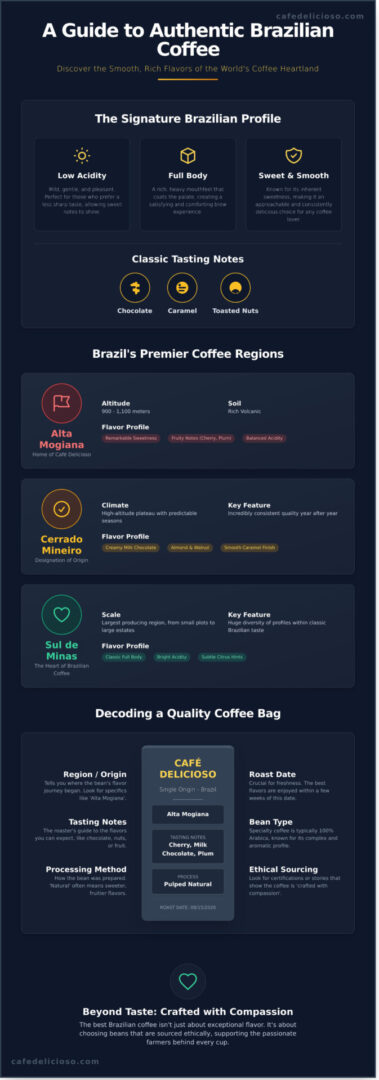
What defines that classic Brazilian taste? It’s a beautifully balanced and gentle cup. Grown at lower altitudes than many other specialty coffees, Brazilian beans typically have a mild, pleasant acidity. This allows the deep, sweet tasting notes to shine through. Expect a full-bodied brew rich with flavors of milk chocolate, creamy caramel, and toasted nuts like almond or peanut. It’s a profile that feels like a warm hug, creating a reliable and satisfying cup of joy every single time.
From Commodity to Specialty: A Quality Revolution
While Brazil has always been a coffee powerhouse, its focus has evolved dramatically. The rich history of coffee production in Brazil shows a journey from mass-market quantity to an incredible focus on exceptional quality. In recent decades, a new generation of passionate farmers has championed the cultivation of specialty-grade Arabica beans. They are pioneering innovative processing methods, like pulped natural and natural processing, which enhance the bean’s inherent sweetness and create a richer, more complex cup.
This commitment to excellence is why the best brazilian coffee beans today are both a comforting classic and a canvas for exciting new flavors. Their inherent sweetness and full body make them an exceptional single-origin pour-over, but they also serve as the foundational base for many of the world’s finest espresso blends, providing that rich crema and chocolatey depth that baristas and home brewers adore.
A Journey Through Brazil’s Premier Coffee Regions
When you think of Brazilian coffee, you might picture one specific taste. But the truth is, Brazil is a vast country with an incredible diversity of coffee profiles. The secret lies in its distinct growing regions, where different altitudes, climates, and soils create unique and wonderful flavor nuances. To find the best brazilian coffee beans for your palate, you must first journey through its terroir. The scale and complexity of this production are detailed in this insightful Brazilian coffee industry analysis. Understanding these regions is the first step toward discovering your perfect cup of joy. Let’s explore the “big three” specialty coffee areas.
Alta Mogiana: The Home of Sweet and Complex Beans
Known for its rich volcanic soil and stable altitudes of 900-1,100 meters, Alta Mogiana is a paradise for growing exceptional Arabica. This region consistently produces beans with a remarkable natural sweetness, balanced acidity, and delightful fruity notes like cherry and plum. It’s no wonder this area is a favorite for roasters seeking premium, specialty-grade coffee. We are proud that this is the home of Café Delicioso’s authentic, single-origin beans-crafted with compassion right from the source.
Cerrado Mineiro: Consistent and Classic Flavors
Welcome to Brazil’s first official ‘Designation of Origin’ for coffee, a protected status that guarantees quality and origin. The Cerrado Mineiro region is a high-altitude plateau defined by its predictable seasons-hot, wet summers and dry winters. This stable climate leads to incredibly consistent quality year after year. Beans from here are celebrated for their classic, comforting flavor profile: think creamy milk chocolate, notes of almond and walnut, and a smooth caramel finish. It’s a reliable choice for a perfectly balanced cup.
Sul de Minas: The Heart of Brazilian Coffee
As the literal heart of Brazilian coffee, Sul de Minas is the largest producing region in the country. It’s a sprawling area with rolling hills and a wide range of farm sizes, from small family plots to large estates. This diversity translates to the cup, offering a spectrum of classic, full-bodied coffees. While the quintessential chocolate and nutty notes are present, beans from Sul de Minas often surprise with a bright, pleasant acidity and subtle hints of citrus, making them both familiar and exciting.
How to Read a Coffee Bag: Decoding Labels for Quality
The information on your coffee bag is more than just marketing-it’s a map to your perfect cup of joy. Learning to spot the key details empowers you to move beyond flashy claims and make an informed choice. This knowledge is your guide to finding the very best brazilian coffee beans that truly match your taste.
Single Origin vs. Blend
When you see “Single Origin” on a bag, it means the beans come from one specific farm or region, offering an authentic taste of its unique climate and soil. With Brazil being the world’s largest coffee producer, a fact well-documented by the International Coffee Organization, choosing a single-origin allows you to explore the incredible diversity within the country. Blends, on the other hand, are crafted from multiple origins for a consistent, balanced flavor profile year-round. For a true taste of Brazil, we believe single-origin is the exceptional choice.
Processing Method: Natural, Pulped Natural, Washed
How the coffee cherry is removed from the bean dramatically impacts the final flavor. It’s a core part of the coffee’s story, and in Brazil, it’s an art form. Here are the three main methods you’ll see:
- Natural Process: The coffee cherries are dried whole, allowing the fruit to impart its sugars into the bean. This results in a sweet, heavy-bodied cup with distinct fruity notes.
- Washed Process: The fruit is completely washed off the bean before drying. This creates a cleaner, brighter, and more acidic cup, highlighting the bean’s intrinsic flavors.
- Pulped Natural (Honey) Process: A hybrid method perfected in Brazil. Some of the fruit is left on the bean during drying, creating an incredible balance of sweetness and clarity. It’s the best of both worlds.
Roast Level and Roast Date
The roast transforms the green coffee bean, unlocking its aromatic potential. A medium roast is often perfect for Brazilian beans, highlighting their classic balanced flavors of chocolate, caramel, and nuts. A dark roast delivers a bolder, more robust cup with rich, smoky-sweet notes. More important than the level, however, is the roast date. Always look for a “Roasted On” date. Coffee is at its peak flavor within a few weeks of roasting. Freshness is not a luxury; it’s essential for an exceptional experience.
Beyond Taste: Why Ethical Sourcing Defines the ‘Best’ Coffee
A truly exceptional cup of coffee tells a story that begins long before the beans are roasted. The journey to find the best brazilian coffee beans goes beyond rich flavor notes and a perfect aroma. It’s a story crafted with compassion-for the people who grow it and the land that nurtures it. Choosing consciously means you’re not just buying coffee; you’re supporting a better, more sustainable future for the entire coffee world.
Love for the People: Fair Labor Practices
At its heart, ethical coffee is about human dignity. It ensures farmers receive fair, stable prices for their hard work, empowering them to invest in their families and communities. This often translates to better access to education and healthcare. Brands that build direct relationships with farms create a transparent supply chain where you know exactly who your purchase supports, turning every cup into an act of partnership.
Love for the Land: Regenerative Farming
Ethical sourcing also means showing love for the land. The gold standard is regenerative farming, a practice that goes beyond sustainability by actively improving the environment. This approach focuses on nourishing the soil, using pesticide-free growing methods to protect ecosystems, and conserving precious water resources. This holistic commitment ensures the land can continue producing exceptional coffee for generations. Have more questions? Check out our frequently asked questions page.
Certifications to Look For
When you’re shopping, these labels and terms can help you verify a brand’s commitment to ethical practices. Here’s what to look for:
- Fair Trade: This well-known certification guarantees farmers receive a minimum price for their coffee, plus a premium to invest in their communities as they see fit.
- Rainforest Alliance: The frog seal indicates that a farm has been audited to meet rigorous standards that protect forests, conserve wildlife, and support farming communities.
- Direct Trade: While not a formal certification, this signifies a direct relationship between the roaster and the farmer. It often results in higher pay for producers and exceptional quality control, creating a win-win for everyone.
When you choose coffee that is thoughtfully sourced, you become part of a positive cycle. This deep commitment to people and the planet is what truly elevates good coffee to the best brazilian coffee beans you can find.
Finding Your Perfect Brew: Tips for Buying and Brewing
You’re now equipped with the knowledge to navigate the wonderful world of Brazilian coffee. From understanding regions to decoding flavor profiles, you can choose with confidence. Let’s put it all together with a few practical tips to ensure every cup is your perfect cup of joy, crafted with compassion and care.
Where to Buy the Best Brazilian Beans
For peak flavor and quality, we recommend buying directly from specialty roasters online. They ship freshly roasted beans, often with detailed origin stories and roast dates that guarantee an authentic taste. Your local specialty cafe is another great source-ask the barista what single-origin Brazilian coffees they recommend. We advise avoiding generic supermarket bags with no roast date. Freshness is the key to unlocking the rich, nuanced flavors you deserve.
Whole Bean vs. Pre-Ground
The single biggest upgrade you can make to your coffee ritual is grinding your beans just before brewing. This simple step preserves the delicate aromatic oils that deliver exceptional flavor and a truly memorable experience. While pre-ground coffee offers convenience for a busy lifestyle, always be sure to buy it in a well-sealed bag with a recent roast date to minimize flavor loss and maximize enjoyment.
Simple Brewing Tips for Brazilian Coffee
Honoring your high-quality beans is simple. Their balanced, low-acidity profile shines with classic, straightforward brewing methods. To get the most from your coffee:
- Brew Method: A French press enhances the coffee’s full body and chocolatey notes, while a pour-over or drip machine will highlight its clean, sweet character.
- Water Quality: Always use filtered water. It removes impurities that can interfere with the coffee’s pure, intended taste.
- Water Temperature: The ideal temperature is just off the boil, around 200°F (93°C), to extract rich flavor without introducing bitterness.
For more detailed guidance, our FAQ page has answers to common brew questions.
You’re ready. Armed with these tips, you can confidently select and brew the best brazilian coffee beans for your palate. The journey from the highlands of Brazil to your morning mug is one of passion and care. Now, it’s time to taste the difference and savor an exceptional experience. Explore our authentic collection at cafedelicioso.com to start your adventure.
Your Journey to the Perfect Brazilian Brew Begins Now
Your quest for the ultimate cup has guided you through Brazil’s lush coffee landscapes, from the rolling hills of Minas Gerais to the celebrated Alta Mogiana region. You’ve learned that true quality isn’t just about rich flavor notes; it’s also about the story behind the beans. By knowing how to read a label and understanding the importance of ethical sourcing, you’re now perfectly equipped to find the best brazilian coffee beans that align with both your palate and your principles.
This is where the search ends and the experience begins. At Café Delicioso, we believe your coffee should be a cup of joy, crafted with compassion from bean to brew. Our 100% pure, specialty-grade Arabica beans are responsibly sourced from the premium Alta Mogiana region, a place renowned for its exceptional coffee. Cultivated through regenerative farming, each sip reflects our deep love for the land, the process, and the people.
Experience the authentic taste of Alta Mogiana. Shop Café Delicioso today!
Don’t settle for ordinary. Your exceptional coffee ritual awaits.
Frequently Asked Questions About Brazilian Coffee
What is the best roast level for Brazilian coffee beans?
A medium to medium-dark roast is the sweet spot for Brazilian coffee. This level beautifully enhances the bean’s signature notes of chocolate, caramel, and nuts without introducing bitterness. It creates a well-balanced, smooth, and exceptionally flavorful brew that allows the coffee’s authentic character to shine. This ensures every sip contributes to your perfect cup of joy, crafted with care from bean to brew.
Is Brazilian coffee good for espresso?
Absolutely! Brazilian coffee is a favorite for espresso worldwide. Its naturally low acidity, full body, and creamy mouthfeel produce a rich, stable, and beautiful crema. The classic flavor profile of chocolate and toasted nuts creates a smooth, balanced, and consistently delicious shot that is never too bitter. It’s the perfect, trustworthy foundation for your lattes, cappuccinos, or a simple, satisfying espresso.
Are the best Brazilian coffees always 100% Arabica?
While Brazil produces different coffee varieties, the best brazilian coffee beans for specialty coffee are overwhelmingly 100% Arabica. Premium Arabica beans are celebrated for their complex aromas and nuanced, sweeter flavors, which are less harsh than their Robusta counterparts. For an exceptional and authentic taste experience that reflects our love for the process, choosing 100% Arabica is the key to a truly superior cup.
How can I tell if my coffee beans are fresh?
Freshness is everything! First, always look for a “roasted on” date on the bag-the closer to today, the better. A quality bag will also have a one-way valve to let gasses escape without letting air in. The ultimate test is the “bloom”: when you first pour hot water over the grounds, fresh coffee will bubble and expand as it releases carbon dioxide. No bloom means the beans are likely stale.
What does ‘single-origin’ mean and why is it important for Brazilian coffee?
Single-origin means the coffee comes from one specific, traceable geographical location-be it a single farm, a cooperative, or a distinct region like Alta Mogiana. This is important because it showcases the unique flavor profile, or *terroir*, of that specific place. It’s a promise of authenticity and a connection to the land and the people who grew the beans, delivering a pure and consistent taste experience.
How should I store my Brazilian coffee beans to maintain freshness?
To preserve that delicious, fresh-roasted flavor, store your beans in an airtight, opaque container at room temperature. Keep it in a cool, dark place like a pantry, away from sunlight, heat, and moisture. We strongly advise against storing beans in the refrigerator or freezer, as condensation can damage their delicate oils and strip them of their incredible aroma and taste.