The Ultimate Guide to Chocolate Bars: From Cacao to Coffee Pairing
Standing in front of a wall of premium chocolate bars, do you ever feel more tested than tempted? It’s easy to feel overwhelmed. What does 72% cacao really mean for the flavor? Is ‘single-origin’ just a fancy phrase? And how can you be sure your treat was crafted with compassion, from bean to bar?
We believe finding your perfect moment of joy shouldn’t be complicated. This guide is your warm invitation to explore the authentic world of chocolate with confidence. We’ll help you decode every label, understand the difference quality makes, and discover exceptional brands that share our love for the people and the land.
Even better, we’ll show you how to pair these discoveries with your favorite coffee, turning a simple pleasure into an unforgettable tasting experience. It’s time to move beyond guessing and start truly enjoying. More smiles, less settling-in every single bite.
Understanding the World of Chocolate: From Bean to Bar
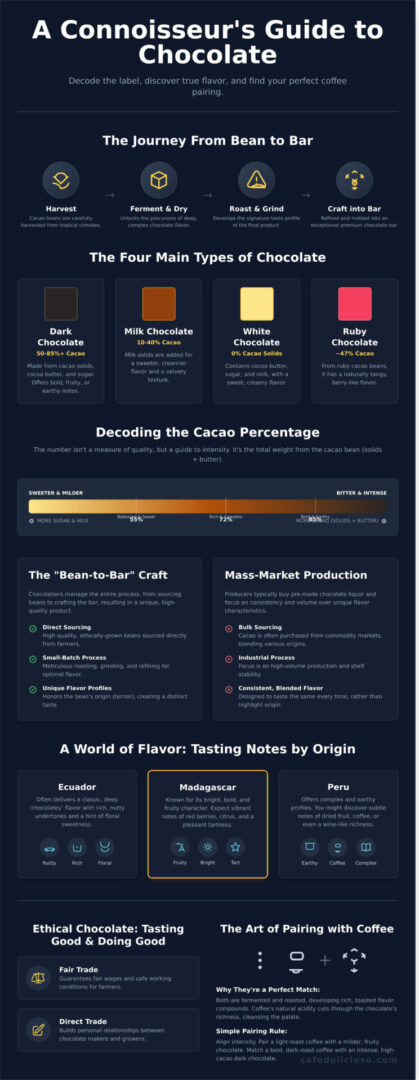
Before a chocolate bar can deliver its moment of joy, it begins a long and passionate journey. It starts as a cacao bean, nurtured in tropical climates and harvested with care. This humble bean undergoes a remarkable transformation, beginning with fermentation and roasting-critical steps that unlock its deep, complex flavors. Much like specialty coffee, the craftsmanship at every stage is what separates an ordinary candy from an exceptional, premium chocolate experience. It is this dedication that turns a simple ingredient into the beloved treat we know today; for a comprehensive overview of chocolate bars and their rich history, the story from bean to bar is truly fascinating.
The Three Main Types of Chocolate
To find your perfect coffee pairing, it helps to know the foundational chocolate profiles. Each type offers a unique canvas of flavor and texture, crafted with intention.
- Dark Chocolate: Made from cacao solids, cocoa butter, and sugar. It ranges from semi-sweet (often around 50-60%) to intensely bittersweet (70% and above), offering bold, fruity, or earthy notes.
- Milk Chocolate: The classic creamy favorite. Milk solids are added to the cacao and sugar, creating a sweeter, milder flavor and a velvety texture that melts beautifully.
- White Chocolate: This unique creation contains no cacao solids. It’s made from cocoa butter, sugar, and milk solids, giving it a sweet, creamy flavor all its own.
- Ruby Chocolate: A newer discovery, Ruby chocolate is made from ruby cacao beans and offers a naturally tangy, berry-like flavor without any added fruit flavorings.
Decoding the Label: What Cacao Percentage Really Means
That number on the front of high-quality chocolate bars isn’t a measure of quality, but rather intensity. The cacao percentage represents the total amount of the bar, by weight, that comes directly from the cacao bean (cacao solids + cocoa butter). A higher percentage means less sugar and a more intense, pure chocolate flavor. Think of it like coffee roasts: a light roast isn’t “better” than a dark roast, it’s just different. A 55% dark chocolate might be your perfect daily treat, while an 85% bar offers a bold, complex experience for special moments.
The Craft of a Chocolatier: Bean-to-Bar Explained
The “bean-to-bar” movement is all about authenticity and control. Unlike mass-market producers who buy pre-made chocolate, bean-to-bar chocolatiers manage the entire process themselves. They source high-quality, ethically-grown cacao beans directly from farmers, then meticulously roast, grind, and refine them in small batches. This hands-on approach allows them to develop unique flavor profiles that honor the bean’s origin, resulting in a truly exceptional product crafted with passion and purpose.
A Journey Through Flavor: Chocolate Origins and Tasting Notes
Just like specialty coffee, the world of premium chocolate is defined by a powerful sense of place. This concept, known as ‘terroir,’ refers to how a region’s unique soil, climate, and altitude shape the final flavor of the cacao bean. Understanding this is the first step to appreciating why not all chocolate bars are created equal. The journey from a humble bean to an exceptional bar is a story written by the land itself, a narrative you can taste in every single bite.
Single-Origin vs. Blends: Which is Right for You?
A single-origin chocolate showcases the distinct, unadulterated flavor profile of one specific region. It’s an adventure in a bar, perfect for tasting sessions and pairing with single-origin coffees to highlight unique notes. Blends, on the other hand, are crafted by chocolatiers to create a consistent, balanced, and harmonious flavor. Choose a blend for reliable comfort, and a single-origin for a taste of something truly authentic and new.
Tasting Notes from Around the Globe
Exploring single-origin chocolate bars is like taking a trip around the world. Each region offers a signature experience:
- Ecuador: Often delivers a classic, deep ‘chocolatey’ flavor with rich, nutty undertones and a hint of floral sweetness.
- Madagascar: Known for its bright, bold, and fruity character. Expect vibrant notes of red berries, citrus, and a pleasant tartness.
- Peru: Offers complex and earthy profiles. You might discover subtle notes of dried fruit, coffee, or even a wine-like richness.
Other notable regions like Venezuela and Vietnam also produce exceptional cacao, each with its own delicious story to tell.
Ethical Chocolate: Tasting Good and Doing Good
An exceptional chocolate experience goes beyond flavor. It’s about ensuring the entire process is crafted with compassion. Certifications like Fair Trade guarantee fair wages for farmers, while Direct Trade models build personal relationships between makers and growers. Learning about the history and science of chocolate reveals how crucial sustainable and regenerative farming practices are for both quality and the planet. At Café Delicioso, this philosophy is at our core-we believe the best products are born from a deep love for the people and the land.
The Art of Pairing: How Coffee Elevates Your Chocolate Experience
Discovering the perfect coffee and chocolate pairing is like unlocking a new level of flavor. It’s an experience where two exceptional items become something greater than the sum of their parts. The goal is simple: to find a coffee that either complements the notes in a chocolate bar or provides a delightful contrast, creating a tasting journey that is both balanced and exciting. This is where your daily cup of joy transforms into a moment of pure indulgence.
Why They’re a Perfect Match: The Flavor Science
It’s not just a happy accident that coffee and chocolate are a classic duo. Their compatibility is rooted in chemistry. Both beans are fermented and roasted, a process that develops deep, complex flavor compounds like pyrazines, which give them those rich, toasted notes. Coffee’s natural acidity is the perfect tool to cut through the creamy richness of chocolate, cleansing your palate and making each bite taste as decadent as the first.
A Simple Pairing Guide: Roast, Region, and Richness
Finding a great match doesn’t have to be complicated. You can start by aligning the intensity of your coffee with the richness of your chocolate. Think of it as matching weights-you don’t want one to overpower the other. Here is a simple framework to guide your next tasting:
- Light Roast Coffee: With bright, acidic, and often fruity notes, light roasts pair beautifully with high-cacao dark chocolate bars that feature fruity profiles, such as those made with Madagascan beans.
- Medium Roast Coffee: The balanced, smooth, and often nutty or caramel notes of a medium roast are incredibly versatile. They are the perfect partner for classic milk chocolate or dark chocolate with nuts and toffee.
- Dark Roast Coffee: Bold, smoky, and low in acidity, dark roasts stand up to the most intensely flavored, bittersweet dark chocolates (80% cacao and above), creating a deeply satisfying and robust experience.
The Perfect Partner: Pairing with Brazilian Coffee
For a truly harmonious pairing, look no further than an authentic Brazilian coffee. Known for its gentle acidity and wonderfully smooth body, Brazilian coffee often presents comforting notes of chocolate, nuts, and caramel. This profile makes it an exceptionally forgiving and rewarding partner for chocolate. It enhances the creaminess of milk chocolate and brings out the toasted notes in dark chocolate with almonds or hazelnuts. Ready to create your own exceptional pairing experience? Find the perfect coffee for your next tasting.
How to Choose and Store the Best Chocolate Bars
Your journey into the art of pairing culminates with the star of the show: the chocolate itself. Choosing and caring for your chocolate is an act of compassion for your palate, ensuring every pairing with your favorite coffee is an exceptional experience. It’s about seeking quality and protecting your investment in that perfect moment of joy. More smiles, less settling.
Spotting Quality: What to Look For on the Shelf
Finding premium chocolate bars is simple when you know the signs. An authentic, high-quality bar tells its story through its ingredients and appearance. Don’t be swayed by fancy packaging alone; look closer for these markers of true craftsmanship.
- Simple Ingredients: Look for a short list. Great dark chocolate needs little more than cacao, sugar, and perhaps cocoa butter and an emulsifier like lecithin.
- Cacao Origin: The best brands proudly state the origin of their beans. This signals a commitment to terroir and flavor, much like specialty coffee.
- Appearance and ‘Snap’: A quality bar should have a glossy, even finish. When you break a piece, it should make a clean, crisp ‘snap’-a sign of good tempering.
Curated Picks for Every Palate
To help you start, here are three paths to delicious discovery:
- For the Purist: Try a 70%+ single-origin bar from Ecuador or Madagascar. Its complex, fruity, or earthy notes provide a beautiful, nuanced counterpoint to a bold coffee.
- For the Sweet Tooth: A craft milk chocolate bar with a touch of sea salt offers a sublime balance. The creamy sweetness and savory finish are pure comfort.
- For the Adventurous: Explore bars with unique inclusions like chili, lavender, or cardamom. These bold flavors create dynamic and unforgettable pairings.
Pairing isn’t limited to coffee, either. For an adventurous twist, try matching a bright, fruity chocolate with a complementary nature-inspired beverage. If you’re curious about this kind of tasting experience, you can visit Aroha Drinks for some delicious ideas.
Storing Chocolate Like a Pro
You’ve found the perfect bar-now protect it. The refrigerator is not your friend! Cold temperatures and moisture can cause condensation, dulling the flavor and texture. Instead, store your chocolate in a cool, dark, and dry place like a pantry or cabinet (ideally 60-68°F or 15-20°C). This also prevents ‘bloom,’ the harmless whitish coating that appears when cocoa butter separates. Proper storage ensures your chocolate is ready when you are.
By choosing with intention and storing with care, you elevate a simple treat into a key part of your coffee ritual. You now have the knowledge to select exceptional chocolate bars that will honor the premium, authentic coffee in your cup. Because a coffee crafted with such compassion deserves a partner of equal quality. Discover your next favorite pairing at cafedelicioso.com.
Elevate Your Chocolate Experience
Your journey into the world of chocolate has taken you from the humble cacao bean to the complex flavors shaped by origin and craft. You now understand that a great chocolate bar is an experience, not just a treat-and that choosing the best chocolate bars is an art you can master. The final, most delicious step is discovering the perfect pairing to unlock every rich, hidden note.
This is where your cup of joy meets your favorite treat. Our coffee, sourced from the premium Alta Mogiana region of Brazil, is the perfect partner for this moment. Crafted with compassion and ethical practices, its balanced profile is designed to complement, not overpower, your chocolate. It’s the key to transforming a simple pleasure into an extraordinary ritual.
Elevate your chocolate moments with our exceptional Brazilian coffee.
Here’s to a world of delicious discovery. More smiles, less settling.
Frequently Asked Questions
What is the difference between cacao and cocoa?
Cacao refers to the raw, unprocessed beans from the Theobroma cacao tree. It’s the purest, most authentic form of chocolate, packed with antioxidants. Cocoa, on the other hand, is the result of roasting and processing these beans at high temperatures. This process develops the rich, deep flavor we love in our favorite treats. Think of cacao as the raw ingredient and cocoa as the refined product ready for your cup of joy.
Is dark chocolate actually healthy for you?
Absolutely! When enjoyed in moderation, dark chocolate (70% cacao or higher) is a wonderful source of antioxidants called flavonoids. These powerful compounds can support heart health and reduce inflammation. It’s also rich in essential minerals like iron and magnesium. Choosing a high-quality dark chocolate is a delicious way to treat yourself with compassion, offering a moment of pure, guilt-free pleasure that contributes to your well-being. More smiles, less settling, even for your treats!
Does dark chocolate contain caffeine, and how much?
Yes, dark chocolate does contain caffeine, though typically less than a cup of coffee. The amount varies with the cacao percentage. A one-ounce serving of 70-85% dark chocolate contains about 23 milligrams of caffeine. For comparison, an eight-ounce cup of our premium Brazilian coffee has around 95 milligrams. It offers a gentle lift, making it a perfect partner for an afternoon pick-me-up without the full jolt of your morning brew.
Why are some chocolate bars so much more expensive than others?
The price of premium chocolate bars often reflects a deep love for the process, from bean to bar. Key factors include the origin and rarity of the cacao beans, ethical sourcing that ensures fair wages for farmers, and the meticulous craft involved. Small-batch producers invest more time and use higher-quality ingredients, avoiding artificial fillers. Just like with specialty coffee, you’re paying for an exceptional, authentic experience crafted with compassion and integrity.
What does ‘Dutch-processed’ cocoa mean?
‘Dutch-processed’ or ‘alkalized’ cocoa is cocoa powder that has been washed with an alkaline solution. This process neutralizes its natural acidity, resulting in a darker color and a smoother, less bitter flavor profile. While this makes it excellent for baking, the process can slightly reduce the antioxidant content. Natural cocoa powder, by contrast, retains its original acidity and a more robust, fruity chocolate flavor that pairs beautifully with bold coffees.
Can you eat baking chocolate like a regular chocolate bar?
While you technically can, you probably wouldn’t want to! Baking chocolate, or unsweetened chocolate, contains 100% cacao solids with little to no added sugar. This gives it a very bitter and intense flavor designed to be balanced by other ingredients in a recipe. For a moment of pure enjoyment, we recommend sticking to a high-quality eating chocolate bar that is crafted for a delicious, ready-to-eat experience.