
The Ultimate Guide to Nutty Flavor Profile Coffee
What if that rich, toasted hazelnut aroma in your mug isn’t coming from a bottle, but from the very soil where the bean was born? Most coffee lovers crave a smooth, balanced cup, yet it’s far too common to end up with a brew that tastes unpleasantly acidic or overly sharp. You shouldn’t have to settle for a flavor that doesn’t bring you a smile. Finding a consistent, high quality nutty flavor profile coffee is about more than just luck; it’s about understanding the journey from the farm to your favorite mug.
You’re about to discover the science and secrets behind those comforting almond and walnut notes that define the best Brazilian beans. We’ll explain how the unique climate of regions like Alta Mogiana, where 100 percent Arabica beans thrive at elevations between 800 and 1,200 meters, creates that signature sweetness. This guide provides a clear look at how professional roasting develops these savory characteristics and offers practical brewing tips to ensure your morning ritual is always exceptional. Get ready to transform your kitchen into a sanctuary of authentic flavor and quality.
Key Takeaways
- Identify the specific notes like almond and hazelnut that define a high quality nutty flavor profile coffee and learn why low acidity is the key to its smooth finish.
- Discover how lower altitude regions and specific soil conditions create the chemical precursors for the sweet and savory characteristics found in your favorite beans.
- Understand how the medium roasting process highlights natural sweetness while preventing delicate walnut and cashew undertones from turning smoky.
- Explore the difference between generic beans and specialty nutty coffee produced through precise farming and ethical labor practices.
- Learn how pesticide free Arabica beans from the Alta Mogiana region offer a pure and incomparable taste that brings more joy to your morning cup.
What Defines a Nutty Flavor Profile in Coffee?
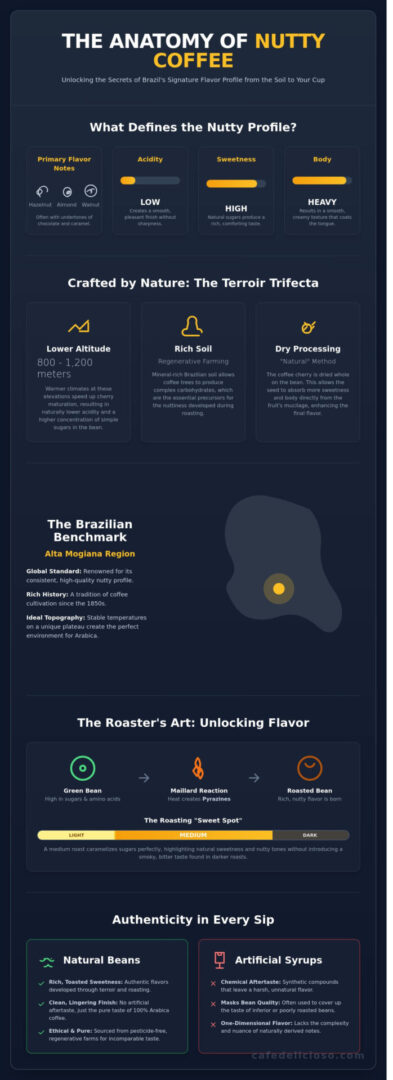
A nutty flavor profile coffee is often described as the gold standard for traditional comfort. It is your cup of joy on a rainy morning, offering a reliable and soothing experience. Unlike the bright, floral notes found in some high-altitude African beans, these coffees prioritize a heavy body and low acidity. This profile relies on a foundation of high sweetness that reminds drinkers of toasted legumes or tree nuts. Common tasting notes include almond, hazelnut, walnut, and cashew. These flavors rarely exist in isolation; they frequently overlap with rich chocolate and buttery caramel undertones. This nutty flavor profile coffee standard is why Brazilian beans, particularly those from the Alta Mogiana region which has cultivated coffee since the 1850s, remain a global favorite. To understand how these characteristics evolved, one can look into the history and origins of coffee, which shows how different growing regions became famous for these specific traits.
Identifying Nutty Notes During Tasting
Recognizing these notes starts with the mouthfeel. Nutty coffees typically have a smooth, creamy texture that coats the tongue. There is a distinct difference between the aroma and the actual taste. You might smell roasted peanuts while the coffee is brewing, but the flavor on the palate often leans toward the buttery sweetness of a macadamia nut. These beans are the preferred choice for milk-based drinks like lattes and cappuccinos. The fats in the milk bind with the nutty oils in the coffee. This interaction enhances the natural sweetness without requiring extra sugar or artificial sweeteners.
Natural Flavor vs Artificial Additives
Authentic quality doesn’t come from a bottle. High-quality beans don’t need hazelnut syrups or artificial flavorings to achieve a rich profile. The secret lies in the bean variety and the precision of the roasting process. Using 100 percent Arabica beans provides a clean finish that artificial additives simply can’t replicate. Arabica accounts for approximately 60 percent of global coffee production, and its superior flavor profile is the reason we use it exclusively. At Café Delicioso, we believe in “More Smiles. Less Settling.” while providing a premium experience. While synthetic syrups often leave a chemical aftertaste, natural beans offer a lingering, toasted sweetness. You can explore our selection of natural beans on our coffee page to see how we prioritize these authentic characteristics. We focus on ethical production and regenerative farming to ensure every harvest maintains its intrinsic flavor integrity.
The Science and Origins of Nutty Coffee Notes
Terroir shapes every sip of your morning brew. While high altitude beans often lean toward bright citrus or floral notes, coffee grown at lower elevations, typically between 800 and 1,200 meters, develops the distinct nutty flavor profile coffee enthusiasts love. These lower altitudes provide a warmer climate that speeds up the maturation of the coffee cherry. This faster growth results in lower phosphoric acidity and a higher concentration of simple sugars within the seed.
Soil composition is equally vital. In Brazil, the earth is rich in minerals that support the development of chemical precursors for nuttiness. We believe in the power of regenerative farming to enhance these natural traits. By focusing on soil health, farmers allow coffee trees to produce more complex carbohydrates. These sugars eventually caramelize during the roasting process to create a signature toasted almond or hazelnut finish. It’s a natural cycle that brings more joy to your cup while respecting the land.
Why Brazil Leads the World in Nutty Coffee
The Alta Mogiana region in Brazil is the global benchmark for this specific profile. Its unique plateau topography and stable temperatures create an ideal environment for Arabica beans to thrive. Most farmers in this region utilize the dry processing method, where the fruit dries entirely on the bean before being removed. This technique allows the bean to absorb more sweetness and body from the coffee cherry’s mucilage. Brazilian coffee has maintained this flavor consistency for over 150 years. It’s an authentic tradition that ensures you get a reliable, deliciously strong experience every time you browse our premium Brazilian selections.
The Chemistry of the Maillard Reaction
Roasting is the bridge between raw chemistry and delicious flavor. The Maillard reaction occurs when heat transforms amino acids and reducing sugars into hundreds of aromatic compounds. The most critical molecules for a nutty profile are pyrazines. These specific compounds are responsible for the savory aroma of roasted peanuts, walnuts, and pecans. Bean density plays a major role in how these flavors develop. Uniform, medium density beans allow heat to penetrate the center evenly, preventing the outside from scorching while the sugars inside develop fully. For a deeper technical dive, The Science and Origins of Nutty Coffee Notes explains how bean density and roast levels interact to highlight these specific savory characteristics.
Understanding these chemical shifts helps us appreciate the craft behind every bag. It’s not just about heat; it’s about timing and precision. When the roast is handled with care, the result is a balanced cup that offers less settling and more smiles.
How Roasting and Brewing Influence Nutty Tones
The journey from a green bean to a steaming cup of joy depends heavily on the roasting drum. Roasting is a precise craft where heat transforms chemical precursors into the nutty flavor profile coffee enthusiasts adore. During this process, the Maillard reaction creates essential aromatic compounds. According to The Science and Origins of Nutty Coffee Notes, specific molecules like pyrazines and pyrroles are responsible for the toasted, almond, and hazelnut scents that emerge as the beans brown.
Roast levels dictate which notes take center stage. Light roasts, typically pulled at temperatures between 385°F and 400°F, retain high acidity. This brightness often masks the subtle nuttiness with citrus or floral layers. Medium roasts are the true sweet spot for nut lovers. At temperatures between 410°F and 425°F, the sugars caramelize without burning, highlighting clear notes of almond and cashew. Once a roast enters the dark territory, exceeding 440°F, the profile shifts. The sweetness fades into charred, smoky, or bitter cocoa flavors that can overwhelm the delicate nut characteristics.
Freshness is the final pillar of flavor. Nutty tones rely on volatile aromatic oils that begin to dissipate 14 to 21 days after roasting. At Café Delicioso, we prioritize small-batch roasting to ensure these oils remain intact. You can learn more about our dedication to the craft on our coffee page. Using beans within their peak window ensures you taste the authentic richness of the Alta Mogiana region.
Best Brewing Methods for Nutty Profiles
The French Press is an exceptional choice for highlighting body and nuttiness. Because it uses a metal mesh filter rather than paper, it allows the coffee’s natural oils to pass directly into your mug. These oils carry the heavy, nutty aromatics that provide a creamy mouthfeel. For those who enjoy clarity, a pour over is ideal. It helps isolate specific walnut or chestnut notes by filtering out finer particles. To protect these flavors, keep your water temperature between 195°F and 205°F. Water boiling at 212°F is too hot; it extracts harsh tannins that create a dry, astringent finish.
Grind Size and Extraction Tips
Achieving a balanced cup requires a precise grind. For immersion methods like the French Press, use a medium-coarse grind that resembles the texture of sea salt. This size prevents over-extraction, which can turn a sweet hazelnut profile into something ashy and flat. If you are using a drip machine, a medium grind is best.
- Brew Time: Aim for a 4-minute steep in a French Press to allow sugars to fully develop.
- Ratio: Use 2 tablespoons of ground coffee for every 6 ounces of water for a bold, reliable strength.
- Adjustment: If the coffee tastes sour, your grind is too coarse. If it tastes bitter or hollow, try a coarser setting next time.
Consistency in your morning ritual leads to more smiles and less settling. For more practical advice on perfecting your home setup, visit our FAQ section to find answers to common brewing questions.
Common Misconceptions About Nutty Coffee
Many people mistake nutty coffee for a generic or low-quality fallback. They assume it is the “safe” flavor found in dusty supermarket cans. This couldn’t be further from the truth. Developing a clean, specialty nutty flavor profile coffee requires precise farming and scientific roasting. In the Alta Mogiana region of Brazil, farmers focus on soil health to ensure beans develop the necessary sugars. When these sugars interact with heat, they create the complex almond and hazelnut notes we love. You don’t need flavored creamers or chemical additives to find these tastes. Those additives often mask poor bean quality. True nutty coffee is crafted with compassion and highlights the natural excellence of the land.
Nutty vs Bitter: Understanding the Difference
Distinguishing a toasted almond finish from a burnt bean is essential for your palate. Bitterness often comes from “quakers” or immature beans that don’t roast properly. In research conducted by coffee quality institutes, even a 5 percent defect rate in a batch can significantly distort the intended flavor. We prioritize ethical sourcing and rigorous sorting to eliminate these defects. A high-quality nutty bean should feel smooth and buttery, not ashy or sharp. If your coffee tastes like charcoal, it is likely a roast defect or poor sourcing rather than a natural characteristic. Check our FAQ section for more on bean quality and how we avoid bitter defects.
Roast Level Confusion
A bean’s personality changes based on heat. A Brazilian Arabica bean might taste like green apple at a light roast, but it transforms into a rich peanut butter profile at a medium roast. This change happens during the Maillard reaction, which peaks between 302 and 401 degrees Fahrenheit. To find the best nutty flavor profile coffee, look for labels that offer single origin transparency. This tells you exactly where the bean grew and how it was processed. Natural processing, where the cherry dries on the bean, often enhances these nutty and chocolatey characteristics. Don’t settle for anonymous blends; look for the story behind the bean.
Experience Authentic Nutty Coffee with Café Delicioso
Finding the right nutty flavor profile coffee shouldn’t be a guessing game. At Café Delicioso, we source 100 percent Arabica beans directly from the Alta Mogiana region of Brazil. This high-altitude area, sitting between 900 and 1,000 meters above sea level, is famous for producing beans with naturally low acidity and a heavy body. Our commitment to pesticide-free farming ensures that the purity of these hazelnut and almond notes remains untainted. When you remove chemicals from the equation, you’re left with the honest, raw character of the land.
Our “Love for the Process” means every batch is roasted with precision to highlight these specific characteristics. We don’t just sell beans. We provide an experience that results in more smiles and less settling for mediocre, bitter brews. It’s about finding your cup of joy every single morning without compromise. By focusing on quality over volume, we ensure that every bag delivered to your door meets the highest standards of specialty coffee.
Crafted with Compassion and Quality
We believe that ethical labor practices directly influence the final taste in your cup. By working with the Cocapec cooperative, we support fair wages and regenerative farming for over 2,000 member growers. This environmental care leads to bean exceptionalism. Healthy soil creates a resilient coffee plant, which in turn produces a more complex and satisfying flavor. You can read about our mission to change the coffee world through transparency, sustainability, and genuine care for the people who grow our favorite beans.
Start Your Journey to a Better Cup
Brazilian coffee is the gold standard for anyone seeking a classic nutty flavor profile coffee. Our beans offer a smooth, chocolatey finish that complements the toasted nut aroma perfectly. Ordering your next bag is simple and fast through our digital storefront. You can visit our online shop to taste the difference that premium, responsibly sourced beans make in your morning ritual. Don’t settle for burnt or bland coffee when your happy place is just one click away. Experience the bold statement of strong Brazilian coffee today.
Elevate Your Morning Ritual with Authentic Brazilian Tones
Understanding the science behind nutty flavor profile coffee helps you appreciate the complex transition from raw bean to a rich, toasted cup. It’s not just about the roast level; it’s about the 100 percent Pure Arabica beans grown in the mineral rich soil of Alta Mogiana, Brazil. You’ve learned how specific roasting techniques and the Maillard reaction unlock those comforting notes of hazelnut and almond. Now, it’s time to bring that expertise to your own kitchen and choose a brew that aligns with your values.
At Café Delicioso, we prioritize pesticide free regenerative farming because we believe quality coffee should support the health of the planet. Our beans are responsibly sourced through the Cocapec cooperative to ensure every bag is crafted with compassion and a deep love for the people. You’ll taste the difference when you stop settling for mediocre blends and choose 100 percent authentic specialty beans that reflect true Brazilian heritage. Shop our premium nutty Brazilian coffee today and experience a cup of joy that’s as ethical as it is delicious. You deserve a morning ritual that brings more smiles to your day.
Frequently Asked Questions
What coffee origin has the most nutty flavor?
Brazil is widely recognized as the premier origin for a nutty flavor profile coffee. In the Alta Mogiana region, 100 percent Arabica beans often develop distinct notes of toasted almond and walnut. These beans grow at altitudes between 900 and 1250 meters, which allows the natural sugars to caramelize perfectly during the drying process. This specific environment creates a consistent, nutty foundation that defines our commitment to quality.
Is nutty coffee low in acid?
Nutty coffees are typically lower in acidity compared to floral or citrusy varieties. Most Brazilian beans have a pH level closer to 5.0, making them gentler on the stomach than high altitude African coffees. This lower acidity occurs because the beans are often processed using the natural or pulped natural method. You can enjoy your favorite ritual without the sharp bite, ensuring your cup of joy remains smooth and comforting.
What is the best roast level for a nutty flavor profile?
A medium roast is the ideal choice for highlighting a nutty flavor profile coffee. Roasting to an internal temperature of approximately 410 degrees Fahrenheit strikes the perfect balance between original bean characteristics and toasted notes. If the roast is too light, the acidity masks the nuttiness; if it’s too dark, the oils turn smoky and bitter. Our medium roasts ensure you taste the authentic hazelnut and cashew notes we love.
Does nutty coffee contain actual nuts or allergens?
Pure specialty coffee does not contain actual nuts or allergens. The nutty taste comes from chemical compounds like pyrroles and pyrazines that form naturally during the roasting process. These molecules mimic the aroma and flavor of pecans or almonds without any physical nut matter involved. At Café Delicioso, we focus on 100 percent pesticide free beans to ensure your experience is safe, pure, and crafted with compassion.
Why does my coffee taste like peanuts instead of hazelnuts?
Peanut notes often indicate under developed beans or lower quality commercial grades. Specialty beans from a cooperative like Cocapec are sorted to remove defects that cause these earthy, legume like flavors. If your brew tastes like raw peanuts, the roast might not have reached the 9 minute mark required for proper sugar development. Choosing premium Arabica ensures you get the sweet, refined hazelnut profile you deserve with less settling.
Can I get a nutty flavor from light roast coffee?
You can find nutty notes in light roasts, but they often resemble green almonds or raw peanuts rather than toasted varieties. Light roasts preserve more of the bean’s organic acids, which can overshadow the subtle nuttiness you might be looking for. For a more pronounced and comforting experience, we recommend moving toward a medium profile. This allows the flavor compounds in the bean to fully mature into a rich, sweet experience.
How should I store nutty coffee beans to keep them fresh?
Store your beans in an airtight container in a cool, dark place to preserve their delicate oils. Exposure to oxygen for just 24 hours can significantly degrade the aromatic compounds that provide that characteristic nutty punch. Avoid the refrigerator, as moisture can ruin the bean’s cell structure and alter the taste. Keeping your coffee in a ceramic canister at a room temperature of 68 degrees Fahrenheit protects the quality without compromise.
What is the difference between nutty and chocolatey coffee?
Nutty flavors are characterized by savory, toasted notes like walnut, while chocolatey profiles lean toward creamy sweetness and cocoa bitterness. Many Brazilian coffees feature both, but the nutty aspect is often more aromatic and light on the palate. Chocolatey notes typically emerge from longer roasting times that trigger the Maillard reaction more intensely. Both profiles contribute to a balanced, delicious cup that brings more smiles to your morning routine.