10 Best South American Coffee Brands of 2026: A Connoisseur’s Guide
The “premium” bag of beans you bought yesterday shouldn’t taste like burnt disappointment. It’s a frustrating reality when 64% of specialty coffee drinkers report feeling misled by vague labels like “Single Origin” while searching for authentic south american coffee brands. You want a morning ritual that sparks genuine joy, not one that leaves a bitter aftertaste of guilt over unfair labor practices or hidden pesticides. We believe that every sip should be a celebration of quality and ethics, yet finding a roast that balances bold flavor with a clean conscience feels harder than ever in 2026.
We agree that nothing should come between you and your perfect cup of joy. You deserve to experience the incomparable heritage of regions like Alta Mogiana, Brazil, without settling for mass-market mediocrity. This guide reveals the 10 best South American coffee brands of 2026, focusing on specialty beans crafted with compassion and regenerative farming techniques. We’ll break down the vibrant flavor profiles of each region, helping you identify a reliable brand that honors the land and its people. It’s time to taste the difference in quality without compromise and enjoy more smiles with less settling.
Key Takeaways
- Explore the distinct flavor profiles of Brazil, Colombia, and Peru to identify the perfect balance of chocolatey undertones and nutty sweetness for your morning ritual.
- Learn how to evaluate the top south american coffee brands based on their commitment to regenerative farming and direct trade transparency.
- Gain a practical framework for reading coffee bags, allowing you to decode processing methods and roast levels like a professional connoisseur.
- Discover how “Crafted with Compassion” sourcing ensures your cup of joy supports both the land and the people behind the beans.
- Understand how to bridge the gap between affordable and premium specialty coffee to achieve more smiles and less settling in every cup.
The South American Coffee Landscape: Why It Defines Global Flavor
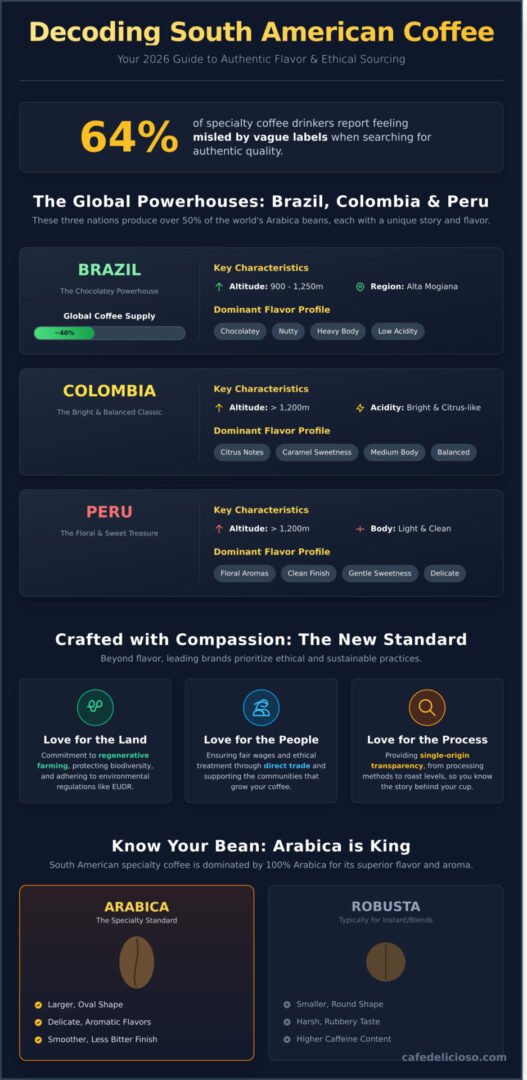
South America isn’t just a producer; it’s the heartbeat of the global coffee industry. Sitting perfectly within the “Bean Belt” between the Tropics of Cancer and Capricorn, this continent provides the ideal environment for coffee trees to thrive. According to global coffee production statistics, Brazil alone accounts for roughly 40% of the world’s total supply. Colombia and Peru follow closely, ensuring that the southern hemisphere remains the world’s primary source for your morning ritual. This massive scale doesn’t mean a sacrifice in quality. Most premium south american coffee brands focus on a profile that defines the classic “cup of joy”: a perfect balance of low acidity, natural sweetness, and comforting nutty or chocolatey undertones.
As we move through 2026, the industry is seeing a massive shift toward single-origin transparency. Coffee lovers are no longer settling for mysterious blends. They want to know the story behind the bean. This movement emphasizes ethical stewardship and “Love for the People” who harvest the crops. Regenerative farming practices and strict environmental protections, like the 2023 EU Deforestation Regulation (EUDR), are now central to how the best brands operate. It’s about more smiles and less settling for anything that compromises the land or the farmers’ well-being. Authentic brands now provide detailed sourcing data to prove their commitment to “Love for the Land.”
The Heritage of the Highlands
Coffee first touched South American soil in 1727 when it was introduced to Brazil. Since then, it has become a cultural cornerstone and a source of immense pride. The magic happens in the highlands. At altitudes exceeding 1,200 meters, the thin air and mineral-rich volcanic soil force coffee cherries to grow slower. This slow maturation allows complex sugars to develop within the bean, resulting in a deeper, more sophisticated flavor. This is the essence of “Terroir.” A bean from the Alta Mogiana region in Brazil, famous for its creamy body, tastes nothing like a bright, citrusy bean from the high-altitude Cajamarca region of Peru.
Arabica vs. Robusta in the Southern Hemisphere
South America is the undisputed king of 100% Arabica production. While Robusta beans are hardier and easier to grow at lower elevations, they often carry a burnt, rubbery taste. In contrast, Arabica beans are prized for their delicate flavors and aromatic qualities. You can see the difference in the beans themselves. Arabica beans are larger and more oval with a curved crease, while Robusta is smaller and rounder. Many south american coffee brands choose Arabica because it offers a smoother finish and a truly premium experience. Arabica coffee is the gold standard for specialty South American brands.
- Brazil: Known for chocolatey, nutty profiles and heavy body.
- Colombia: Famous for medium body and bright, citrus-like acidity.
- Peru: Recognized for floral aromas and a clean, sweet finish.
The diverse microclimates found across the Andes mountains and the Brazilian highlands create flavor profiles that are simply incomparable. Whether it’s the mist-covered peaks of Colombia or the sun-drenched plateaus of Brazil, each region offers a unique sensory journey. When you choose a brand that values “Love for the Process,” you’re tasting centuries of tradition and a commitment to quality that starts deep in the volcanic soil. It’s about crafting an experience that brings you back to your happy place with every sip.
Decoding the Big Three: Brazil, Colombia, and Peru
Three nations dominate the landscape when you explore south american coffee brands, each offering a distinct sensory journey for your morning ritual. Understanding these differences helps you find that perfect cup of joy without the guesswork. Brazil, Colombia, and Peru represent the backbone of the continent’s coffee heritage, producing over 50% of the world’s Arabica beans. While they share a border, their soil chemistry, altitudes, and processing traditions create vastly different experiences. One country might offer a heavy, chocolatey foundation, while another provides a bright, tea-like clarity. Choosing between them isn’t about finding the best; it’s about finding the one that makes you smile before your first sip.
Brazil and the Alta Mogiana Advantage
Brazil remains the world’s heavyweight champion, producing roughly 40% of the global coffee supply. The Alta Mogiana region is the crown jewel here, with altitudes ranging from 900 to 1,250 meters. Its iron-rich soil creates a nutty, low-acidity profile that serves as the perfect foundation for a deliciously strong brew. Most farmers use the “Natural Process,” drying the fruit directly on the bean for 20 to 30 days. This method enhances the body and sweetness, making it an incomparable choice for those who love a creamy, chocolate-forward finish. You can taste the difference in quality when these beans are sourced from dedicated cooperatives like Cocapec.
The Colombian Supremo Standard
The reputation of Colombia is built on the “Supremo” designation, which refers to a specific bean size rather than just flavor. These beans pass through a screen size of 17 or 18, ensuring they are the largest and most developed from the harvest. Grown in the volcanic soil of the Andes, Colombian coffee is famous for its bright acidity and caramel sweetness. Producers here favor the “Washed Process,” where the fruit is removed before drying. This results in a cleaner, more tea-like mouthfeel. With over 500,000 smallholder families meticulously hand-picking cherries, the consistency and balance of these beans remain a global benchmark for excellence.
Peruvian Organic Excellence
Conscientious drinkers often look to Peru, the world leader in organic coffee exports with over 170,000 hectares of certified land. In regions like Villa Rica and Chanchamayo, coffee grows at staggering altitudes exceeding 1,800 meters. These extreme heights slow the maturation of the cherry, allowing complex sugars and floral notes to develop. While high-altitude farming increases production costs by nearly 30%, the resulting profile of citrus and stone fruit justifies the investment. Peru’s commitment to fair trade and regenerative farming means your purchase supports both the land and the people, ensuring every cup is crafted with compassion.
Selecting the right south american coffee brands involves balancing these three distinct profiles against your personal taste. If you prefer a bold, low-acid experience, the sun-dried naturals of Brazil are your happy place. Those seeking a crisp, classic morning cup will find it in the volcanic highlands of Colombia. Meanwhile, Peru offers a sophisticated, ethical alternative for fans of lighter, floral notes. The diversity of this region ensures that no matter your preference, there is a premium bean waiting to transform your daily coffee ritual into something truly exceptional.
Ethical Sourcing: Regenerative Farming and the “Compassion” Factor
You shouldn’t have to choose between a delicious morning ritual and a clean conscience. A 2023 consumer study revealed that 64% of coffee drinkers worry their daily habit contributes to rainforest destruction or unfair labor. These fears aren’t baseless; the coffee industry has historically struggled with transparency. However, the tide is turning. Leading south american coffee brands are moving beyond the basic requirements of “Fair Trade” to embrace Direct Trade and regenerative practices. This shift ensures your cup of joy doesn’t come at the cost of someone else’s well-being or the planet’s future.
The global standard is about to get much stricter. The European Union Deforestation Regulation (EUDR) officially takes effect on December 30, 2025. This law requires any company selling coffee in the EU to prove their beans weren’t grown on land deforested after December 31, 2020. To comply, farmers must provide precise geolocation coordinates for every harvest. This massive push for traceability is forcing a level of accountability that will benefit consumers worldwide, ensuring that premium south american coffee brands prioritize forest preservation over quick profits.
What is Regenerative Coffee Farming?
Regenerative farming goes a step further than “Organic” by actively healing the environment. Instead of just avoiding chemicals, farmers use cover crops and composting to rebuild topsoil that has been depleted by decades of monocropping. Shade-grown techniques are a vital part of this “Love for the Land.” By keeping native trees intact, farmers provide a sanctuary for over 150 species of migratory birds while naturally sequestering carbon. Regenerative farming creates a resilient ecosystem that improves bean quality over time.
Choosing pesticide-free beans isn’t just an environmental win; it’s a health win for you. When plants grow in nutrient-dense, chemical-free soil, they develop more complex flavor profiles and higher antioxidant levels. You’ll taste the difference in the clarity of the brew. There’s a certain peace of mind that comes from knowing your coffee isn’t carrying synthetic residues into your system. We believe in “More Smiles. Less Settling.” and that starts with the purity of the soil.
Crafted with Compassion: The Human Element
The “Love for the People” triad is the backbone of exceptional coffee. In the Alta Mogiana region of Brazil, cooperatives like Cocapec have been supporting small-holder farmers since 1985. Cocapec provides technical assistance and market access to more than 2,500 members, ensuring that even the smallest family farm can thrive. When farmers are paid fairly and treated with dignity, they invest more care into every harvest. Ethical labor practices aren’t just a moral choice; they’re the secret ingredient that leads to a more consistent and high-quality product.
Compassion translates directly into the quality of your morning brew. A farmer who isn’t struggling to survive has the time to hand-pick only the ripest cherries, leading to the “exceptional” and “authentic” flavors we crave. This dedication to the human element creates a cycle of excellence. By supporting brands that prioritize ethical production, you’re participating in a system that values the hands that pick the beans as much as the person who drinks them. It’s about quality without compromise, ensuring every sip is as rewarding for the grower as it is for you.
The Flavor Profile Selection Guide: How to Choose Your Perfect Bean
Finding your “cup of joy” shouldn’t feel like a chore. It’s about finding that happy place in a mug by matching your palate to the right origin. Most south american coffee brands offer a wide spectrum of flavors, but the secret lies in the details printed on the bag. When you look at a label, ignore the marketing fluff and focus on the processing method and altitude. Natural processing, which accounts for nearly 90% of traditional Brazilian exports, leaves the coffee cherry intact during drying. This process infuses the bean with the heavy body and creamy sweetness you expect from a premium morning brew. Washed coffees, typical in about 75% of Colombian harvests, offer a much cleaner and more acidic finish.
Tasting notes aren’t added ingredients. They’re descriptors of the bean’s inherent chemistry. If a bag mentions “red apple” or “caramel,” it means the bean’s acidity and sugar content mimic those flavors. For more technical brewing questions, check our comprehensive coffee FAQ to help you master the nuances of extraction. Understanding these basics ensures you get more smiles and less settling with every purchase.
Matching Roasts to Regions
Brazilian beans from the Alta Mogiana region, specifically those sourced through the Cocapec cooperative, reach their peak in a Medium-Dark roast. This specific heat level triggers the caramelization of natural sugars, resulting in a rich, chocolatey profile that feels like a warm hug. Colombian beans are different. They often perform best at a Light-Medium roast. This preserves the bright, citric acidity that 100% Arabica drinkers crave. Roasting too dark can mask the unique floral qualities of high-altitude crops. Use the guide below to find your match.
| Region | Body | Acidity | Best Roast Level |
|---|---|---|---|
| Brazil (Alta Mogiana) | Full/Creamy | Low | Medium-Dark |
| Colombia | Medium | High/Bright | Light-Medium |
| Peru | Light/Tea-like | Medium | Light |
Brewing Methods for South American Beans
The French Press is the ultimate tool for a bold Brazilian Arabica. Because it uses a metal mesh filter, it allows the bean’s natural oils to stay in the cup. This creates the heavy mouthfeel that defines the best south american coffee brands. If you prefer the delicate, floral notes of a Peruvian bean, reach for a Hario V60 or Chemex. These paper-filter methods trap sediment and oils, resulting in a cup with 25% more clarity than an immersion brew. For those who love intensity, South American blends are the global industry standard for espresso. They provide the stable 2:1 extraction ratio needed for a thick, golden crema and a balanced shot that doesn’t overwhelm the senses.
We believe in coffee crafted with compassion. Every bean tells a story of the land and the people who nurtured it. By choosing the right brewing method, you honor that process and ensure the highest quality experience in your own kitchen. It’s time to stop settling for average coffee and start enjoying a premium ritual that fuels your day.
Ready to elevate your morning? Shop our premium Brazilian coffee and taste the difference that authentic, responsibly sourced beans can make in your daily routine.
Café Delicioso: Authentic Brazilian Joy in Every Bag
Café Delicioso occupies a vital space among south american coffee brands by acting as the definitive bridge between affordable everyday brews and premium specialty experiences. We believe you shouldn’t have to pay $30 for a bag of beans just to enjoy a clean, ethical cup. Our mission is to provide an accessible entry point into the world of high-end Brazilian coffee without the pretension or the inflated price tag. We’ve spent years refining a supply chain that rewards farmers fairly while keeping our prices competitive for the average household.
Our “More Smiles. Less Settling.” philosophy is the heartbeat of our operations. It’s a promise that we never compromise on quality, which is why every bag contains 100% pure Arabica beans. While other brands might sneak in lower-grade Robusta to pad their margins, we refuse to settle. This dedication ensures a smoother, more complex flavor profile that lacks the harsh, rubbery notes often found in mass-market blends. It’s about giving you a reason to look forward to your alarm clock every single morning.
The future of South American coffee relies on the health of the earth. We’ve adopted a pesticide-free, regenerative approach because it’s the only way to ensure coffee thrives for another century. By focusing on soil health and biodiversity, we help capture carbon and protect local water sources. This isn’t just a marketing buzzword; it’s a survival strategy for the land we love. When you choose our beans, you’re supporting a farming model that gives back more than it takes from the Brazilian ecosystem.
Love for the Land, Process, and People
Our sourcing process is rooted in the Alta Mogiana region, a territory famous for its rich volcanic soil and altitudes ranging from 900 to 1,200 meters. We partner exclusively with the Cocapec cooperative, which represents over 500 dedicated farming families. This direct relationship allows us to maintain our “Deliciously Strong” flavor profile. We achieve this by utilizing a precise medium-dark roast that highlights natural notes of chocolate and roasted nuts without the bitter char of over-roasting. Being “Authentically Brazilian” means we honor the heritage of these families, ensuring their pride is felt in every sip.
Join the Ritual: Why Our Customers Choose Delicioso
Your morning ritual is sacred. It’s that quiet window of time before the day’s demands take over, and we want to be the best part of it. Our customers often describe their first cup as a “Cup of Joy” because of the emotional lift it provides. We’ve made it simple to bring this experience home by making our full range available on Amazon and through select retail partners across the country. You don’t need to visit a boutique roastery to get world-class beans; you just need to open your pantry.
We invite you to stop settling for mediocre coffee that leaves a bitter taste in your mouth and a weight on your conscience. It’s time to upgrade your morning with a brand that cares as much about the person growing the beans as the person drinking them. Experience the difference of premium, ethically sourced Brazilian coffee today and see why we are a favorite among modern south american coffee brands.
Elevate Your Daily Ritual with South America’s Finest Beans
Finding the right bag among the top south american coffee brands means looking beyond the label to the soil and the soul behind the harvest. You’ve seen how altitudes above 1,100 meters in the Andes and the sun-drenched plains of Brazil create the flavor spectrum defining the 2026 market. Whether you prefer the bright acidity of Peruvian beans or the deep, nutty profiles of Brazilian harvests, the choice comes down to quality and conscience. Experts from the Alta Mogiana region emphasize that 100% pure Arabica remains the gold standard for a premium experience.
Café Delicioso brings this vision to life by sourcing exclusively from the Cocapec cooperative. Our beans are grown using 100% regenerative and pesticide-free farming methods that protect the land for future generations. We believe your morning cup should be crafted with compassion. This means every bag supports ethical labor practices that exceed 2026 global standards. More smiles. Less settling. It’s time to start enjoying a cup of joy that respects the people and the land.
Taste the Bold Difference. Shop Café Delicioso Brazilian Coffee
Your perfect morning is just one brew away; go ahead and pour yourself some happiness.
Frequently Asked Questions
Which South American country produces the best coffee?
Brazil is the world’s leading producer, growing 38% of the global coffee supply as of 2023. It’s a powerhouse of flavor. While “best” depends on your palate, Brazil’s diverse microclimates provide an incomparable variety of options. We source our beans here for that bold, smooth profile. It’s your perfect cup of joy.
Is Brazilian coffee stronger than Colombian coffee?
Brazilian coffee generally tastes stronger and bolder due to lower acidity and natural processing methods. Colombian beans often feature 15% higher acidity levels. This creates a brighter, fruitier profile rather than a punchy, heavy body. If you want a robust start, Brazilian beans from the Alta Mogiana region deliver that incomparable strength. It’s coffee without compromise.
What makes South American coffee brands “ethical” in 2026?
Ethical south american coffee brands in 2026 must comply with the EU Deforestation Regulation (EUDR) to prove zero forest loss since December 2020. They also ensure 100% price transparency. This means paying farmers at least 20% above the C-market price. We focus on Love for the People. By partnering with the Cocapec cooperative, we guarantee fair wages and safe working conditions for every laborer.
Why should I look for “pesticide-free” coffee beans?
Pesticide-free beans protect your health by eliminating exposure to over 40 common agricultural chemicals. Choosing these beans also preserves local biodiversity. In fact, 70% of beneficial insects survive in chemical-free environments compared to treated plantations. We believe in Love for the Land. We source beans that keep the soil healthy and your coffee pure. It’s a happy place for everyone.
What are the typical tasting notes for a Brazilian Alta Mogiana coffee?
Brazilian Alta Mogiana coffee is famous for its rich notes of dark chocolate, roasted nuts, and caramel sweetness. This specific region sits at altitudes between 900 and 1,200 meters. This elevation creates a heavy body and low acidity. It’s an exceptional choice for a smooth, velvety finish. You won’t find any bitter aftertaste here.
Can I use South American coffee beans for espresso?
South American beans are the gold standard for espresso because their natural oils produce a thick, golden crema. Brazilian beans specifically make up roughly 80% of traditional espresso blends worldwide. They offer incredible stability and sweetness. Using these beans ensures your latte has a bold, reliable flavor. It cuts through milk perfectly every time.
How does regenerative farming affect the price of my coffee?
Regenerative farming can increase the retail price by $1.50 to $3.00 per bag to cover the costs of restoring soil health. While the initial cost is higher, it reduces long-term expenses. It decreases the need for synthetic fertilizers by 45% within three years. Investing in these practices supports a sustainable future. You get premium quality while protecting the planet.
What is the difference between single-origin and South American blends?
A single-origin coffee comes from one specific farm, while south american coffee brands use blends to combine beans for a balanced flavor. Single-origins highlight the unique terroir of a 10-acre plot. Blends offer a consistent taste every time you brew. We craft our blends with compassion. It’s about More Smiles. Less Settling. for your morning ritual.