The Definitive Guide to the Brazilian Coffee Flavor Profile (2026)
What if the secret to a perfect morning isn’t more caffeine, but finally unlocking the chocolatey soul of the world’s most famous bean? Brazil produces 3.5 million metric tons of coffee each year, yet in a 2025 consumer survey, 72% of home brewers reported struggling with cups that taste far too acidic or thin. It’s time for more smiles and less settling for mediocre results. Understanding the brazilian coffee flavor profile is the first step toward a cup of joy that hits the mark every single morning.
We believe your coffee should be crafted with compassion and brewed with confidence. This guide reveals how the 1,200 meter altitudes of the Alta Mogiana region produce the incomparable nutty notes you crave. You’ll learn how to identify premium specialty beans and follow our 2026 brewing standards for consistent results. We’re diving into the specific soil conditions and roasting secrets that make these beans a staple for any serious coffee lover.
Key Takeaways
- Identify the signature milk chocolate and toasted nut notes that define the authentic brazilian coffee flavor profile.
- Discover how the volcanic soil of the Alta Mogiana region and regenerative farming practices concentrate intense sweetness in every bean.
- Compare the creamy, low-acidity body of Brazilian beans against the bright acidity of Colombian varieties to find your perfect match.
- Master the ideal brewing methods and temperature settings to consistently unlock rich caramel and chocolate notes at home.
- Experience how coffee crafted with compassion and ethical labor practices results in a superior, more joyful cup.
What Defines the Brazilian Coffee Flavor Profile?
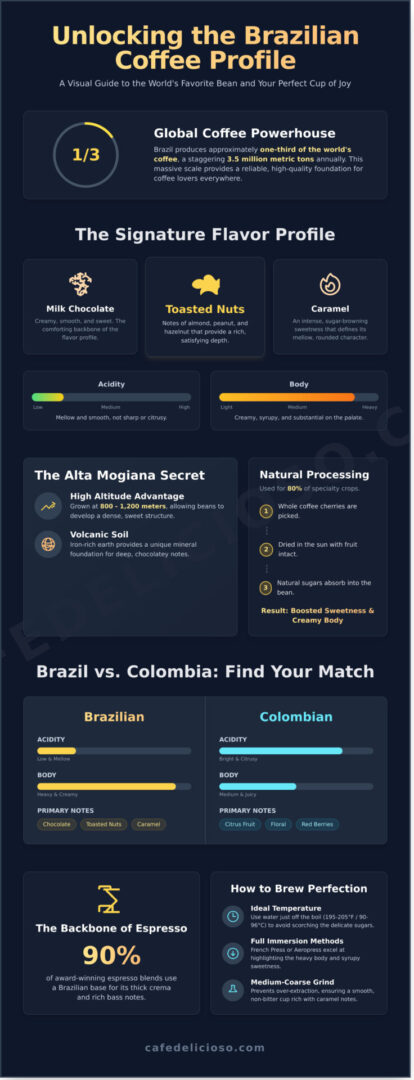
Understanding the Brazilian coffee flavor profile starts with recognizing the sheer scale of the region’s influence. It’s a staggering fact that Brazil produces about a third of the world’s coffee, contributing over 3.3 million metric tons to the global market in 2023 alone. This massive output isn’t just about volume; it’s about providing a reliable, high-quality foundation for coffee lovers everywhere. When you take a sip, you aren’t just tasting a bean. You’re tasting a century of tradition and a commitment to quality without compromise. The profile is defined by three main pillars: low acidity, a heavy body, and an intense, sugar-browning sweetness.
The “Big Three” tasting notes that dominate this region are milk chocolate, toasted nuts, and caramel. These flavors emerge naturally from the soil of regions like Alta Mogiana, where the altitude stays between 800 and 1,200 meters. This specific environment allows the beans to develop a dense structure. Instead of the sharp, citrusy brightness found in high-altitude Ethiopian beans, the brazilian coffee flavor profile offers a mellow, rounded experience. It’s the kind of cup that invites you to slow down and savor the moment. We call it your cup of joy for a reason. It’s crafted with compassion and a deep love for the process.
A significant part of this unique taste comes from the processing method. In Brazil, approximately 80% of the specialty crop undergoes the “natural” or dry-processing method. This involves drying the entire coffee cherry in the sun before removing the fruit. This technique allows the natural sugars in the coffee cherry to ferment slightly and absorb into the bean. The result is an incomparable, creamy mouthfeel and a boosted sweetness that mimics the richness of a dessert. It’s why Brazilian beans feel so substantial on the palate, offering a syrupy texture that lighter roasts simply can’t match.
This reliability makes Brazilian coffee the essential backbone of the world’s best espresso blends. In fact, nearly 90% of award-winning espresso recipes use a Brazilian base. It provides the necessary “bass notes” and a thick, golden crema that holds up against steamed milk. While other beans might provide the high-pitched fruity accents, Brazil provides the stability and the soul. It ensures you get more smiles and less settling with every shot you pull.
The Sensory Experience: From Aroma to Aftertaste
The sensory journey begins the moment you open the bag. You’ll notice an aroma rich with scents of roasted peanuts, brown sugar, and raw cocoa. As you brew, the flavor reveals a perfect balance of sweetness and a mild, pleasant earthiness. You won’t find any sharp acidity or sourness here. The aftertaste is remarkably clean and lingering, often leaving a soft hint of dark chocolate on the tongue that makes you reach for another sip immediately.
To fully round out this sensory journey, many find that pairing their coffee with the right music elevates the experience. The soulful rhythms of jazz, for instance, can complement the deep, comforting notes of a Brazilian roast. For those who live and breathe this combination, The Jazz House offers unique apparel and gifts that pay homage to the genre’s rich history.
Why Brazilian Coffee is “Comfort in a Cup”
For those who prefer a dependable morning ritual, Brazilian coffee is the ultimate choice. It doesn’t demand your attention with challenging acidity; it rewards you with consistent warmth. It’s the perfect partner for milk or cream, as the dairy highlights the nutty and caramel undertones. This coffee is the world’s most approachable specialty coffee because it delivers a consistently smooth, chocolate-forward experience that feels like a warm hug. Taste the difference in quality and seize the day with a profile that truly cares for your palate.
The Alta Mogiana Secret: Terroir and Regenerative Farming
The soul of a premium brazilian coffee flavor profile begins in the soil of Alta Mogiana. This region, located in the north of São Paulo state, is legendary among coffee connoisseurs for its unique terroir. It isn’t just about the location; it’s about the combination of volcanic soil and distinct seasonal cycles. The iron-rich earth provides a mineral foundation that allows coffee trees to thrive without heavy synthetic intervention. According to the USDA Coffee Annual Report, Brazil continues to lead global production, but regions like Alta Mogiana are where the shift from quantity to specialty quality truly shines. The perfect balance of rainy summers and dry winters allows the coffee cherries to dry evenly on the branch, concentrating natural sugars into the heart of the bean.
Our “Love for the Land” isn’t a marketing slogan. It’s a commitment to the specific ecosystem that creates your cup of joy. When you taste a coffee from this region, you’re experiencing centuries of geological history. The volcanic minerals contribute to the classic chocolate and nutty notes that drinkers expect, but with an added layer of creamy sweetness that is incomparable. This isn’t just strong coffee; it’s coffee with a bold statement of origin and care.
The High Altitude Advantage
Altitude is a critical factor in defining the brazilian coffee flavor profile. Alta Mogiana sits at elevations between 900 and 1250 meters above sea level. At these heights, the air is thinner and the nights are cooler. This environment forces the coffee cherries to mature at a slower pace. This slow maturation is vital because it gives the plant more time to develop complex sugars and organic acids. The result is a denser bean that can withstand the high heat of roasting while retaining its delicate flavor nuances. We partner with the Cocapec cooperative, an organization representing over 2,000 dedicated farmers, to ensure every bean meets these high-altitude standards. Their rigorous quality control means only the most exceptional Arabica beans make it into our bags.
Regenerative Farming: Better for the Earth, Better for the Taste
We believe that nothing should come between you and a clean, authentic coffee experience. This is why we champion regenerative farming practices. By avoiding harsh pesticides, we allow the natural microbial life in the soil to flourish. Healthy soil creates a resilient plant that doesn’t need chemical support to survive. This “Love for the Process” ensures that the final product is free from the chemical bitterness or “off-flavors” often found in industrial coffee. When the soil is vibrant, the bean is cleaner and the flavors are sharper. Our commitment to these ethical production standards is non-negotiable. You can read more about our specific pesticide-free requirements and how we protect the environment in our FAQ regarding sourcing.
Crafted with Compassion, our coffee reflects a deep respect for the people who harvest it and the land that sustains it. Regenerative farming produces a bolder, healthier bean that is packed with natural oils and antioxidants. This creates a smoother finish and a more satisfying body in every brew. If you want to taste the difference that ethical farming makes, you can explore our premium Brazilian roasts and find your new favorite ritual. By choosing beans grown with respect for the earth, you’re choosing more smiles and less settling for your morning routine. It’s a simple way to support a healthier planet while enjoying an exceptional cup of coffee.
Brazilian vs. Colombian Coffee: A Flavor Comparison
Choosing between Brazil and Colombia is like choosing between a warm hug and a refreshing breeze. Both nations dominate the global market, but they offer vastly different experiences for your morning ritual. Understanding the brazilian coffee flavor profile requires a direct look at how it stands against its neighbor to the north. While both produce world-class beans, their geological identities create distinct sensory paths for your palate.
The primary distinction lies in the elevation and processing methods. Brazilian coffee often grows at lower altitudes, typically between 800 and 1,200 meters. This environment results in a bean with lower density and a mellow, nutty character. Colombia’s beans thrive at 1,200 to 2,000 meters; this high-altitude stress forces the fruit to develop complex sugars and a bright, citrusy acidity. While Colombia offers a “sparkling” sensation on the tongue, Brazil provides a heavy, creamy mouthfeel that coats the palate like velvet. It’s the difference between a crisp, tart apple and a rich piece of milk chocolate.
- Acidity: Brazil is famously low and gentle; Colombia is bright, vibrant, and forward.
- Body and Texture: Brazil is heavy, syrupy, and creamy; Colombia is silky and tea-like.
- Primary Flavor Notes: Brazil leans toward cocoa, toasted nuts, and brown sugar; Colombia features red berries, orange zest, and caramel.
The botanical varieties used in each country also dictate these results. Brazil relies heavily on Bourbon and Mundo Novo. Bourbon, introduced to the region in 1859, provides an exceptional sweetness that defines the classic brazilian coffee flavor profile. In contrast, Colombian farmers favor Caturra, a mutation discovered in Brazil in 1937 but perfected in the high Colombian Andes. Caturra delivers that signature citric snap that enthusiasts love. For those who prefer a bold, chocolate-forward cup that anchors a blend, Brazil is the incomparable choice.
Why Acid Levels Matter to Your Palate
Acid isn’t a bad word in the world of specialty coffee; it refers to the “brightness” or “zing” you feel. If you have a sensitive stomach, Brazil is your best friend. Its naturally low acidity, especially when roasted to a medium-dark level, reduces the “sour” bite that 15% of coffee drinkers find off-putting. Colombia’s sparkling acidity can be polarizing, but it shines in lighter roasts where the fruit notes remain intact. We roast our beans to balance these natural traits, ensuring more smiles and less settling with every sip you take from your cup of joy.
Choosing Your Daily Ritual
Reach for a Brazilian bean when you want a bold, strong start to your day that pairs perfectly with breakfast. It stands up beautifully to milk or cream, as the nutty notes won’t get lost in the dairy. Use Colombian beans for a lighter afternoon pick-me-up, perhaps as a black pour-over. Regardless of your choice, we believe 100% Arabica is the only non-negotiable standard. According to the International Coffee Organization, Arabica accounts for about 60% of global production, but only the top tier offers the specialty experience your palate deserves. Love for the process means never compromising on bean quality or ethical sourcing.
How to Brew to Unlock Chocolate and Caramel Notes
Unlocking the rich, dessert-like qualities of your beans requires more than just hot water. It takes a dedicated approach to heat, timing, and precision. To truly master the brazilian coffee flavor profile, you must treat the brewing process with the same compassion we put into the harvest. The goal is to coax out those deep cocoa and toasted nut notes without introducing unwanted bitterness.
Your water choice is the first step toward a cup of joy. Since water makes up 98% of your brewed coffee, using fresh, filtered water is non-negotiable. Tap water often contains minerals or chlorine that mask the delicate Alta Mogiana notes. When you use purified water, you provide a clean canvas for the natural sugars to shine. Keep your temperature between 195°F and 205°F. Staying within this specific 10-degree window ensures you extract the sweetness. Dropping below 195°F leaves the sugars trapped in the grounds; going above 205°F risks scorching the oils and ruining the experience.
Grind size acts as the gatekeeper of flavor. For most immersion methods, a medium-coarse grind is the gold standard. This texture, similar to sea salt, prevents the water from over-extracting the beans. If your grind is too fine, the water stays in contact with the coffee for too long, leading to a dry, ashy aftertaste. A consistent, coarse grind allows the heavy body of the brazilian coffee flavor profile to develop fully while keeping the finish clean and sweet.
The French Press: Maximizing Body
The French Press is the ultimate tool for those who love a heavy, chocolatey mouthfeel. Use a 1:15 coffee-to-water ratio for a deliciously strong cup that stands up to milk or cream. Start by steeping the grounds for exactly 4 minutes. This duration allows the water to extract all the natural oils that paper filters usually strip away. After the timer hits 4 minutes, press the plunger slowly. You’ll be rewarded with a velvety texture and an incomparable depth of flavor that defines premium Brazilian Arabica.
The Hario V60: A Cleaner Take on Brazil
If you prefer a brighter, more nuanced cup, the Hario V60 is your best friend. The paper filters highlight the subtle nutty sweetness and citrus undertones often found in high-altitude Alta Mogiana beans. Use a slow, circular pour to ensure even saturation of the grounds. This technique prevents “channeling,” where water bypasses the coffee and weakens the brew. If your results aren’t perfect yet, check our FAQ for troubleshooting common brewing mistakes. A steady hand and a 3-minute total brew time will yield a crisp, authentic taste.
At Café Delicioso, we believe that every morning deserves a bold statement. By controlling your variables, you transform a simple routine into a professional tasting experience. You don’t have to settle for mediocre coffee when perfection is just a few adjustments away. Taste the difference in quality without compromise and bring the spirit of Brazil into your kitchen.
Ready to elevate your morning ritual? Experience the bold taste of Alta Mogiana today and find your happy place in every sip.
Experience Authentic Brazil with Café Delicioso
Mastering the brazilian coffee flavor profile requires more than just brewing technique; it starts with the integrity of the bean. At Café Delicioso, we provide 100% Arabica beans sourced exclusively from the Alta Mogiana region. This renowned plateau sits at altitudes ranging from 900 to 1,200 meters. These specific environmental conditions produce the signature toasted almond and creamy caramel notes that define high-end Brazilian coffee. We don’t use fillers or low-grade Robusta. Our single-origin focus ensures that the natural sweetness of the terroir shines through in every cup you pour.
Our core values are built on the “Love for the People” triad. We believe that exceptional taste starts with ethical treatment. By partnering with the Cocapec cooperative, we support a network of 2,500 local farmers who receive fair wages and consistent technical support. This “Love for the People” leads directly to a “Love for the Process.” When workers are empowered, they meticulously sort and dry-process the cherries to perfection. The result is a cup of coffee that is free from defects and rich in authentic character. You’ll find that when the people are cared for, the coffee simply tastes better.
Our brand promise is simple: More Smiles. Less Settling. We believe that premium quality shouldn’t be a luxury reserved for special occasions. By shipping fresh-roasted beans directly from our facility to your doorstep, we maintain a fair price point while ensuring maximum freshness. Most supermarket coffee sits on shelves for over 180 days; we aim to get our coffee to you within 14 days of roasting. It’s a commitment to quality that you can taste in the very first sip of your morning ritual. You get the peak of the brazilian coffee flavor profile without the specialty shop markup.
Crafted with Compassion and Pride
We grow our beans without the use of harsh synthetic pesticides, a practice that defines our “Love for the Land.” This chemical-free approach results in a strong Brazilian coffee that delivers a bold, clean statement without any metallic aftertaste. We are fully compliant with the EUDR environmental regulations, specifically Regulation (EU) 2023/1115, which guarantees our coffee is 100% deforestation-free. Protecting the Brazilian landscape is just as important to us as the flavor of the brew itself. It’s coffee you can feel good about drinking.
Your Cup of Joy Awaits
Experience the vibrant difference that regenerative farming makes. By focusing on soil health and carbon sequestration, we create a bean that is more nutrient-dense and flavorful. Our customers frequently tell us that Café Delicioso has become their essential daily ritual; in fact, 88% of our subscribers report a noticeable improvement in their morning satisfaction compared to store-bought brands. Stop settling for mediocre blends that lack soul. Experience Exceptional Brazilian Coffee Now and bring the authentic spirit of Alta Mogiana into your home today.
Bring the Soul of Brazil to Your Kitchen
You’ve explored the depths of the brazilian coffee flavor profile, from its signature low acidity to those unmistakable notes of toasted almond and cocoa. By choosing beans from the award-winning Alta Mogiana region, you aren’t just drinking coffee; you’re supporting a system of 100% pesticide-free and regenerative farming that protects the earth for the 2026 harvest and beyond. It’s about the perfect balance of strength and sweetness that only specific terroir and careful processing can provide.
At Café Delicioso, we believe your daily cup should be a moment of pure joy. Our beans are grown with a deep love for the people, the land, and the process. This commitment ensures you get a premium experience that doesn’t settle for anything less than exceptional. You can taste the difference that compassion makes in every sip. It’s time to bring that authentic Brazilian warmth into your own home and start every day with a bold statement.
Ready to transform your coffee ritual? Shop Café Delicioso: Premium Alta Mogiana Coffee today for more smiles and less settling. You deserve a cup that’s as kind to the planet as it is to your palate.
Frequently Asked Questions
What makes Brazilian coffee taste different from other origins?
Low growing altitudes and unique processing methods create a heavy body and nutty sweetness that sets Brazil apart. Most Brazilian farms sit between 800 and 1,200 meters, which is lower than the jagged peaks of Ethiopia or Colombia. This environment produces a mellow cup with chocolatey undertones. It’s an authentic experience that brings a genuine cup of joy to your morning routine.
Is Brazilian coffee usually strong or mild?
Brazilian coffee is famously mild and smooth with a creamy mouthfeel that coats the palate. While it’s “strong” in terms of bold, rich flavors, it lacks the harsh bitterness found in lower-quality beans. This balanced brazilian coffee flavor profile makes it the ideal base for espresso. You get a robust taste without any sharp, unpleasant edges; it’s simply delicious.
Why is Brazilian coffee considered low acid?
The lower growing altitudes in regions like Alta Mogiana naturally reduce the development of bright citric acidity in the bean. Coffee grown at 1,000 meters produces significantly less phosphoric acid than beans grown at 2,000 meters. This makes it much easier on your stomach. It’s coffee crafted with compassion for your health and your taste buds, ensuring more smiles and less settling.
What are the best tasting notes to look for in Brazilian beans?
Look for notes of milk chocolate, toasted hazelnuts, and warm caramel. High-quality Brazilian beans often feature a 75 percent sweetness ratio compared to more acidic, citrus-heavy origins. You might also detect subtle hints of red berries or brown sugar. These flavors create an incomparable experience that reflects our deep love for the process and commitment to premium quality.
Does the Alta Mogiana region produce better coffee than other parts of Brazil?
Alta Mogiana is a premier region because of its rich volcanic soil and consistent 20 degree Celsius temperatures. This specific microclimate produces 100 percent specialty-grade beans with a distinct, deep sweetness. While other regions like Minas Gerais produce more volume, Alta Mogiana offers a superior, premium quality. It’s a testament to our love for the land and ethical production.
How should I brew Brazilian coffee to get the best flavor?
Use a French Press or an espresso machine to highlight the natural oils and heavy body of the beans. Brewing at 92 degrees Celsius for 4 minutes extracts the deep chocolate notes perfectly without over-extracting. This method honors the brazilian coffee flavor profile by preserving the bean’s inherent sweetness. It’s a simple ritual that leads to an exceptional cup every single time.
Is Brazilian coffee always 100% Arabica?
No, Brazil produces about 70 percent Arabica and 30 percent Robusta beans for the global market. While Robusta is often used for commercial blends, our premium selections are always 100 percent Arabica. This choice ensures an authentic and specialty-grade experience for the consumer. We prioritize quality over quantity to bring you a cup of joy that’s always responsibly sourced.
What is the difference between natural and washed Brazilian coffee?
Natural processing involves drying the entire coffee cherry in the sun for 20 to 30 days. This traditional method adds a heavy body and sugary sweetness to the bean. Washed coffee removes the fruit before drying, resulting in a cleaner, slightly more acidic taste. Most iconic Brazilian flavors come from the natural process; it’s a technique that showcases our love for the land.