Coffee That Gives Back to Communities: How Your Daily Brew Can Create Real Change
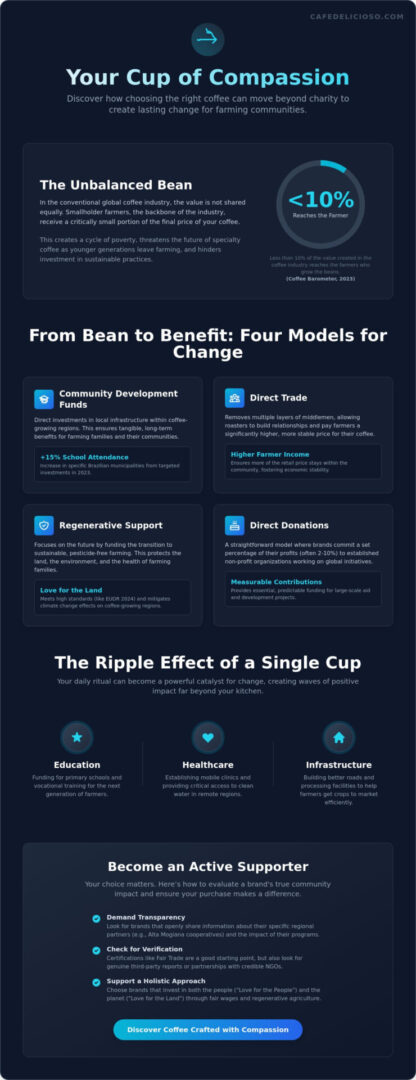
According to the 2023 Coffee Barometer, less than 10 percent of the value created in the global coffee industry actually reaches the smallholder farmers who grow the beans. You likely want your morning ritual to mean something, but finding coffee that gives back to communities often feels like sorting through a maze of confusing labels. It’s frustrating to wonder if your purchase is truly helping or if you’re just falling for another clever marketing campaign. We believe that nothing should come between you and a cup of joy crafted with compassion.
In this article, you’ll discover how choosing the right brand can fund vital infrastructure, such as the 2022 rural school projects in the Alta Mogiana region, and protect the land through regenerative farming that meets 2024 EUDR standards. We will break down the mechanics of coffee philanthropy and show you how to identify businesses that move beyond performative charity to create real change with every harvest. You’ll gain the confidence to choose a brew that supports ethical labor and environmental health without compromising on taste.
Key Takeaways
- Learn about the hidden social costs of conventional coffee and how your daily ritual can either sustain or break the cycle of poverty for small scale farmers.
- Distinguish between different philanthropic models to ensure your support reaches the people who need it most through direct infrastructure and development funds.
- Discover how choosing coffee that gives back to communities fosters long term stability in regions like Alta Mogiana by empowering cooperatives to invest in better processing methods.
- Gain practical tips for evaluating brand claims by identifying specific regional partners and checking for genuine third party verification.
- See how a commitment to regenerative farming and pesticide free Arabica beans ensures the safety of the land and the health of the farming families.
The Social Impact of Your Morning Ritual
Every morning, millions of people reach for their favorite cup of joy to start the day. It’s a comforting ritual, but the beans inside your mug often carry a hidden cost that isn’t reflected on the price tag. For many small-scale farming communities, the conventional global coffee market creates a cycle of poverty. When the Coffee C-price fluctuates wildly, as it did in 2019 when prices hit a 12-year low, producers often receive less than it costs to grow the crop. This instability makes it impossible for families to plan for the future or invest in their land.
Choosing sustainable coffee is a vital step toward breaking this cycle. When you intentionally seek out coffee that gives back to communities, your daily habit becomes a catalyst for real-world change. A single purchase can contribute to essential local improvements, such as:
- Education: Funding for primary schools and vocational training for young farmers.
- Healthcare: Establishing mobile clinics and providing clean water access in remote regions.
- Infrastructure: Building better roads and processing facilities to help farmers get their crops to market efficiently.
By prioritizing coffee that gives back to communities, you ensure that your morning energy boost provides a matching lift to the people who made it possible.
Why Giving Back is Essential for the Coffee Industry
High-quality Arabica coffee depends on the well-being of the farmers who tend the soil. When farming isn’t profitable, the younger generation often abandons their heritage for urban centers in search of a living wage. This urban migration threatens the long-term availability of specialty beans. Community investment keeps these traditions alive by making farming a viable and respected profession. Furthermore, these funds allow farmers to implement regenerative farming techniques. These practices are necessary to mitigate the effects of climate change, which has already reduced suitable coffee-growing land in regions like Brazil’s Alta Mogiana by nearly 10 percent in some areas.
Moving From Passive Consumption to Active Support
We’re witnessing a major shift toward compassionate capitalism. Consumers are no longer satisfied with being passive buyers; they want to be active participants in global equity. This requires a transition from simply looking for a caffeine fix to demanding transparency and ethical production. It’s about ensuring your coffee reflects a “Love for the People” and a “Love for the Land.” When brands prioritize these values, the coffee industry becomes a tool for social justice rather than just a commodity trade. You can see this philosophy in action by exploring our mission to support the hard-working families behind every bean. Your cup of joy can truly be a force for good.
Understanding the Different Models of Coffee Philanthropy
Choosing coffee that gives back to communities involves understanding how money moves from your kitchen to the farm. Philanthropy in the coffee industry isn’t a one size fits all approach. Many brands start with a direct donation model, committing a set percentage of profits, often between 2% and 10%, to established non profit organizations. While this provides essential funding for global initiatives, it’s only one way to create a positive impact.
Other brands focus on community development funds. These programs invest directly in local infrastructure within coffee growing regions. Instead of a general donation, the money builds primary schools, installs clean water filtration systems, or funds mobile medical clinics. In 2023, targeted investments in Brazilian growing regions helped increase local school attendance by 15% in specific rural municipalities. This model ensures the benefits are visible and permanent for the families who grow the beans.
Direct trade and regenerative support offer more systemic changes. Direct trade removes the multiple layers of middlemen, allowing roasters to build long term relationships with farmers. This ensures a higher portion of the retail price stays in the community. Regenerative support focuses on the future by funding the transition to pesticide free farming. This preserves the land for the next generation of growers while protecting the health of the current workforce.
The Difference Between Fair Trade and Direct Trade
Fair trade certifications serve as a vital safety net by setting a price floor. This protects farmers when global market prices crash below the cost of production. However, direct trade often exceeds these standards. By working directly with cooperatives like Cocapec in the Alta Mogiana region, specialty brands can pay 20% to 50% above fair trade minimums based on crop quality. At Café Delicioso, we prioritize ethical production that rewards the hard work of the growers. It’s about quality without compromise, ensuring that your cup of joy supports a sustainable lifestyle for Brazilian farmers.
Environmental Conservation as a Community Benefit
Protecting the land is a direct way of giving back to the people. When a farm adopts regenerative practices, it stops toxic chemicals from entering local groundwater. This shift is essential for community longevity. Research into sustainable and ethical alternatives shows that organic, bird friendly practices can improve soil carbon sequestration by up to 30%. This creates a healthier ecosystem for everyone. Our Love for the Land is matched by our Love for the People, as healthy soil leads to a resilient community. You can learn more about how we put these values into practice by exploring our mission for a better coffee world.
The Ripple Effect: How Community Support Transforms Farming Regions
Choosing coffee that gives back to communities changes lives far beyond the kitchen counter. In the Alta Mogiana region of Brazil, this support isn’t a vague concept; it’s the backbone of their local economy. When farmers receive a stable and predictable income, they stop worrying about daily survival and start focusing on long term growth. This financial security allows for immediate investments in modern de-pulping machines, moisture meters, and raised drying beds. These tools directly improve the specialty grade of the beans, which means the farmer earns a higher premium in the next harvest cycle. It’s a cycle of improvement that starts with your morning cup.
The impact of ethical sourcing extends to the physical health of the farming families. By moving away from harsh chemicals and prioritizing pesticide free farming, cooperatives protect the local water supply and the people who work the land. Ethical labor practices ensure that every worker is treated with dignity, provided with proper safety gear, and paid a fair wage. This creates a culture of pride and safety that radiates through the entire region. When workers feel valued and safe, the quality of the harvest improves, proving that compassion is a vital ingredient in premium coffee.
Case Study: The Cocapec Cooperative in Brazil
Founded in 1985, the Cocapec cooperative empowers more than 2,000 small producers. Collective bargaining allows these farmers to compete on a global scale, securing prices that individual growers could never reach alone. The cooperative provides essential technical assistance and education, helping members master Brazilian coffee production. This shared expertise ensures quality remains incomparable while protecting the livelihoods of thousands of families in the Alta Mogiana region.
Investing in the Next Generation of Coffee Farmers
Rural flight is a major challenge as young people leave farms for urban centers. Community support helps reverse this by funding local schools and vocational training in rural Brazil. When children see that modern farming involves technology and fair pricing models, it becomes a viable career. These investments, funded by coffee that gives back to communities, ensure the love for the land continues for decades, keeping families together and rural economies thriving.
How to Evaluate a Coffee Brand’s True Community Impact
Many brands use beautiful imagery to suggest they care, but finding coffee that gives back to communities requires looking past the packaging. True impact is measured in transparency and longevity. You want to see a brand that names its partners. If a company mentions they source from the Alta Mogiana region of Brazil and works specifically with the Cocapec cooperative, they’re providing a trail you can follow. Specificity is the enemy of greenwashing. When a brand identifies its specific farms or regions, it shows they have a direct connection to the people on the ground.
Genuine brands also release transparency reports or provide third party verification. They don’t just say their beans are premium; they show the regenerative farming practices they support. Look for details on labor standards and environmental protections. If a brand is quiet about where their money goes, the community impact is likely minimal. Choosing coffee that gives back to communities ensures your favorite ritual builds a better world for everyone involved in the process.
Analyzing the sourcing model is another vital step. Does the roaster buy from the same farms every harvest? Price volatility often drives brands to chase the cheapest beans year after year. This leaves farmers vulnerable. A brand that maintains relationships for five or ten years provides the financial stability these communities need to thrive. This consistency is the hallmark of a brand that values people over profit margins.
Red Flags of Coffee Greenwashing
Generic terms like ethically sourced or responsibly grown often mean very little without supporting data. Many companies use these phrases as marketing shields rather than commitments. If a brand focuses on vague symbols instead of naming their origin details, be cautious. Transparency should be the default, not a secret. Brands that hide their supply chain often do so because their labor or environmental practices wouldn’t pass a close inspection. Look for clear, verifiable facts instead of poetic marketing copy.
The Checklist for Conscious Coffee Shoppers
To ensure your morning cup supports real progress, use this quick checklist to verify the brand’s claims:
- Verify the origin: Look for single origin beans or blends where every component is traceable to a specific region or cooperative.
- Identify the mission: Does the brand demonstrate a clear Love for the People and Land through direct action and pesticide-free farming?
- Check for longevity: Research if the brand has long-term partnerships with its growers to ensure economic stability.
You can learn more about these standards by reading our guide on what is ethical coffee and how to sip consciously.
Experience the difference that true transparency and compassion make in every sip. Shop our responsibly sourced Brazilian coffee today.
Crafted with Compassion: The Café Delicioso Approach
At Café Delicioso, we believe your morning cup should do more than just wake you up; it should represent a commitment to a better world. Our journey begins in the Alta Mogiana region of Brazil, a place known for its deep coffee heritage and rich soil. We don’t just source beans from here; we invest in the future of the land through regenerative farming. This method focuses on restoring soil health and increasing biodiversity, ensuring the region remains fertile for generations to come. When you choose coffee that gives back to communities, you’re supporting a system that prioritizes the earth as much as the harvest.
Our decision to provide pesticide free Arabica is a core part of this mission. We do this for two vital reasons. First, it ensures that you enjoy a clean, premium cup of joy without chemical residues. Second, and more importantly, it protects the safety of the farmers. By removing toxic pesticides from the production process, we eliminate the health risks that workers often face in traditional farming. Our guiding triad is simple: Love for the People, Love for the Land, and Love for the Process. We’ve found that we can maintain affordability while ensuring our partners are treated with dignity by working directly with producers and cutting out unnecessary middleman costs. More Smiles. Less Settling.
Love for the People: Our Ethical Labor Standards
We don’t just buy coffee; we build long term relationships. Our primary partnership is with the Cocapec cooperative, which supports over 2,500 members in the Franca region. We strictly adhere to rigorous labor regulations that guarantee fair compensation and safe working conditions for every individual involved in the harvest. These ethical standards aren’t just boxes to tick; they’re the foundation of our brand. You can explore the depth of our commitment on Our Mission page. By fostering stability and respect, we help create a sustainable economic future for thousands of Brazilian families.
Love for the Land: Regenerative Practices
Protecting the environment is a non-negotiable part of being a coffee that gives back to communities. We are fully committed to EUDR compliance, which ensures that our coffee production never contributes to the deforestation of precious Brazilian forests. Our pesticide free approach allows the local ecosystem to flourish, protecting native pollinators and keeping local water sources clean. This regenerative mindset creates a natural balance that benefits the entire region. We invite you to join our favorite coffee ritual and taste the difference that compassion makes. Every bag you purchase is a step toward a more ethical and sustainable coffee industry.
Make Your Morning Ritual a Force for Good
Your daily cup of joy holds the power to transform lives across the globe. When you choose coffee that gives back to communities, you’re investing in a sustainable future for farming regions like Alta Mogiana, Brazil. It’s about recognizing that every bean represents a person’s hard work and a piece of land that deserves protection. True change comes from supporting models that prioritize transparency, fair wages, and environmental health. At Café Delicioso, we believe in more smiles and less settling. That’s why our 100 percent pure Arabica is produced using regenerative farming methods with absolutely no pesticides. We maintain strict adherence to ethical labor and environmental regulations to ensure our process is as clean as the flavor. By focusing on quality without compromise, we help you seize the day while providing essential support to the Cocapec cooperative. You can feel confident knowing your choice fosters real growth and preserves the heritage of Brazilian coffee. It’s time to enjoy a brew that tastes as good as the impact it makes.
Shop our ethically sourced Brazilian coffee and support community growth
Taste the difference that compassion makes and enjoy your journey toward a more meaningful brew.
Frequently Asked Questions
How do coffee companies give back to communities?
Coffee companies give back by investing directly in the infrastructure and social welfare of the regions where they source their beans. This often includes funding local schools or improving medical clinics in rural areas like the Alta Mogiana region of Brazil. By paying premiums above market rates, brands ensure that coffee that gives back to communities translates into higher wages for the 25 million people globally who rely on coffee production for their livelihoods.
What is the difference between fair trade and direct trade coffee?
Fair trade is a certification system that guarantees a minimum price floor for farmers to protect them against market volatility. Direct trade is a personal partnership where roasters buy beans directly from producers, often paying 25 percent to 50 percent more than fair trade minimums. This direct approach fosters transparency and ensures that farmers receive the maximum profit without middleman fees, creating a stronger bond between the grower and your cup.
Does buying ethical coffee really help farmers in Brazil?
Buying ethical coffee provides Brazilian farmers with the capital needed to comply with strict environmental regulations like the EU Deforestation Regulation. In regions like Alta Mogiana, these purchases support cooperatives like Cocapec that offer technical training to smallholders. Since Brazil accounts for nearly 40 percent of global coffee production, your ethical choices here have a massive impact on the economic stability and professional growth of thousands of farming families.
How can I tell if a coffee brand is actually giving back or just marketing?
You can identify authentic brands by looking for specific details about their sourcing partners and annual impact reports. Genuine companies will name the specific cooperatives they work with rather than using vague slogans. Check for third party certifications or detailed descriptions of their regenerative farming practices to ensure your coffee that gives back to communities is making a measurable difference. Transparency is the hallmark of a brand that truly leads with compassion.
What is regenerative farming and how does it help local communities?
Regenerative farming is a holistic land management practice that restores soil health and increases biodiversity through techniques like cover cropping and composting. It helps local communities by preserving the land for future generations and reducing the dependency on expensive chemical fertilizers. These practices can sequester up to 3 tons of carbon per hectare each year, creating a healthier environment and a more sustainable business model for the families living on the farms.
Why is single origin coffee better for community transparency?
Single origin coffee is better for transparency because it traces the beans back to a single geographic location or even a specific farm. When you know your coffee comes from a specific region in Brazil, you can verify the exact labor conditions and environmental standards of that area. This clarity prevents the blending of beans from unknown sources where unethical practices might be hidden, ensuring every bean in your bag is sourced responsibly.
How much of my coffee purchase goes toward community projects?
The amount varies by brand, but many ethical roasters contribute a set premium of approximately 0.20 USD per pound specifically for community development projects. These funds are managed by local cooperatives to build vital infrastructure like clean water systems or processing mills. While individual brand contributions differ, choosing specialty coffee ensures a larger portion of the retail price stays with the producer compared to mass market options found in grocery stores.
Are all organic coffee brands also ethical in their labor practices?
No, an organic label only certifies that the coffee was grown without synthetic pesticides or fertilizers. It doesn’t guarantee fair wages or safe working conditions for the laborers on the farm. To ensure a brand is truly ethical, you must look for additional commitments that specifically address labor rights and social responsibility. A truly compassionate brand balances love for the land with a deep respect and fair treatment for the people who harvest the crop.