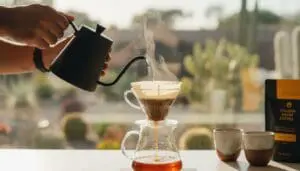
The Ultimate Brazilian Coffee Brewing Guide: Master the Art of the Perfect Cup
A bitter cup of coffee is not a requirement; it is a mistake. You deserve a morning ritual that brings comfort rather than a burnt aftertaste. Many coffee lovers struggle with inconsistent results and confusion over grind sizes, leaving them with a brew that hides the true potential of the bean. You want that signature nutty sweetness that defines high quality Brazilian Arabica, yet achieving it at home often feels like a guessing game. It is time to stop settling for mediocrity in your mug.
Our brazilian coffee brewing guide changes that by teaching you how to treat these low acid beans with the respect they deserve. You will learn to master both traditional and modern techniques tailored to the specific density of the record breaking 2026 harvest. We will walk you through the precise extraction times and water temperatures needed to reveal deep chocolate notes. By the end of this guide, you will have the knowledge to transform your kitchen into a cafe and create a perfect cup every single day. This is your path to a more mindful and delicious morning.
Key Takeaways
- Discover the unique profile of Alta Mogiana Arabica beans and why their low acidity creates a smooth, chocolatey foundation for your cup.
- Master the cultural technique of the traditional Cafezinho to share a true taste of Brazilian hospitality with your guests.
- Follow our comprehensive brazilian coffee brewing guide to optimize modern tools like the French press or pour over for these specific beans.
- Identify and correct common brewing errors to ensure your coffee is never sour or unpleasantly astringent again.
- Learn how ethical sourcing and artisanal roasting processes directly impact the flavor and quality of your morning ritual.
Understanding the Unique Profile of Brazilian Coffee Beans
Brazilian coffee is a masterpiece of nature and human care. To truly master a brazilian coffee brewing guide, you must first understand the soul of the bean. We source our 100 percent Arabica beans from the prestigious Alta Mogiana region. This plateau is famous for producing coffee with a deep, heavy body and remarkably low acidity. Unlike many other regions that prioritize volume, the farmers in this region use regenerative farming practices to nurture the soil. This dedication allows the plants to develop complex natural sugars that translate into a sweet, lingering finish in your cup. If you want to explore the deep roots of this industry, you can read our complete guide to Brazilian coffee for more context on the world’s most beloved bean.
Terroir and Taste: The Alta Mogiana Influence
The Alta Mogiana region sits at an ideal altitude with a stable climate that coffee trees love. This environment produces the classic flavor notes of rich chocolate, toasted nuts, and smooth caramel. Because the region lacks the sharp volcanic soil found in Central America or Africa, the coffee is naturally less tart and much smoother on the palate. This makes it a perfect choice for those who find high-acid drinks difficult to digest. The history of coffee production in Brazil shows how these specific plateaus became the gold standard for balance and consistency. We take pride in this heritage. We care for the land, the people, and the process.
Why Brazilian Beans Require a Unique Brewing Approach
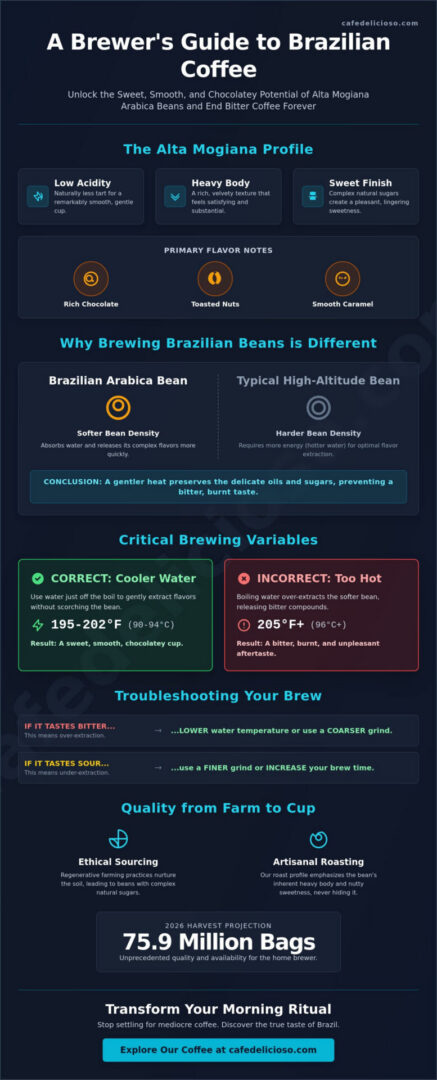
Brazilian beans have a distinct physical density that sets them apart. This density directly affects how they interact with water. They are often softer than high-altitude African varieties, which means they absorb water and release their flavors more quickly. If your water is too hot, you risk over-extracting the coffee and creating a bitter, burnt taste that masks the natural sweetness. While a bright Kenyan coffee might need near-boiling water to sparkle, a Brazilian bean thrives with slightly cooler temperatures. This gentler heat preserves the delicate oils and sugars that define the region. Using a specific brazilian coffee brewing guide helps you avoid the common pitfalls of bitterness and inconsistency.
With the 2026 harvest reaching record levels of up to 75.9 million bags, the quality and availability of these beans have never been better for the home brewer. In Brazil, traditional roasting often goes slightly deeper than standard Western specialty roasts. This isn’t to hide flaws; it’s to emphasize the heavy body and nutty sweetness. We roast our beans to highlight their natural integrity so that you get a reliable, cafe-quality cup every single morning. We believe in strength without bitterness and quality without compromise. By respecting the unique needs of these beans, you create a morning ritual that is both high-performance and high-integrity.
How to Brew a Traditional Brazilian Cafezinho
In Brazil, coffee is the language of welcome. The Cafezinho, or “little coffee,” is a concentrated, steaming cup offered to every guest as a symbol of genuine hospitality. It is not an espresso, which relies on high pressure, nor is it a diluted Americano. Instead, it is a heavy, sweet, and soul-warming brew that captures the heart of the nation. To truly follow a traditional brazilian coffee brewing guide, you must understand that this method is about connection. It is about slowing down to share a moment of joy. Because Brazilian coffee characteristics include a naturally low acidity and a syrupy body, this intense brewing style highlights the bean’s inherent chocolate and nutty notes without the sharp bite found in other origins.
The Essential Equipment: The Cloth Filter or Pano
The secret to an authentic Cafezinho lies in the “Pano,” a traditional cloth filter held by a simple wire stand. While paper filters can strip away the aromatic oils that give coffee its character, the fabric Pano allows these essential elements to pass through into your cup. This creates a texture that is rich, velvety, and deeply satisfying. Before you use a new cloth filter for the first time, you must cure it. Boil the filter in a pot of water with used coffee grounds for ten minutes to remove the “new” fabric taste and season the fibers. After every use, rinse the Pano thoroughly with hot water. Never use soap, as the fabric will absorb the scent and ruin your next brew. Store your filter in a clean container of water in the refrigerator to keep the fibers fresh and prevent any mold from developing.
Step by Step Instructions for Authentic Cafezinho
Creating this traditional brew requires precision and patience. Follow these steps to bring the taste of Brazil into your home:
- Measure your ingredients: Use 10 grams of very fine coffee grounds for every 100ml of fresh, filtered water.
- Sweeten the water: Add your desired amount of sugar directly into the water while heating it in a small pot. This allows the sugar to dissolve completely and integrate with the coffee’s oils during extraction.
- Monitor the temperature: Watch the pot closely. Remove the water from the heat just before it reaches a rolling boil. Water that is too hot will scald the delicate grounds and create bitterness.
- The slow pour: Pour the sweetened water slowly and steadily over the grounds in the cloth filter. Let the coffee drip naturally into a small carafe or directly into demitasse cups.
The result is a drink that is bold in flavor yet gentle on the spirit. To achieve this perfect balance, always start with high quality grounds that have been roasted with care. You can find the ideal freshly roasted Brazilian coffee in our shop to ensure your Cafezinho is always vibrant and aromatic. This method is a celebration of heritage. It is a ritual that honors the environment, the farmer, and the final consumer. By mastering this brazilian coffee brewing guide, you aren’t just making a drink; you are crafting an experience of pure happiness.
Optimising Modern Brewing Methods for Brazilian Coffee
Brazilian beans are remarkably versatile. They don’t belong solely in a traditional pano. While the Cafezinho is beautiful, your French press or V60 can unlock layers of flavor you haven’t tasted yet. This brazilian coffee brewing guide helps you bridge the gap between tradition and modern convenience. With the 2026 harvest forecast reaching up to 75.9 million bags, there has never been a better time to master these techniques at home. Every roast level demands a different approach. A dark roast thrives with cooler water; a medium roast needs a bit more heat to reveal its caramel sweetness. We believe in the power of the ritual. We care for your morning, your mood, and your mug.
Immersion methods often outperform percolation when you want to highlight nutty flavor profiles. Because the coffee grounds stay in contact with the water for the entire brew time, the result is a fuller, rounder cup. Percolation methods can sometimes move too quickly through the soft density of Brazilian Arabica. Don’t be afraid to experiment with your ratios to find what brings you joy. While we provide standard starting points, the perfect cup is ultimately the one that makes you smile. Happiness in every sip; no compromise in every bean.
French Press: Highlighting Chocolate and Nutty Notes
The French press is perhaps the best tool for showcasing the heavy body of our Alta Mogiana beans. Use a coarse grind to prevent over-extraction during the long four-minute steep. The metal mesh filter is critical here. It preserves the natural oils that paper filters often trap, resulting in a rich and velvety texture. Following a specific brazilian coffee brewing guide for immersion helps you maintain consistency. We recommend a 1 to 15 ratio of coffee to water for a bold, satisfying result. If you find the brew too sharp, try decreasing your water temperature to around 90 degrees Celsius. This small change protects the natural sugars and ensures a smooth finish.
Pour Over Techniques for Low Acidity Beans
If you prefer a cleaner and crisper cup, the pour over is an excellent choice. Use a medium-fine grind to ensure the water has enough contact time with the coffee. We recommend the pulse pouring method. By adding water in small stages, you keep the temperature stable and control the extraction more precisely. For those using a light roast, this method can even bring out subtle floral notes that are usually hidden. If you are new to this style, consult our Hario V60 guide for a deep dive into the mechanics. A paper filter will highlight the clarity of the bean while maintaining the gentle, low-acid profile you love.
Critical Variables for Brewing Success
Precision is the bridge to perfection. Even the finest beans from the 2026 harvest can fail if the variables are out of balance. This brazilian coffee brewing guide is your roadmap to consistency, helping you move from guesswork to a repeatable morning ritual. We believe that every cup should be a celebration of the farmer’s hard work and your own craftsmanship. To achieve this, you must control the water, the grind, and the temperature. When these elements align, the result is a cafe-quality experience in the comfort of your own home. Before you begin, see our guide on buying coffee beans to start your journey with the best possible foundation.
Consistency in measurement is the secret to professional results. Use a digital scale to weigh your coffee and water every time. This eliminates the variables that lead to a cup that is too weak or unpleasantly strong. We care for your experience, and that means providing you with the tools to succeed. If your coffee tastes sour, it is under-extracted. If it leaves a dry, sand-paper feeling in your mouth, it is over-extracted. Mastering these small adjustments ensures that your coffee is always a source of joy rather than a disappointment.
Finding the Perfect Grind Size for Brazilian Roasts
Grind size is the most important factor in determining how fast water travels through your coffee. Because Brazilian beans have a softer density, they are sensitive to grind changes. Use these visual cues to guide your adjustments:
- Coarse: Similar to sea salt; ideal for the French press.
- Medium: Texture of beach sand; perfect for flat-bottom drip brewers.
- Medium-Fine: Like table salt; best for the Hario V60 or Cafezinho.
- Fine: Similar to powdered sugar; used for espresso.
Always grind your beans just before brewing. Pre-ground coffee loses its vibrant aromatics within minutes of being exposed to air. If your brew tastes bitter, coarsen your grind slightly to slow down the extraction. We invite you to buy our freshly roasted coffee and experience how the right grind unlocks a world of flavor.
Water Temperature and Quality for 100 Percent Arabica
Water makes up 98 percent of your cup. If your water tastes poor, your coffee will too. Use filtered water to ensure a clean slate for the bean’s natural oils. Minerals like magnesium and calcium are actually helpful; they act as “hooks” that pull the flavor out of the grounds. Avoid distilled water, as it is too empty and will leave your coffee tasting flat and lifeless. Keep your water temperature between 195 and 205 degrees Fahrenheit. This range is hot enough to extract the deep chocolate notes but cool enough to avoid scorching the delicate natural sugars. Always pre-warm your brewing vessel with hot water before you start. This simple step maintains temperature stability and protects the integrity of your brew from the first drop to the last.
Elevating Your Ritual with Café Delicioso
Your morning coffee is more than a caffeine delivery system. It is a moment of peace, a spark of clarity, and a connection to a global heritage. Following this brazilian coffee brewing guide is the first step toward mastering your craft, but the true secret lies in the integrity of the bean. We believe that a high performance brew starts with high integrity sourcing. We don’t just roast coffee; we cultivate happiness. Every bag we ship is a testament to our commitment to freshness, ensuring that the chocolate and nutty notes we’ve discussed remain vibrant from our roaster to your doorstep. We invite you to join a community of conscious coffee lovers who refuse to compromise on quality or ethics.
The global coffee market in 2026 is experiencing a period of adjustment. While shipping disruptions have increased costs, the record 2026/27 harvest forecast of up to 75.9 million bags ensures that premium Brazilian Arabica remains accessible. We navigate these challenges with a focus on your personal joy. We care for the soil, the soul, and the cup. By choosing a brand that prioritizes human empathy over industrial precision, you ensure that your daily ritual supports a better world for everyone involved in the production process.
Sourcing Excellence from the Heart of Brazil
Our journey begins with direct partnerships in the Alta Mogiana region. By working closely with local farmers, we maintain a genuine artisanal feel that corporate brands simply cannot match. We employ strict quality control measures that align with the official standards announced by the BSCA and SCA in May 2025. These protocols ensure that every bean meets a superior botanical standard before it ever reaches our roasters. You can explore the narrative behind our production process on our coffee page to see how we maintain these high standards. We are proud of our regional heritage and the local partnerships that make our coffee possible. This transparency provides the “reason to believe” that every sip will be as perfect as the last.
Sustainable Brewing for a Better Planet
A perfect cup should never come at the cost of the environment. Our commitment to regenerative farming and clean farming methods reflects a deep sense of global responsibility. When you brew with intention, you align yourself with these values. You can extend this ethical cycle in your own kitchen with simple steps:
- Compost your grounds: Coffee is rich in nitrogen and makes an excellent addition to garden soil.
- Use reusable filters: Align your brewing with our mission of environmental stewardship by reducing paper waste.
- Support ethical labor: Buying from transparent sources ensures fair treatment for the people who harvest your beans.
We invite you to read about our mission to see how we support local communities and international environmental standards. Sustainable brewing is a choice for strength, quality, and compassion. It is the final piece of the puzzle in your journey toward coffee mastery.
Now that you have the knowledge to master the art of the perfect cup, it is time to put it into practice. Don’t settle for mediocre, bitter coffee when you can experience the gentle boldness of the world’s finest beans. We invite you to shop our fresh Brazilian roasts and begin your new morning ritual today. Elevate your standards; elevate your life.
Start Your Journey to Coffee Mastery
You now have the tools to transform your daily brew from a simple routine into a meaningful personal experience. By understanding the low acidity and heavy body of Alta Mogiana beans, you can adjust your grind and water temperature to reveal hidden sweetness. Whether you choose the traditional Cafezinho or a modern French press, precision in every step ensures a cup that is bold yet gentle. This brazilian coffee brewing guide provides the foundation you need for a repeatable, cafe-quality experience at home. We believe that every sip should be a celebration of quality, heritage, and care. Strength without bitterness; quality without compromise.
We take pride in our 100 percent pure Arabica, grown using regenerative farming techniques that protect our planet and your health. Our beans are ethically sourced and pesticide free, ensuring a clean and vibrant flavor in every mug. We care for the environment, the farmer, and your morning ritual. Experience the true taste of Brazil with our fresh roasted coffee and feel the difference that artisanal craftsmanship makes. It’s time for your perfect cup. Embrace the process and let every morning be filled with pure coffee joy.
Frequently Asked Questions
What is the best grind size for Brazilian coffee?
The best grind size depends entirely on your chosen brewing tool. Use a coarse grind for immersion tools like the French press to allow for a slow, even extraction. If you are using a pour-over or standard drip machine, a medium grind similar to sea salt is ideal. For a traditional Cafezinho, a very fine grind ensures the concentrated strength this style requires. Matching the grind to your tool is the first step in any successful brazilian coffee brewing guide.
Do I need to use sugar when making a traditional Cafezinho?
Yes, adding sugar to the water while heating is a defining step of the traditional Cafezinho. This process allows the sweetener to integrate with the coffee oils during the extraction phase. While you can enjoy it black, the classic Brazilian experience relies on this pre-sweetened method to balance the intense concentration of the brew. It creates a syrupy, comforting drink that serves as a true symbol of hospitality and warmth.
Can I use a regular drip coffee maker for Brazilian beans?
You can certainly use a regular drip coffee maker for these beans. To get the best results, ensure your machine is clean and reaches a temperature of 195 to 205 degrees Fahrenheit. Using fresh, high quality grounds in your drip machine will still highlight the signature chocolate and nutty notes that make this origin famous. It is an accessible way to enjoy a cafe-quality cup without needing specialized equipment or complex skills.
Why does my Brazilian coffee taste bitter even though it is low acid?
Bitterness is usually a sign of over-extraction rather than the bean’s natural acidity. If your cup tastes burnt, your water might be too hot or your grind size too fine. Try coarsening your grind slightly or letting your water sit for a minute after boiling. This brazilian coffee brewing guide helps you troubleshoot these variables to ensure a smooth, sweet finish every single morning. Never settle for a bitter cup when sweetness is possible.
Is it better to use a paper or cloth filter for Brazilian coffee?
The choice depends on your preference for body or clarity. A cloth filter is the traditional choice because it allows more natural oils to pass through, creating a rich and velvety texture. Paper filters are better if you prefer a crisper, cleaner cup with fewer sediments. Both methods work beautifully with the low-acid profile of Alta Mogiana beans. We believe in the ritual that brings you the most personal joy and comfort.
How much coffee should I use per cup for a standard brew?
A standard starting point is two tablespoons of coffee for every six ounces of water. This roughly translates to a 1 to 15 ratio, which provides a bold and satisfying strength. You can adjust this amount slightly to find your personal preference. Consistency in measurement is the secret to a professional result at home. Using a digital scale ensures your morning ritual remains perfect every day of the week without any guesswork.
What is the ideal water temperature for brewing 100 percent Arabica?
The ideal temperature range for brewing 100 percent Arabica is between 195 and 205 degrees Fahrenheit. Staying within this window ensures you extract the deep caramel and nutty flavors without scorching the grounds. If you do not have a thermometer, simply bring your water to a boil and let it rest for about 60 seconds before pouring. This gentle heat protects the natural sugars that define the unique Brazilian terroir and flavor profile.
How long does Brazilian coffee stay fresh after opening the bag?
Your coffee is at its peak flavor for approximately two weeks after opening the bag. To preserve the vibrant aromatics, store your grounds in a cool, dark place inside an airtight container. Oxygen is the enemy of freshness. Keeping the bag sealed tightly between uses helps maintain the integrity of your morning ritual. We roast our beans to ensure they arrive at your door ready for the perfect extraction and immediate enjoyment.