

What if your cup of Café Delicioso could become your next work of art?
For coffee artist Nancy Nichols, coffee is more than a drink. It is her medium of choice.
Using real espresso, watercolor paper, and a brush, Nancy creates artwork in rich shades of brown. The process can look like watercolor painting, but coffee has unique qualities of its own.
Nancy’s connection to coffee painting began in 1986. During a modern art class, she placed watercolor paper near a stove and allowed coffee to drip onto it. That simple experiment introduced her to an idea that would later become an important part of her creative life.
Today, coffee plays two roles in Nancy’s world. It is a gateway to connection and creation.
And she says you don’t have to be a professional artist to try it.
What Is Coffee Painting?
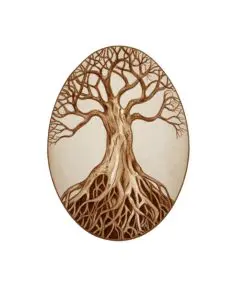
Coffee painting is a form of art that uses brewed coffee as a natural pigment.
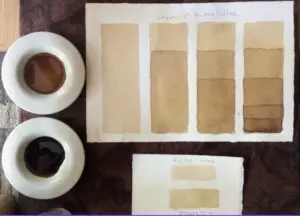
Instead of traditional watercolor or acrylic paint, an artist can change the strength of the coffee to create different shades of brown. Light washes can produce soft beige tones. More concentrated coffee creates deep, dark browns.
Nancy prefers real espresso to instant coffee.
Her process begins with liquid espresso poured onto a white plate and set out to dry. The dried coffee creates a concentrated pigment. She can then add water and use it much like traditional watercolor paint.
Coffee also gives an artist room to experiment.
According to Nancy, it can be re-wet and even erased. It can behave like watercolor while also creating some of the opacity associated with gouache. Layers help build depth while maintaining transparency.
While some artists use instant coffee, Nancy prefers the real deal because she likes the color it produces.
Why Paint With Only One Color?
At first, painting with brown may sound restrictive. Nancy says that’s part of the appeal.
Working with one color forces an artist to focus on the basic elements of an image. Nancy pays close attention to value, composition, perspective, shape, and proportion.
Instead of reaching for another color, the artist must find new ways to create contrast.
Coffee makes that possible through concentration.
Add more water and the coffee becomes lighter. Use stronger coffee or build several layers and the color becomes darker.
One cup can create a surprising range of tones.
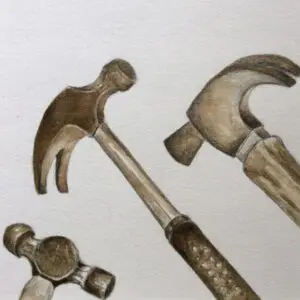
Nancy once spent three months painting hammers to practice proportions and simple forms.
The exercise reflects an important lesson in art: creativity isn’t always about adding more.
Sometimes, limitations make you look closer and inspire you to think outside the box.
Coffee Painting Can Make Art Feel Less Intimidating
Nancy has heard it all before: “I’m just not the creative type.”
Traditional art supplies can make a beginner nervous. A blank canvas, expensive brushes, and rows of paint colors may create pressure to make something perfect.
Coffee feels different because it’s familiar. Whether it’s the inviting aroma, comforting warmth, or familiar taste, coffee creates connection.
That familiarity is one reason Nancy began using coffee painting to help people move past their creative blocks.
In her workshops, participants could trace leaves and paint inside the shapes with coffee. The process felt similar to working in a coloring book.
The goal was to make creating feel approachable. Coffee became the icebreaker.
Once people started painting, they were often surprised by what appeared on the page. That surprise opened their minds to new possibilities.
Coffee, Art, and the Power of Ritual
Coffee already has a strong connection to ritual. It’s a sensory experience that can bring us back to the present moment.
We grind the beans. We hear the coffee brewing. We smell its aroma. We wrap our hands around a warm cup and take that first sip.
For many people, those small actions mark the beginning of a new day.
Nancy has a coffee ritual of her own. She prepares her coffee setup the night before. In the morning, she drinks water first and then enjoys her coffee.
Her favorite order? A cappuccino without milk and “go easy on the top.”
Coffee also brings people together.
Think about how often we say, “Let’s get coffee.”
Coffee can turn into a first date, a meeting, a conversation with an old friend, or a quiet moment alone.
Art can create a similar sense of connection.
During our conversation with Nancy, we discussed how both coffee and art can become grounding experiences. They encourage us to notice what is happening in the present moment.
That may be part of what makes painting with coffee so interesting.
It combines two rituals in one.
Finding Creativity During Difficult Times
Coffee painting is also deeply personal for Nancy.
After her mother passed away, Nancy chose to take some time off and focus on her personal art projects. Painting also offered an outlet for her grief.
Her work later gained attention from her local arts community. An arts commission contacted a local newspaper about Nancy’s coffee paintings. An arts editor then created a two-page feature about her work.
Coffee had grown from an unexpected artistic experiment into something much larger.
Experimenting With Coffee as an Art Medium
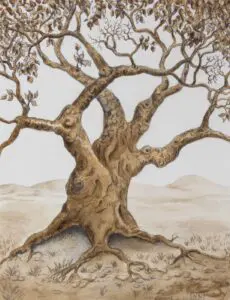
While Nancy continues to explore what coffee can do on paper, one of her most cherished pieces is an old oak tree from 2014. She combined pencil and coffee to create an almost metallic appearance.
She has experimented with other natural materials, such as turmeric and beet juice. She’s even tried painting with red wine, although she found that its color became muddy.
In addition to using actual coffee grounds to create texture, she has enjoyed cutting pieces of corn on the cob to create a type of stamp. The technique produces a lovely floral pattern.
Her experiments show that coffee painting doesn’t have to follow one set of rules.
How to Paint With Coffee at Home
Nancy stresses that you don’t need a professional art studio to experiment with coffee painting.
She recommends a few simple supplies:
- Real coffee or espresso
- Watercolor paper
- A white plate
- A paintbrush
The brush doesn’t need to be expensive either. In fact, one of Nancy’s recommended brushes costs only a few dollars and can be found in some museum gift shops.
To experiment at home, start by brewing your coffee.
Pour a small amount onto a white plate. Allow some of the coffee to dry and become more concentrated. Keep another portion diluted.
Now test the different strengths on watercolor paper.
Try making a pale wash. Let it dry. Add another layer.
Then try a darker concentration.
Instead of worrying about creating a finished painting, pay attention to how the coffee behaves on the paper.
What happens when you add more water?
What happens when you add another layer?
What happens when the coffee dries?
That process of experimentation is part of making art.
Can You Use Café Delicioso for Coffee Painting?
That’s what Nancy has started to explore.
Before experimenting with Brazilian coffee, Nancy assumed most real coffees would behave in similar ways when used as paint. But after a few color experiments, she began to notice something different.
The richness of the color and texture opened new creative possibilities.
“It’s like I got a new color on my coffee color wheel,” Nancy says.
For an artist who works within a monochromatic palette, discovering those differences can add an entirely new dimension to the process.
Café Delicioso is made with 100% Arabica coffee from Brazil. In a cup, we usually think about coffee in terms of aroma, flavor, and the experience of drinking it.
On watercolor paper, a different set of qualities becomes important.
How rich is the color?
How does the texture change?
What happens when the coffee is diluted or layered?
Those are questions Nancy is now excited to explore further.
And because Café Delicioso can be ordered online, anyone who wants to try coffee painting at home can use the same coffee that Nancy is using.
In fact, Nancy may already have found her new medium of choice, adding, “I have a feeling I’ll be painting strictly with Café Delicioso from now on.”
To paint with coffee is to witness it take on a new life.
So will you create a tree or a tiger? Perhaps even a hammer like Nancy’s first muse. The possibilities are endless.
What’s Next for Coffee Artist Nancy Nichols?
Nancy now wants to make coffee painting more accessible online.
After moving away from larger in-person workshops, she began exploring digital options that could introduce coffee painting to people far beyond a traditional classroom.
All they would need is some paper, a brush, coffee, and a willingness to experiment.
Perhaps that’s one of Nancy’s most interesting lessons:
The purpose of coffee painting isn’t to earn the title of “artist.” It’s simply to begin.
A Cup of Coffee Can Be a Canvas
Nancy Nichols invites us to look at coffee differently.
Coffee can become light and shadow. It can create shape, depth, texture, and contrast. It can help someone practice artistic fundamentals or move beyond the belief that they aren’t creative.
And it can turn an everyday ritual into something unexpected and magical.
One of Nancy’s favorite things about painting with coffee is its rich brown color. As she puts it, just as there isn’t another blue quite like the blue of the sky, coffee has a color all its own.
So, the next time you brew a cup of Café Delicioso, take a moment to look at its rich brown color before your first sip.
After all, your love of coffee could extend from your palate to an artist’s palette!