10 Common Coffee Brewing Mistakes to Avoid for a Perfect Cup in 2026
What if the reason your morning brew tastes flat has nothing to do with the beans and everything to do with a 10 degree variance in your water temperature? You’ve likely invested in premium specialty coffee because you value quality and the ethical story behind every harvest from the Alta Mogiana region. It’s frustrating when that investment results in a sour or inconsistent cup that feels like a waste of artisanal effort. We know you want café quality flavor without the confusion of complex technical jargon or the fear of ruining a bag of specialty beans.
By identifying the most common coffee brewing mistakes to avoid, you can transform your daily ritual into a reliable source of joy. Recent industry data from late 2025 suggests that 68 percent of home brewers achieve significantly better extraction simply by adjusting their water to coffee ratio. This guide provides the practical clarity you need to master your gear and honor the craft of our Brazilian farmers in 2026. We’re going to explore ten essential corrections that will help you brew with confidence, ensuring your kitchen becomes your favorite happy place with more smiles and less settling.
Key Takeaways
- Learn the three stages of flavor extraction to balance acidity and sweetness while preventing the bitterness that masks the true character of your beans.
- Master the essentials of water purity and bean freshness to eliminate common coffee brewing mistakes to avoid and ensure a vibrant cup every morning.
- Discover why switching to a burr grinder is the most effective way to achieve the particle uniformity needed for professional and consistent results.
- Understand how precise temperature control protects delicate Arabica oils from scorching and preserves the complex aromatic profile of your specialty coffee.
- Protect your favorite brewing ritual by learning maintenance techniques that prevent old coffee oils from turning rancid without using damaging soaps.
The Foundation of a Perfect Cup: Understanding Extraction
Making a great cup of coffee isn’t magic; it’s chemistry. When hot water meets coffee grounds, it acts as a solvent, pulling out oils, acids, and sugars. This process is called extraction. Understanding how this works is the first step in identifying common coffee brewing mistakes to avoid. If you don’t master extraction, even the most expensive equipment won’t save your morning routine. It’s the difference between a muddy, forgettable drink and a true cup of joy that starts your day with a smile.
Extraction happens in a specific, predictable sequence. First, the water dissolves the bright, acidic compounds. Next, the sugars and caramels emerge to provide sweetness and body. Finally, the heavier, bitter organic matter dissolves. Your goal is to find the sweet spot where these three stages intersect. If you stop the process too soon, you lose the sweetness. If you let it run too long, the bitterness overwhelms everything else. Achieving this balance requires precision and a deep respect for the bean’s potential.
What Is Ideal Coffee Extraction?
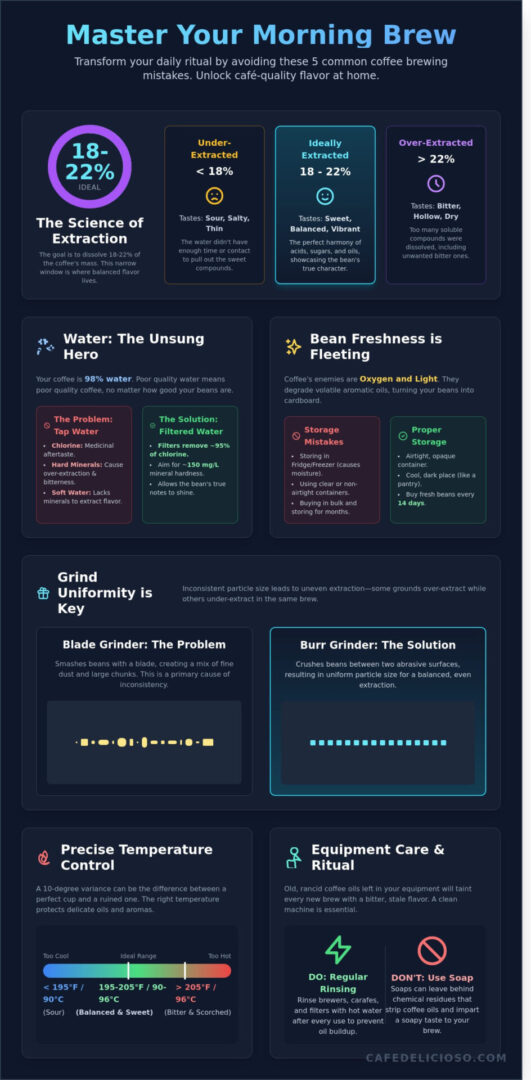
Ideal extraction is the balanced removal of 18 to 22 percent of the coffee’s total mass into the water. When you fall below this 18 percent threshold, the coffee is under-extracted. It often tastes thin, sour, or even strangely salty. If you exceed 22 percent, the coffee becomes over-extracted. This results in a dry, hollow bitterness that lingers on the back of your tongue and masks the bean’s natural character. Most common coffee brewing mistakes to avoid stem from failing to hit this narrow window of flavor.
Why Premium Beans Like Alta Mogiana Matter
The quality of your raw material dictates the ceiling of your success. Using 100 percent Arabica beans from regions like Alta Mogiana, Brazil, provides a cleaner and more complex flavor profile than lower-grade blends. These specialty beans are grown at altitudes above 900 meters, which allows the cherries to ripen slowly and develop concentrated sugars. Choosing single origin sourcing ensures consistency because every bean in your bag shared the same soil and climate conditions.
The way these beans are grown also impacts your final cup. We focus on regenerative farming practices that prioritize soil health and nutrient density. Healthy soil leads to beans with a more robust chemical structure, which makes them more forgiving during the extraction process. When you start with a bean crafted with compassion and care for the land, you’re already halfway to a perfect brew. High-quality beans offer more smiles and less settling for mediocrity.
Water Quality and Freshness Blunders
A cup of coffee consists of roughly 98 percent water. If your base ingredient tastes like a swimming pool or a rusty pipe, your premium beans won’t stand a chance. Overlooking water quality is one of the most common coffee brewing mistakes to avoid when you are chasing that perfect morning ritual. Tap water often contains high levels of chlorine and heavy minerals that chemically clash with the delicate oils in the bean, resulting in a cup that feels muted and metallic.
Freshness is the second pillar of a great brew. Coffee beans are agricultural products filled with volatile aromatic oils. Once these oils vanish, they can’t be recovered. Oxidation is the process that turns a vibrant, fruity Brazilian roast into something that tastes like flat cardboard. This chemical reaction begins the moment the beans leave the roaster and accelerates rapidly once they are ground. If your coffee lacks that signature aroma when you open the bag, the flavor has already left the building.
The Tap Water Trap
Chlorine is added to municipal water to kill bacteria, but it creates a medicinal, harsh aftertaste in your brew. Excessive calcium and magnesium can cause over-extraction, leading to a bitter cup. Conversely, water that is too soft lacks the mineral grip needed to pull flavors out. Aim for a water hardness of approximately 150 mg/L for the best results. A simple charcoal filter pitcher is an effective baseline for most homes. It removes about 95 percent of chlorine and sediment, allowing the authentic notes of the coffee to shine through without interference.
Storage Mistakes That Kill Flavor
Oxygen and light are the primary enemies of your coffee’s soul. Many people store their beans in the fridge or freezer, but this is a mistake. The constant temperature shifts create moisture through condensation, which degrades the bean structure and allows the coffee to absorb odors from other foods. Keep your beans in an airtight, opaque container in a cool, dark pantry. For the best experience, buy smaller quantities every 14 days to ensure you are always brewing at peak potency. You can shop our freshly roasted Brazilian beans to experience the difference that peak freshness brings to your daily cup of joy.
To check if your beans are still fresh, use the bloom test. When you pour a small amount of hot water over fresh grounds, they should swell and release bubbles of carbon dioxide. If the grounds stay flat and lifeless, they are likely more than 30 days past their roast date and have lost their essential oils. Fresh coffee is a living product, and treating it with respect ensures more smiles and less settling in every sip.
Matching Your Grind to Your Method for Maximum Flavor
Treating every brewing method with a one size fits all approach is one of the most common coffee brewing mistakes to avoid if you want a truly exceptional experience. Coffee extraction is a science of surface area. When you grind beans finely, you expose more surface area to the water, which accelerates the extraction of oils and flavors. If you use a fine espresso grind in a French press, the long immersion time will over-extract the grounds, leaving you with a bitter, astringent cup rather than your expected cup of joy.
The tool you use matters as much as the setting. Blade grinders function like blenders, chopping beans into inconsistent pieces of varying sizes. This creates a mix of fines and boulders, where the small dust over-extracts and the large chunks under-extract. Switching to a burr grinder provides the particle uniformity needed for a balanced taste. Quality burr grinders ensure that every granule reacts to the water at the same rate, which is why professional baristas prioritize them for 100 percent of their brews.
Many people rely on pre-ground coffee for convenience, but this limits your control. Pre-ground bags are typically dialed in for standard drip machines. If you use that same bag for an AeroPress or a Moka pot, you’re settling for a compromised flavor profile. Freshly grinding your specialty Brazilian beans right before brewing preserves the volatile aromatics that make our coffee unique. It’s a simple step that honors the love for the process we put into every roast.
The Danger of Eyeballing Measurements
Precision is the secret to consistency. Relying on a scoop or a tablespoon is a gamble because bean density varies by roast and origin. A scoop of dark roast weighs less than a scoop of light roast due to moisture loss during roasting. This can lead to a weight variance of up to 20 percent. Use a digital kitchen scale to maintain a 1 to 16 golden ratio. For example, 20 grams of coffee requires 320 grams of water. Even a 2 gram error can drastically shift the flavor from vibrant to watery.
Grind Size Cheat Sheet
- Coarse: Best for French Press or Cold Brew. It should look like heavy sea salt.
- Medium: Ideal for Drip coffee and Pour Over. Aim for the texture of kosher salt.
- Fine: Required for Espresso. The texture should feel like table salt or fine flour.
If your coffee tastes sharp, sour, or salty, your grind is likely too coarse. If the finish is unpleasantly bitter or dry, your grind is too fine. Small adjustments to these settings will help you find your happy place with every pour.
Temperature and Timing Errors That Ruin the Brew
Temperature is the silent killer of flavor in your morning ritual. Many home baristas assume that boiling water at 212 degrees Fahrenheit is the standard for extraction. This is a trap. Water at a rolling boil is far too aggressive for delicate Arabica beans. Excessive heat forces the Maillard reaction to occur too rapidly. Instead of developing the complex sugars and nutty oils that define a high-quality roast, the heat carbonizes the grounds. This chemical overreach results in a cup that tastes like charcoal rather than the vibrant, chocolatey notes found in our specialty Brazilian coffee.
The damage doesn’t stop at the pour. Leaving your finished coffee on a warming plate is another of the most common coffee brewing mistakes to avoid. These plates continue to apply heat to the liquid, essentially “stewing” the coffee. Within 15 minutes, the delicate aromatic compounds evaporate, leaving behind a bitter, metallic liquid. If you can’t drink it immediately, transfer it to a thermal carafe to preserve the integrity of the brew.
Freshness also demands a bloom phase. When water first hits fresh grounds, you will see bubbles. This is the release of carbon dioxide. If you skip the 30 second bloom, these gases form a barrier that prevents water from fully saturating the coffee particles. A proper bloom ensures a balanced, sweet extraction every single time.
Scorching the Grounds
Precision is the key to a cup of joy. The ideal temperature range for brewing is 195 to 205 degrees Fahrenheit. If you don’t own a digital thermometer, use this simple hack: let your kettle sit for 60 seconds after it reaches a boil before you start pouring. This brief pause allows the water to drop into the safe zone. Avoiding excessive heat prevents the release of harsh, ashy flavors that mask the natural sweetness of the bean.
The Waiting Game: Perfecting Brew Time
Timing is just as critical as temperature. For a French Press, the 4 minute rule is your best friend. Any longer and the coffee becomes over-extracted and dry. If you prefer pour over methods, aim for a total brew time between 2 and 3 minutes. This window allows the water to pull the right amount of solids from the grounds without extracting the woody, bitter fibers. Use a digital timer to ensure your process is repeatable. Consistency is the hallmark of a true coffee lover.
Equipment Care and the Brewing Ritual
Your brewing equipment acts as the vital bridge between a raw bean and your morning joy. Neglecting its maintenance is one of the most common coffee brewing mistakes to avoid if you want a consistent flavor profile throughout 2026. Coffee beans contain natural lipids that provide a rich mouthfeel, but these same oils become a liability when they cling to your carafe or filter basket. Within 30 days, leftover residues can oxidize and turn rancid, injecting a sour, metallic tang into every fresh pot you brew regardless of bean quality.
Cleaning Without Tainting
Expert advice from CNET suggests that over-washing with standard dish soaps often does more harm than good. These soaps leave behind a thin film of surfactants that can make your premium Brazilian blend taste like floral perfume. Instead, rinse your gear daily with 195 degree water. For deeper maintenance, use a specialized coffee equipment cleaner once a month to break down stubborn proteins. Don’t forget to descale your machine every 90 days. Mineral buildup from hard water can reduce heating efficiency by as much as 15 percent, preventing your water from reaching the 200 degree sweet spot required for proper extraction.
Respecting the Process
At Café Delicioso, we believe in quality without compromise. This philosophy is at the heart of our mission to provide an incomparable coffee experience for everyone. When you take the extra minute to clean your equipment and calibrate your scale, you honor the hard work of farmers in the Alta Mogiana region of Brazil. Brewing shouldn’t be a rushed chore; it’s a mindful ritual that brings more smiles and less settling to your morning. Treat each step with compassion for the craft, and your final cup will be the perfect reward for your patience. You can find more specific guidance on maintaining your gear by visiting our FAQ page for expert tips.
- Rinse carafes with 195 degree water immediately after use to prevent oil buildup.
- Use citric acid-based descalers every three months to protect heating elements.
- Avoid abrasive sponges that create micro-scratches where bacteria and oils can hide.
- Always dry your equipment thoroughly to prevent mold growth in hidden chambers.
By shifting your perspective from a quick caffeine fix to a deliberate ritual, you ensure that every cup is crafted with the same love we put into our beans. This commitment to the process eliminates the common coffee brewing mistakes to avoid and guarantees a professional result in your own kitchen.
Master Your Daily Coffee Ritual
Achieving a barista quality cup in 2026 starts with mindfulness and precision. You have learned how critical it is to match your grind size to your specific brewing method and why keeping your equipment spotless prevents bitter residue from ruining your morning. By addressing these common coffee brewing mistakes to avoid, you are no longer just making a drink; you are honoring a craft. True quality depends on the integrity of the beans you choose for your home setup.
Our 100 percent pure Arabica comes directly from the Alta Mogiana region in Brazil, where we prioritize pesticide free farming and ethical sourcing. We have already delivered thousands of smiles across the US by focusing on transparent, regenerative practices that respect both the land and the people who tend it. Don’t settle for a mediocre routine when you can enjoy a cup of joy that is crafted with compassion. More smiles and less settling starts with the right foundation in your portafilter or press.
Experience the difference of premium Brazilian Arabica: Shop Café Delicioso
Your journey to a better brew is just beginning. We can’t wait to be part of your favorite daily ritual and help you taste the difference in every sip.
Frequently Asked Questions
Is it better to use whole bean or pre-ground coffee for freshness?
Whole bean coffee is significantly better for freshness because beans begin to lose their aromatic profile within 15 minutes of being ground. Pre-ground coffee has a much larger surface area exposed to oxygen, which causes it to go stale 50 percent faster than whole beans. For a truly premium experience, grind your Café Delicioso beans immediately before brewing to capture the authentic flavors of the Alta Mogiana region.
Can I use a regular paper filter for my pour over coffee?
You can use a regular filter in a pinch, but specialized pour over filters are 20 percent to 30 percent thicker to trap fine sediments and oils. Standard basket filters often collapse in cone-shaped drippers, leading to water bypass where the liquid skips the grounds entirely. Avoiding this is essential when looking at common coffee brewing mistakes to avoid if you want a clean and sediment-free cup of joy.
How do I stop my coffee from tasting bitter every morning?
Bitterness usually happens because your water is too hot or your grind size is too fine. Keep your water temperature between 195 and 205 degrees Fahrenheit to prevent scorching the delicate coffee oils. If you’re using a standard 1 to 16 coffee to water ratio and the taste is still sharp, try a slightly coarser grind setting to reduce the total extraction time.
Why does my coffee taste watery even when I use more grounds?
Watery coffee is often caused by a grind that’s too coarse, which allows water to flow through the bed too quickly. Even with extra grounds, a coarse setting can result in an extraction rate below 18 percent, leaving the final brew thin and sour. Switch to a medium-fine consistency similar to table salt to ensure the water spends enough time extracting flavor from the beans.
Should I put my coffee beans in the freezer to keep them fresh?
You shouldn’t put your coffee beans in the freezer because the moisture and condensation will damage the essential oils that provide flavor. Coffee is highly porous and can absorb the scents of surrounding frozen foods within 24 hours. Store your specialty beans in an airtight, opaque container at a room temperature of 68 degrees Fahrenheit to maintain their incomparable quality.
What is the best water temperature for brewing Brazilian coffee?
The best water temperature for brewing Brazilian coffee from the Alta Mogiana region is exactly 202 degrees Fahrenheit. This specific temperature extracts the natural chocolate and nutty notes without introducing the harshness found at higher heats. Using boiling water at 212 degrees Fahrenheit is one of the common coffee brewing mistakes to avoid because it destroys the subtle sweetness of the Arabica beans.
How often should I deep clean my coffee maker?
You should deep clean your coffee maker every 30 days or after every 100 brew cycles to prevent mineral scale and old oil buildup. Neglecting this maintenance can reduce your machine’s heating efficiency by 15 percent and introduce rancid flavors into your morning ritual. A simple solution of 50 percent white vinegar and 50 percent distilled water is an effective way to keep your equipment running perfectly.
Does the type of roast affect which brewing mistakes are most common?
Roast type changes the brewing process because dark roasts are approximately 20 percent more soluble and porous than light roasts. Since dark beans release their flavors much faster, they’re more prone to over-extraction and bitterness if the water is too hot. Understanding that your roast level dictates your grind and temperature settings ensures you get more smiles and less settling with every batch you brew.