
Brazilian Coffee Taste Profile: A Guide to Its Rich, Smooth Flavors
Have you ever stood in the coffee aisle, overwhelmed by confusing descriptions and afraid to commit to a whole bag you might not love? You’re searching for a reliable, comforting brew, but worry about getting something too bitter or bland. We believe nothing should stand between you and your perfect cup of joy. That’s why understanding the classic brazilian coffee taste profile is your key to finding a brew that feels like coming home.
This guide is crafted to give you confidence in your coffee choice. We’ll move beyond the technical jargon to explore the warm, signature tasting notes of rich chocolate, toasted nuts, and sweet caramel that make Brazilian coffee so exceptionally smooth and beloved around the world. You’ll learn what factors create its low acidity and comforting body, so you can finally find that delicious, dependable coffee for your daily ritual. It’s time for more smiles and less settling in your morning cup.
Key Takeaways
- Expect a comforting cup defined by notes of rich chocolate, toasted nuts, and sweet caramel, making it a perfect daily coffee.
- The classic brazilian coffee taste profile is no accident; it’s directly shaped by the country’s unique low-altitude farms and processing methods.
- Go beyond the basics and discover how different growing regions produce their own distinct flavor nuances, from fruity to citrusy.
- Learn simple brewing adjustments to enhance the signature smoothness and low acidity of your Brazilian beans for a better cup of joy.
The Signature Taste of Brazil: What to Expect in Your Cup
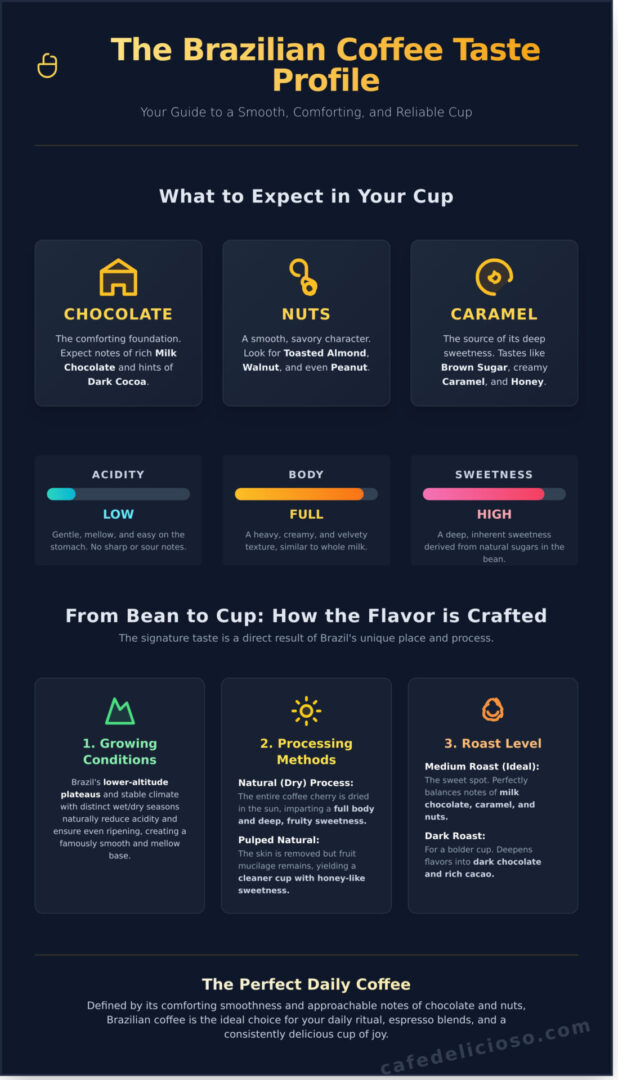
If coffee were a comforting hug in a mug, it would taste like it came from Brazil. This is the classic, approachable flavor that has made Brazilian beans a global favorite and the dependable foundation for countless espresso blends. It’s a coffee that doesn’t shout; it reassures. The authentic brazilian coffee taste profile is a harmonious balance of three key characteristics: a deep, inherent sweetness, very low acidity, and a full, creamy body. Forget sharp, acidic jolts-this is a smooth, satisfying experience crafted for your daily cup of joy.
Imagine a flavor wheel for Brazilian coffee. The largest sections would be:
- Sweet & Sugars: Milk Chocolate, Caramel, Brown Sugar, Honey
- Nuts & Cocoa: Roasted Almond, Walnut, Peanut, Dark Cocoa
- Subtle Notes: Hints of Cherry, Malt, and Toasted Bread
A Foundation of Sweetness: Chocolate, Caramel & Nuts
The first thing you’ll notice in a premium Brazilian coffee is its profound sweetness. Dominant notes of rich milk chocolate, creamy caramel, and roasted nuts like almond create a profile that is both decadent and exceptionally smooth. This isn’t an added flavor; it’s a result of the bean’s natural sugars, which are carefully enhanced during processing. This focus on sweetness is deeply rooted in the long history of Brazilian coffee, where methods were perfected to highlight these delicious traits. It’s this quality that makes it perfect for sipping black or with a splash of milk.
Low Acidity: The Secret to a Smooth, Mellow Sip
In coffee, acidity refers to the bright, sparkling sensation on your tongue-not sourness. While the wine-like acidity of some African coffees can be exciting, Brazil offers the opposite: a gentle, mellow experience. This is largely due to the country’s lower growing altitudes, which yield beans with a naturally lower acid content. The result is a wonderfully smooth cup that is easy on the stomach, making it an ideal choice for those who are sensitive to more acidic brews.
Full Body & Creamy Mouthfeel
‘Body’ describes the weight and texture of the coffee on your palate. To understand it, think of the difference between skim milk and whole milk. A great Brazilian coffee has the rich, velvety texture of whole milk. This heavier, creamier body is often a hallmark of the natural processing methods used in Brazil, where the coffee cherry is dried with the fruit intact. This allows the bean to absorb more oils and sugars, creating a round, full, and incredibly satisfying mouthfeel in every sip.
From Bean to Cup: What Shapes the Brazilian Coffee Flavor Profile?
The rich, smooth character of Brazilian coffee is no happy accident. It’s a story of place and process, crafted with intention from the very beginning. Understanding the journey from bean to cup is the key to appreciating why the brazilian coffee taste profile is so consistently comforting and delicious. Three key factors work in harmony to create this exceptional experience: the unique growing conditions, the traditional processing methods, and the art of the roast.
Growing Conditions: Altitude, Climate, and Soil
Unlike the sharp, volcanic peaks where many coffees grow, Brazil’s famous coffee regions are characterized by lower-altitude plateaus and gentle, rolling hills. This unique terroir softens the coffee’s acidity, creating that famously smooth and mellow base. The country’s stable climate, with a distinct rainy season for growth and a dry season for harvest, ensures each coffee cherry ripens evenly and consistently. This reliability is a cornerstone of modern Brazilian coffee production, allowing exceptional Arabica varieties like Bourbon and Catuai to develop their full, sweet potential year after year.
Processing Methods: The Impact of Natural and Pulped Natural
How the coffee cherry is removed from the bean has a massive impact on flavor. In Brazil, the ‘Natural’ or ‘dry’ process is a celebrated tradition. The entire coffee cherry is left to dry in the sun, allowing the bean inside to absorb sweet, fruity notes from the pulp. This authentic method is responsible for the full, heavy body and deep sweetness many of us love. A popular alternative is the ‘Pulped Natural’ method, which removes the skin but leaves the sticky fruit mucilage, resulting in a cleaner cup that still retains a wonderful, honey-like sweetness.
Roast Level: How Roasting Unlocks Different Flavors
Roasting is the final, transformative step that unlocks the inherent flavors developed on the farm. The classic brazilian coffee taste profile truly shines with a medium roast, which perfectly balances notes of creamy milk chocolate, caramel, and roasted nuts. For those who prefer a bolder, richer cup of joy, a dark roast deepens these notes into dark chocolate and cacao, enhancing the coffee’s full body and creating a deliciously strong finish. Light roasts are less common, as they don’t always fully develop the bean’s signature sweetness and comforting depth.
Exploring Brazil’s Coffee Regions: A Flavor Map
To truly understand the brazilian coffee taste profile, you have to look beyond the country’s name and explore its vibrant, diverse growing regions. Brazil is a vast country, and the coffee grown in one state can taste remarkably different from another. This is the beauty of single-origin coffee-it tells the story of its specific home, from the soil to the climate.
While the classic profile of Brazilian coffee is low-acidity, full-bodied, and sweet, each region adds its own unique chapter to that story. Let’s explore the most significant ones.
Minas Gerais: The Heart of Brazilian Coffee
As the largest coffee-producing state, Minas Gerais is the engine of Brazil’s coffee industry. Coffees from here often define the classic Brazilian cup: full-bodied, gently fruity, and wonderfully sweet. Within this powerhouse state lies the prestigious Alta Mogiana sub-region, a place we hold close to our hearts. Known for its rich volcanic soil and ideal altitudes, it produces beans with an exceptional, lingering sweetness and notes of chocolate and nuts. This is the authentic source for Café Delicioso, where our beans are crafted with compassion to bring you a truly special cup of joy.
Cerrado Mineiro: Consistently Nutty and Sweet
Located in a high, flat plain, the Cerrado Mineiro region benefits from a predictable climate with well-defined seasons. This consistency helps farmers produce a reliable and delicious crop year after year. It was the first region in Brazil to receive the ‘Designation of Origin’ status, a mark of quality control similar to famous wine regions. Its flavor profile is celebrated for being clean and balanced, with prominent notes of:
- Caramel
- Toasted Nuts
- Milk Chocolate
Espírito Santo & Bahia
Beyond the Arabica heartlands, other states contribute to Brazil’s coffee landscape. Espírito Santo is a key producer of Robusta beans, which are often prized for their bold, powerful character in espresso blends. To the north, Bahia represents the modern face of Brazilian coffee, with technologically advanced farms that use sophisticated irrigation to produce unique and often more complex flavor profiles. Understanding these regions shows just how rich and varied the complete brazilian coffee taste profile can be.
For a taste of the exceptional sweetness from Alta Mogiana, we invite you to explore our single-origin coffee and experience the difference that place makes.
How to Brew for the Best Brazilian Coffee Taste
You’ve chosen exceptional beans; now, let’s unlock the complete brazilian coffee taste profile right in your kitchen. Brewing Brazilian coffee isn’t about complex techniques-it’s about simple methods that honor the bean’s natural character. With a few easy adjustments, you can turn a good cup into a truly memorable one. More smiles, less settling.
Recommended Brewing Methods
Certain methods are perfectly suited to highlight the rich, smooth flavors of Brazilian beans. We recommend starting with one of these to truly appreciate the coffee’s low acidity and full body.
- French Press: This immersion method is fantastic for emphasizing the coffee’s full, syrupy body and deep chocolatey notes. It produces a robust and satisfying cup.
- Drip Coffee Maker: A classic for a reason. An automatic drip machine provides a clean, balanced, and consistent brew that lets the inherent sweetness and nutty undertones shine through.
- Espresso: Brazilian coffee’s low acidity and creamy body create a perfect espresso shot. It’s naturally sweet, rich, and serves as an incomparable base for lattes and cappuccinos.
Simple Tips for a Better Brew
Small details make a big difference. To elevate your daily ritual, keep these three fundamentals in mind:
- Grind Size: Match your grind to your brewer. Use a coarser grind (like coarse sea salt) for French press and a medium grind (like table salt) for drip coffee makers.
- Water Temperature: Avoid scorching your beans. The ideal temperature is just off the boil, around 200°F or 93°C.
- Coffee-to-Water Ratio: A great starting point is a 1:16 ratio (1 gram of coffee to 16 grams of water). Feel free to adjust this slightly to match your personal strength preference.
Perfect Pairings to Complement the Flavor
The comforting and versatile nature of Brazilian coffee makes it a perfect companion. Its nutty and chocolate notes pair beautifully with chocolate croissants, almond biscotti, or a simple piece of dark chocolate. Because of its smooth, gentle profile, it blends seamlessly into milk-based drinks, creating deliciously creamy lattes and cappuccinos without any bitterness. It’s the ideal, approachable coffee for any time of day.
Ready to brew your own cup of joy? Experience the authentic taste of single-origin specialty coffee, crafted with compassion. Shop our Alta Mogiana coffee!
Bring Home the Authentic Taste of Brazil
Your journey through the world of Brazilian coffee reveals a story in every cup. We’ve explored how its signature low acidity and smooth, full body are shaped by everything from sunny terroir to meticulous processing. Understanding the classic brazilian coffee taste profile, with its delightful notes of chocolate, caramel, and nuts, empowers you to choose and brew a truly exceptional coffee. It’s more than a beverage; it’s an experience of comforting richness.
Now, it’s time to bring that experience home. At Café Delicioso, we believe nothing should come between you and your cup of joy. That’s why we source our 100% pure, single-origin Arabica beans from the premium Alta Mogiana region. Each batch is crafted with compassion through ethical farming, ensuring a taste that is as good for the soul as it is for the palate.
Discover your new favorite cup of joy. Try Café Delicioso today!
Seize the day with a coffee ritual you can feel great about.
Frequently Asked Questions
Is Brazilian coffee bitter?
Quite the opposite! Authentic, high-quality Brazilian coffee is celebrated for its low acidity and incredible smoothness, not bitterness. If you experience bitterness, it’s often due to over-roasting or improper brewing. Our beans are carefully roasted to highlight their natural sweet notes of chocolate and toasted nuts, ensuring every cup is a moment of pure, balanced joy. More smiles, less settling for bitter coffee.
What is the difference between Brazilian and Colombian coffee?
While both are exceptional, they offer different experiences. The classic Brazilian coffee taste profile is known for its low acidity, full body, and rich, sweet flavors like chocolate and nuts. It’s a comforting and smooth cup. Colombian coffee, on the other hand, typically has a brighter, more pronounced acidity with fruity and citrus-like notes. Think of Brazilian as rich and deep, and Colombian as bright and vibrant.
Is Brazilian coffee strong in caffeine?
Our coffee is “deliciously strong” in flavor, but its caffeine content is standard for premium Arabica beans. People often confuse a bold, rich taste with high caffeine. Our beans provide a wonderful, balanced energy to help you seize the day without the jitters. The strength we proudly talk about is the exceptional, robust flavor profile that makes our coffee an unforgettable experience.
Is Brazilian coffee good for espresso?
It’s not just good-it’s exceptional! Brazilian coffee is a global favorite for espresso blends for a reason. Its low acidity, heavy body, and sweet, nutty notes create a perfectly balanced shot with a thick, long-lasting crema. This creates that classic, rich espresso taste that stands up beautifully on its own or as the base for a latte or cappuccino. It’s the perfect foundation for your favorite coffee ritual.
How can I learn more about common coffee terms like ‘body’ or ‘acidity’?
We believe understanding your coffee deepens your enjoyment! ‘Body’ refers to the weight and texture of the coffee on your tongue-is it light like skim milk or heavy like cream? ‘Acidity’ isn’t sourness, but a bright, tangy quality that adds liveliness, like the tartness of a green apple. Exploring the Brazilian coffee taste profile is a great way to experience low acidity and a full body firsthand.