Eco Friendly Coffee Brands: A Comprehensive Guide to Sustainable Sourcing in 2026
What if the “sustainable” label on your favorite bag of beans is actually masking a history of soil depletion? While global coffee demand is expected to double by 2050, research from Kew Royal Botanic Gardens shows that 60% of wild coffee species are currently at risk of extinction due to habitat loss. You want to support the planet, but it’s hard to feel confident when every bag claims to be green. Finding authentic eco friendly coffee brands shouldn’t feel like a full-time research project or require a small fortune for a single pound of beans.
We believe that your cup of joy should never come at the expense of the earth or the people who tend it. You deserve a brew that’s crafted with compassion and rooted in a deep love for the land. This guide provides a clear path through the confusion of modern certifications and the rising costs of specialty coffee. You’ll discover how to spot true environmental stewardship, understand the direct impact of your purchase on farming communities in regions like Alta Mogiana, and walk away with a practical checklist for your 2026 shopping trips.
Key Takeaways
- Learn why the shift from sustainable to restorative farming is essential for the planet and how regenerative practices are setting new standards for the industry.
- Master the art of identifying genuine eco friendly coffee brands by looking past expensive labels to find direct ethical impact.
- Use our practical checklist to verify bean quality and origin so you can confidently choose 100 percent Arabica coffee from world class regions like Alta Mogiana.
- Discover how a sourcing model built on compassion ensures your daily ritual supports Brazilian farming communities while delivering premium quality without the luxury markup.
Defining Eco Friendly Coffee in 2026
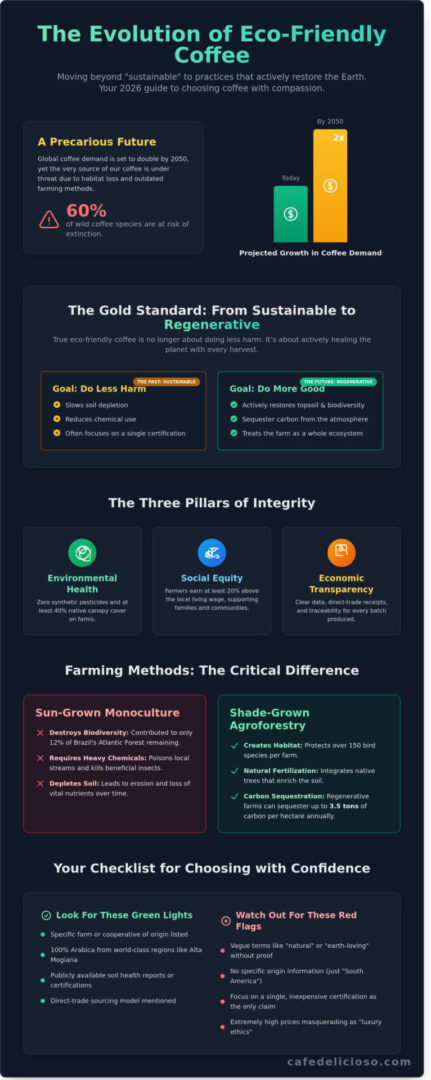
In 2026, your morning ritual carries more weight than ever before. Eco-friendly coffee used to mean just avoiding the worst chemicals or finding a simple logo on a bag. Today, the term describes beans grown, processed, and transported using methods that actively restore the earth rather than just depleting it more slowly. Truly Sustainable coffee has evolved into a restorative practice. This means every bag you buy helps repair the soil and protects the farmers who nurture it. It is about a deep Love for the Land that translates into measurable environmental benefits.
The industry has moved past the era of simply doing no harm. The planet requires more. Leading eco friendly coffee brands now focus on regenerative agriculture as a standard. This approach treats the farm as a living ecosystem. By 2025, research showed that regenerative farms can sequester up to 3.5 tons of carbon per hectare annually. Your cup of joy is now a tool for global carbon sequestration efforts. When you choose a brand committed to these practices, you are participating in a global cooling initiative one sip at a time.
To identify a truly green brand, you must look for the three pillars of integrity. These are environmental health, social equity, and economic transparency. A brand that ignores one cannot claim the others. This holistic view ensures that the coffee is crafted with compassion for both the planet and the people. We believe in More Smiles. Less Settling. This means you shouldn’t have to choose between a bold Brazilian flavor and your ethical values.
- Environmental Health: Using zero synthetic pesticides and maintaining at least 40% native canopy cover.
- Social Equity: Ensuring farmers earn at least 20% above the local living wage to support their families.
- Economic Transparency: Providing clear data or direct-trade receipts for every batch produced.
The Environmental Stakes of Coffee Production
Traditional farming has been brutal on our natural world. In the Brazilian Atlantic Forest, only 12% of original vegetation remains today. Sun-grown coffee, which became popular in the 1970s to increase yields, destroyed vital biodiversity. It requires heavy chemical inputs that poison local streams and kill beneficial insects. Shade-grown models and agroforestry are the essential solution. These systems integrate coffee trees with native fruit and timber trees. This creates a protected habitat for over 150 bird species per farm while naturally fertilizing the soil.
What Consumers Should Look for First
Be wary of brands that use vague words like natural or earth-loving without providing supporting data. If a bag doesn’t list the specific cooperative or farm of origin, it’s a red flag for greenwashing. Transparency is the only way to prove a brand isn’t just hiding behind clever marketing. High-quality eco friendly coffee brands will share their soil health reports or pesticide-free certifications openly. They show a genuine Love for the Process by being open about every step from the farm to your kitchen.
Eco-friendly coffee is a restorative harvest that prioritizes the biological vitality of the soil alongside the dignity and financial security of the people who cultivate it.
Why Regenerative Farming is the Gold Standard for Sustainability
Regenerative agriculture represents a fundamental shift from simply doing less harm to actively doing more good. While many eco friendly coffee brands focus on basic organic certifications, the gold standard involves restoring the very ecosystem that produces the beans. This system focuses on topsoil regeneration and increasing biodiversity, turning coffee plantations into thriving habitats rather than sterile monocultures. It’s a philosophy we call Love for the Land. By treating the farm as a living organism, growers can reverse the damage caused by decades of intensive industrial farming.
The Alta Mogiana region in Brazil stands as a global leader in these modern regenerative techniques. Located at altitudes between 900 and 1,200 meters, this region benefits from a perfect climate and a deep respect for tradition. Farmers here, particularly those within the Cocapec cooperative, have moved beyond traditional methods to embrace restorative processes. They understand that a resilient coffee crop depends on the health of the entire environment. This dedication ensures that the land remains fertile and productive for future generations while delivering a superior product today.
Soil Health and Carbon Sequestration
Healthy soil is much more than a medium for roots; it’s a powerful tool in the fight against climate change. When managed correctly, soil acts as a massive carbon sink, pulling carbon dioxide from the atmosphere and storing it safely underground. In the Alta Mogiana region, farmers employ specific regenerative techniques to maximize this potential. You can learn more about these techniques in our guide to our coffee, where we detail our commitment to quality.
- Cover Cropping: Farmers plant diverse vegetation between coffee rows to prevent erosion and naturally pump nitrogen back into the earth.
- Minimal Tillage: By avoiding heavy plowing, the soil structure remains intact, preserving the complex fungal networks that help plants absorb nutrients.
- Composting: Using organic waste from the milling process as fertilizer reduces the need for synthetic inputs and builds rich, dark humus.
These practices don’t just help the planet; they create a more robust bean. Soil rich in organic matter holds water more effectively, which protected crops during the severe Brazilian droughts of 2021. This resilience means more consistent yields and more smiles for coffee lovers who value reliability.
Pesticide Free Cultivation and Flavor
The relationship between clean farming and flavor is undeniable. When eco friendly coffee brands eliminate synthetic pesticides, they allow the pure, authentic taste of 100 percent Arabica beans to emerge. In a balanced ecosystem, farmers don’t need harsh chemicals. They manage pests naturally by encouraging bird populations and beneficial insects that act as a biological defense force. This natural balance produces environmental, economic, and social benefits that support the entire supply chain.
Pesticide-free coffee is also a matter of personal wellness. For those who enjoy multiple cups a day, choosing beans grown without systemic toxins is a safer choice for long term consumption. You won’t find any chemical aftertaste here; only the notes of chocolate and nuts that define premium Brazilian coffee. It’s about quality without compromise. We believe that nothing should come between you and your cup of joy, especially not unnecessary chemicals. If you want to taste the difference that restorative farming makes, you might want to browse our latest specialty roasts and experience the purity for yourself.
By choosing coffee grown with a Love for the Land, you’re supporting a system that gives back more than it takes. It’s a compassionate way to farm that results in a bolder, cleaner, and more delicious cup. This is the future of the industry, where every harvest leaves the earth better than it was before.
Comparing Certifications and Direct Ethical Impact
Choosing between eco friendly coffee brands often feels like deciphering a complex code. You see dozens of stamps on a single bag. While these symbols offer a baseline of trust, they don’t always tell the whole story of the soil or the soul behind the bean. Some of the most sustainable practices happen on small family plots that can’t justify the $2,000 to $5,000 annual fees required for official seals. These farmers often practice regenerative agriculture and pesticide-free farming simply because it’s the right way to treat the land, not because they want a sticker.
Legal standards are also shifting to force more transparency. The European Union Deforestation Regulation (EUDR) takes full effect for large operators on December 30, 2024. This law requires rigorous geolocation data to prove that coffee didn’t come from land deforested after December 31, 2020. It’s a massive step toward accountability. Brands that already map their supply chains, like those working in the Alta Mogiana region of Brazil, are ahead of this curve. They ensure every cherry is legally verified as deforestation-free, protecting the lush landscapes we love.
Many certifications focus on specific niches. For instance, the Smithsonian Bird-Friendly certification sets the gold standard for biodiversity by requiring 40% canopy cover. While this is vital for migratory birds, it’s just one piece of the puzzle. Truly eco friendly coffee brands look at the holistic health of the ecosystem. This includes water conservation, soil nutrition, and the welfare of the people who pick the cherries. When a brand’s internal mission is Crafted with Compassion, their standards often exceed the requirements of external auditors.
The Reality of Fair Trade in 2026
As we move into 2026, the Fair Trade minimum price for washed Arabica remains a critical safety net at $1.92 per pound. This price protects farmers when market volatility threatens their livelihoods. Beyond the base price, the $0.20 per pound Community Development Fund empowers cooperatives to invest in their own futures. In various Brazilian regions, these funds have successfully built over 15 new schools and 10 health clinics in the last decade. This model ensures that your daily ritual supports infrastructure and education. Read about our commitment to these values on our mission page.
Beyond Labels: The Direct Trade Advantage
Direct trade removes the middleman to put more money directly into the hands of growers. By partnering with established cooperatives like Cocapec in Franca, Brazil, brands can pay 20% to 30% above the Fair Trade minimum. This isn’t just about charity; it’s about respecting the craft. Ethical production standards at this level focus on long-term soil health and pesticide-free cultivation. Cutting out intermediaries ensures that the premium you pay actually reaches the person who harvested the crop. A brand’s direct relationship with a farm is a high-trust signal for buyers because it proves the roaster has personally verified the labor conditions and environmental stewardship of the source.
- Higher Wages: Direct trade often results in pay that is 50% higher than the local average.
- Transparency: Roasters can trace specific bags back to individual farm plots.
- Quality Control: Direct feedback loops help farmers improve bean quality, which leads to higher market prices.
- Environmental Care: Partnerships often include funding for regenerative farming equipment.
At Café Delicioso, we believe that great flavor comes from a place of respect. Our Love for the People and Love for the Land means we don’t just follow the rules; we set higher ones. We strive for more smiles and less settling in every part of our process. When you choose a brand that prioritizes direct relationships, you’re choosing a coffee that is as kind to the earth as it is delicious in your cup.
Your Checklist for Choosing Sustainable Coffee Brands
Finding truly eco friendly coffee brands requires more than a quick glance at a green label. You need to look for specific markers of quality and ethics that go beyond generic marketing. Start by verifying the origin of the beans. Regions like Alta Mogiana in Brazil are global leaders in environmental standards. High-altitude regions naturally support 100 percent Arabica beans, which are superior to mass-market Robusta. Arabica plants require more care and usually grow in shaded, biodiverse environments that protect the local ecosystem and preserve soil health for future generations.
When searching for eco friendly coffee brands, demand transparency in farming methods. Sustainability is a continuous process of improvement, not a static goal. Look for brands that mention regenerative farming techniques. These methods focus on soil health and carbon sequestration rather than just avoiding chemicals. Pesticide-free production is another non-negotiable standard for the health of the land and the people who work it. By 2024, international regulations like the EUDR have made it clearer which brands are serious about preventing deforestation in their supply chains. If a brand cannot tell you exactly where their coffee is grown, they likely don’t know the environmental impact of their production.
Evaluate the physical product and its journey to your kitchen. Quality coffee should respect the planet at every stage of the process.
- Packaging materials: Over 120 million bags of coffee are consumed globally every year. Brands moving toward 100 percent recyclable or compostable packaging are making a measurable impact on landfill waste.
- Price to value ratio: Ethical coffee shouldn’t be an unreachable luxury. A fair price indicates that the farmer is paid well and the land is respected, but it should still be accessible for your daily ritual.
- Labor transparency: Real sustainability includes the people. Ensure the brand works with reputable cooperatives, such as Cocapec, that guarantee fair wages and safe conditions.
How to Spot Greenwashing
Vague imagery is the first sign of greenwashing. Many companies use photos of lush forests or happy animals without providing any data on their actual sourcing. You should look for hard facts. There is a massive difference between carbon neutral claims, which often rely on external offsets, and actual carbon reduction within the roasting process. To find the truth, dig into the details. Use a brand’s FAQ page to see if they provide specific information about their labor audits and environmental certifications. If the answers are generic, the commitment likely is too. Trustworthy brands are proud of their partnerships and will name their specific regions and cooperatives.
The Importance of Freshness and Roasting
The distance your coffee travels after roasting matters. Small-batch production or local roasting significantly lowers the total carbon footprint of your beans. It also ensures that the coffee doesn’t sit in a warehouse for months, losing its character and nutritional value. Choosing ground roasted fresh coffee allows you to enjoy the natural oils and antioxidants that are often lost in mass-produced alternatives. This freshness is a sign of a brand that values the process as much as the profit. It’s about more smiles and less settling for stale, over-processed beans.
To practice sustainability at home, focus on storage. Keep your coffee in a cool, dark place in an airtight container. This preserves the flavor profile for much longer, preventing the waste of stale coffee. When every cup is a cup of joy, you’re less likely to pour unused coffee down the drain. This mindful consumption is the final step in a truly ethical coffee journey. Love for the land and love for the process results in a better experience for you and a healthier planet for everyone.
How Cafe Delicioso Balances Premium Quality with Earth Friendly Practices
Choosing the right coffee often feels like a trade-off between your budget, your palate, and your conscience. We don’t believe you should have to choose. Our approach centers on providing affordable premium Brazilian coffee without the 300% luxury markup found in boutique shops. By shipping directly to consumers and managing our own supply chain, we offer specialty beans at prices 20% lower than traditional high-end retailers. This model proves that standing out among eco friendly coffee brands doesn’t require an elitist price tag. It’s about efficiency and a commitment to making the ethical choice the easiest one for your daily ritual.
Our philosophy is rooted in what we call Love for the People. This isn’t just a marketing slogan; it’s a sourcing model that supports over 2500 small to medium-scale Brazilian farming families. We work closely with local cooperatives to ensure every grower receives a premium that exceeds local market averages by at least 15%. This financial stability allows farmers to invest back into their land and their families, creating a cycle of prosperity rather than a cycle of debt. When you choose our roast, you’re directly contributing to the health of these vibrant agricultural communities.
The secret to our bold flavor lies in the Alta Mogiana region of Brazil. This area is legendary among coffee experts for its rich Terra Roxa soil and perfect microclimate. Located at altitudes between 900 and 1250 meters, the coffee cherries enjoy an average temperature of 20 degrees Celsius. This specific environment allows for a slower maturation process, which concentrates the natural sugars within the 100% Arabica beans. The result is an incomparable cup that is naturally sweet, low in acidity, and deeply satisfying. We focus on this region because its natural gifts allow us to produce a superior product with fewer chemical interventions.
More Smiles, Less Settling means your morning coffee should be a moment of pure joy, not a compromise. We’ve designed our entire process to ensure that your favorite ritual supports a healthier planet and a more equitable industry. It’s about high-integrity coffee that tastes as good as it feels to buy.
Authentic Brazilian Heritage
Our partnership with the Cocapec cooperative ensures that every bean meets rigorous quality standards before it reaches Amazon for nationwide accessibility. We maintain a direct link to the heritage of the Alta Mogiana region, preserving traditional harvesting methods that respect the land. The sensory experience of our coffee is unmistakable; you’ll find a bold, strong body characterized by deep notes of dark chocolate and roasted nuts. It’s an authentic taste of Brazil delivered with modern convenience.
The Future of Conscious Coffee
We’re committed to evolving as one of the leading eco friendly coffee brands by transitioning to 100% regenerative farming practices across all sourcing lines by 2026. This initiative focuses on restoring soil health and protecting local water sources from runoff. Every purchase strengthens a supply chain built on compassion and environmental stewardship. Ready to experience the difference? Shop our latest roast today and join us in crafting a better future for coffee lovers and growers alike.
Brewing a Sustainable Future for Your Morning Ritual
Navigating the landscape of eco friendly coffee brands in 2026 means looking deeper than a logo on a bag. The most impactful choices focus on regenerative farming and direct cooperative partnerships that prioritize soil health and fair wages. By choosing 100% Pure Arabica beans grown without harmful pesticides, you’re supporting a system that values the Alta Mogiana region’s natural beauty and the livelihoods of its farmers. True sustainability is found where environmental care meets exceptional quality.
Café Delicioso embodies this commitment by sourcing exclusively through the Cocapec cooperative; this ensures every harvest is ethically produced and environmentally sound. Our process balances premium quality with a deep respect for the land, proving that a bold Brazilian brew can be both strong and compassionate. We don’t believe in settling for mediocre coffee or questionable ethics. Instead, we offer an authentic experience that honors the people and the process behind every bean. You deserve a coffee ritual that feels as good as it tastes. Start your journey toward a more mindful morning today.
Experience the difference of ethically sourced Brazilian coffee at Café Delicioso
Take pride in your choice and enjoy every sip of your sustainable journey.
Frequently Asked Questions
What makes a coffee brand truly eco-friendly?
A truly eco-friendly coffee brand prioritizes the health of the planet through every stage of production, from soil management to compostable packaging. This includes using regenerative farming techniques that restore biodiversity and avoiding synthetic chemicals that harm local ecosystems. For instance, many eco friendly coffee brands focus on pesticide-free Arabica beans to ensure the land remains vibrant for future generations. It is about a holistic commitment to the land and the process.
Is organic coffee the same as eco-friendly coffee?
Organic coffee is not always the same as eco-friendly coffee, though both aim for better environmental outcomes. While organic certification prohibits synthetic pesticides, it doesn’t always address other critical factors like water conservation or the carbon footprint of global shipping. A brand might be organic but still use unsustainable packaging; therefore, it’s important to look for a comprehensive approach to sustainability that covers the entire lifecycle of the bean.
How does regenerative farming help the environment?
Regenerative farming helps the environment by actively restoring soil health and capturing carbon from the atmosphere. Research indicates that these practices can sequester up to 3 tons of carbon per hectare each year. By using cover crops and avoiding heavy tilling, farmers increase the organic matter in the soil. This improves water retention and prevents the erosion of precious topsoil in regions like Alta Mogiana, keeping the ecosystem resilient.
Why is Brazilian coffee often considered more sustainable?
Brazilian coffee is often considered more sustainable because of the country’s strict environmental regulations, such as the 2012 Forest Code. This law requires landowners in coffee growing regions to preserve between 20 and 80 percent of their native vegetation. Additionally, Brazil leads the way in precision agriculture, using data to reduce water consumption in processing by 70 percent compared to older, traditional methods used in other countries.
Do I need to buy Fair Trade certified coffee to be ethical?
You don’t need a Fair Trade label to ensure your coffee is ethical, as many brands use direct trade models that pay farmers well above the minimum commodity price. Working directly with established cooperatives like Cocapec ensures that the people growing your beans are treated with respect and paid fairly. This approach fosters long term stability for farming communities and guarantees the quality of your favorite coffee ritual without the high administrative fees of certifications.
What is the EUDR and why does it matter for my coffee?
The EUDR is the European Union Deforestation Regulation, which mandates that coffee sold in the EU must not come from land deforested after December 31, 2020. This regulation is crucial because it requires brands to provide verifiable geolocation coordinates for every farm they source from. It ensures that your coffee consumption isn’t linked to the destruction of vital ecosystems, providing a new level of transparency for conscious consumers everywhere.
How can I find affordable eco-friendly coffee brands?
You can find affordable eco friendly coffee brands by looking for companies that source directly from origin to eliminate unnecessary middleman markups. Brazilian specialty beans often provide a premium, sustainable experience at a more accessible price point than other regions due to efficient harvesting methods. Choosing a brand that emphasizes direct relationships with cooperatives ensures you get high quality coffee that fits your budget without compromising your ethical values.
What are the benefits of pesticide-free coffee beans?
Pesticide-free coffee beans provide a cleaner, more authentic flavor profile while protecting the health of the farmers and the local ecosystem. By eliminating synthetic chemicals, growers prevent toxic runoff from entering local streams, preserving 100 percent of the natural aquatic life in the area. This practice ensures that your morning cup of joy is as pure as possible, reflecting a genuine love for the land and the people who tend it.