How to Store Ground Coffee to Keep It Fresh: The Ultimate Guide
Storing your premium Brazilian beans in the freezer is the fastest way to turn a cup of joy into a bitter, flavorless disappointment. You’ve likely felt the sting of spending twenty dollars on a bag of specialty Arabica only to find it tastes like cardboard by the following Thursday. It’s frustrating to invest in quality and lose that signature Alta Mogiana aroma within just four days of opening the bag. Learning how to store ground coffee to keep it fresh is the only way to stop wasting money and start enjoying the consistent, bold experience you deserve every single morning.
We promise to show you the science-backed methods that protect your coffee from its four main enemies: light, heat, moisture, and air. You’ll learn how to maintain that incomparable Brazilian flavor for at least fourteen days using simple, effective techniques that fit into any schedule. This guide covers exactly which airtight containers are worth your money and reveals a three-step morning routine to preserve peak freshness. More smiles and less settling begin with understanding the chemistry behind your favorite brew. We’ll walk you through the transition from stale, inconsistent cups to a reliable ritual that honors the craft behind every bean.
Key Takeaways
- Discover the science behind aromatic compounds and why protecting these delicate oils is the first step toward a perfect cup of joy.
- Learn exactly how to store ground coffee to keep it fresh by shielding your beans from the four environmental enemies that steal flavor.
- Compare different storage materials to find the ideal opaque container that guards your premium coffee against harmful light and air.
- Uncover the truth about the freezing myth and why moisture from condensation can compromise the integrity of your favorite Brazilian blend.
- Adopt the two week rule to ensure you always enjoy an authentic and bold coffee experience without any compromise on quality.
Understanding Why Ground Coffee Loses Its Freshness So Quickly
Coffee freshness isn’t a vague marketing term. It is a specific chemical state defined by the presence of over 800 volatile aromatic compounds and essential oils trapped within the bean. These oils carry the distinct flavors of the Alta Mogiana region, from deep chocolate notes to subtle fruit acidity. When you learn how to store ground coffee to keep it fresh, you’re essentially acting as a guardian for these delicate organic structures. The moment coffee is roasted, a clock starts ticking, and the primary enemy is oxidation.
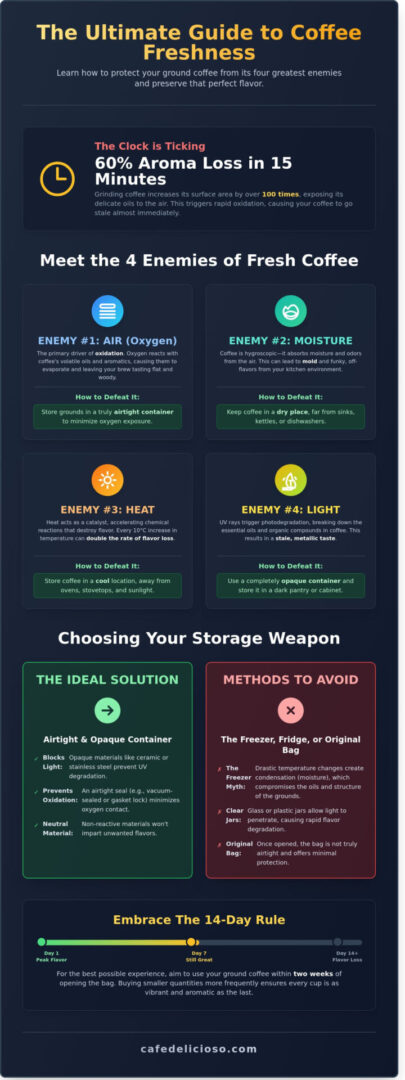
Oxidation occurs when oxygen molecules interact with the coffee’s cellular structure, causing a permanent change in its chemical makeup. This process breaks down the lipids and amino acids that give coffee its body and sweetness. While a whole bean acts as its own protective vault, grinding shatters that vault into thousands of tiny pieces. This increases the surface area exposed to the air by more than 100 times. Because of this massive exposure, ground coffee can lose up to 60 percent of its aromatic intensity within just 15 minutes of being exposed to the open air.
Another critical factor is degassing. During the roasting process, carbon dioxide builds up inside the beans. This gas is actually a friend to the brewer; it forms a protective blanket that prevents oxygen from entering the bean’s pores. Once coffee is ground, this carbon dioxide escapes almost instantly. Without that protective gas, the flavor profile becomes flat and the coffee loses the vibrant “bloom” you see during the brewing process. Understanding these stressors is the first step in mastering how to store ground coffee to keep it fresh for every morning ritual.
The Science of Coffee Degradation
Oxygen specifically targets the unsaturated fats in premium Arabica beans, leading to oxidative rancidity. This chemical reaction is accelerated by grind size. A fine espresso grind has significantly more surface area than a coarse French press grind, meaning it stales at an even faster rate. Because pre-ground coffee lacks the natural protection of the bean’s outer shell, it requires much more intentional care and airtight containment than whole beans to prevent it from tasting like cardboard within days of opening the bag.
Why Your Morning Ritual Depends on Freshness
The emotional experience of coffee is tied directly to its aromatic compounds. These vapors reach your olfactory system before the liquid even touches your tongue, creating that “happy place” sensation. When coffee stales, these aromatics evaporate, leaving behind only the heavy, bitter compounds that don’t dissolve as easily. This results in a cup that feels thin and tastes unpleasantly sharp. At Café Delicioso, we take pride in our heritage and our process. We want you to experience more smiles and less settling, which is only possible when the coffee in your scoop is as vibrant as the day it was roasted.
The Four Enemies of Coffee Freshness and How to Defeat Them
Ground coffee is delicate. The moment beans are ground, their surface area increases by nearly 100 times compared to whole beans. This massive exposure makes them highly vulnerable to four specific environmental factors that can quickly turn your premium cup of joy into a bitter disappointment. Understanding how to store ground coffee to keep it fresh starts with identifying these threats and creating a defensive strategy for your kitchen.
- Air: Oxygen is the primary driver of oxidation. It triggers the evaporation of volatile oils and aromatics that give specialty coffee its distinctive soul. Once these oils are gone, the coffee becomes flat and woody.
- Moisture: Coffee is naturally hygroscopic, meaning it greedily absorbs water from the air. When relative humidity levels exceed 50 percent, your grounds become a breeding ground for mold. They also act like a sponge for kitchen odors, soaking up the scents of nearby spices or cleaning supplies.
- Heat: High temperatures act as a catalyst for chemical degradation. Food science research indicates that every 10 degree Celsius increase in storage temperature can double the rate of flavor loss.
- Light: UV rays break down the organic compounds and lipids within the grounds. This photodegradation results in a stale, metallic taste that ruins the profile of even the finest beans.
Controlling the Kitchen Environment
The countertop might seem like a convenient spot for your morning ritual, but it’s often the most hostile environment for your beans. Storing coffee near a stove can expose it to temperatures exceeding 100 degrees Fahrenheit during meal preparation. Similarly, the area around a dishwasher or sink creates a localized zone of high humidity that accelerates spoilage. Your best bet is a cool, dark pantry shelf situated away from any heat-producing appliances. This simple change ensures you’re treating your authentic Brazilian Arabica with the respect it deserves.
Managing Air Exposure Daily
Learning how to store ground coffee to keep it fresh requires a bit of discipline. Don’t leave the bag sitting open while your water reaches a boil; oxygen begins its work the second the seal is broken. Reseal your container or bag immediately after measuring your scoop. If you use a canister, try to minimize the head-space. A half-empty jar contains trapped oxygen that continues to stale the grounds even after the lid is closed. Using an airtight container with a vacuum seal or a plunger mechanism can remove this excess air, preserving that incomparable flavor profile for every morning brew.
Choosing the Best Container for Ground Coffee Storage
Your coffee’s flavor begins to degrade within 30 minutes of being ground. Choosing the right vessel is the most effective way to protect those delicate Brazilian Arabica notes. To understand how to store ground coffee to keep it fresh, you must prioritize a container that battles the four primary enemies of coffee quality: light, heat, moisture, and oxygen.
A high-quality coffee vault uses a one-way CO2 valve. While ground coffee degasses slower than whole beans, it still releases carbon dioxide for several days after roasting. Without a valve, this gas builds up; however, a one-way valve allows it to escape without letting oxygen enter. Oxygen is the primary cause of oxidation, which turns vibrant oils rancid. Mastering how to store ground coffee to keep it fresh involves recognizing that vacuum-sealed technology can extend shelf life by 50% compared to a standard friction-top jar.
Material Comparison for Coffee Lovers
- Stainless steel: This is the gold standard for daily use. We recommend 304-grade stainless steel because it’s non-reactive and 100% opaque. It completely blocks UV rays that break down coffee lipids and destroy flavor.
- Ceramic: These heavy containers offer superior temperature stability. They’re ideal if your kitchen temperature fluctuates, but you must ensure the lid includes a medical-grade silicone gasket to prevent air leaks.
- Glass: While aesthetically pleasing, glass is only acceptable if it’s stored inside a dark pantry. Even 15 minutes of direct sunlight can trigger “skunking” in coffee oils, leading to a bitter aftertaste.
Features to Look for in a Coffee Vault
Don’t settle for a basic kitchen canister. Look for a heavy-duty latch mechanism. Unlike push-on lids that can pop up as internal gas expands, a metal latch provides constant downward pressure on the seal. This ensures a 100% airtight environment every time you close it. A thick silicone seal is essential because it remains flexible for over 1,000 uses, whereas cheap rubber seals often crack within six months.
Maintenance matters for flavor purity. Coffee oils are stubborn and can become sticky. Choose a container with a wide mouth and smooth interior walls. If you don’t wash your vault every 14 days, old oils will cling to the sides and contaminate your fresh premium Brazilian coffee. A clean container is the secret to ensuring every scoop leads to your perfect cup of joy.
To Freeze or Not to Freeze? Settling the Coffee Storage Debate
Storing your coffee in the freezer is one of the most persistent myths in the specialty coffee world. While it seems like a logical way to preserve freshness, it often does the exact opposite for your daily brew. Coffee grounds are porous and hygroscopic, meaning they act like a sponge for moisture and odors. When you put a bag of ground coffee in a freezer near frozen onions or seafood, those pungent smells migrate into your morning cup. This ruins the authentic, nutty profile of a premium Brazilian Arabica.
The biggest threat is moisture. Every time you open the freezer door, warm air enters and condenses on the cold surface of your coffee. This moisture triggers an immediate degradation of the coffee’s chemical structure. Understanding how to store ground coffee to keep it fresh means recognizing that the freezer is a high-risk environment for anything you plan to use every morning.
The Dangers of Daily Freezing
Daily freezing and thawing creates a destructive cycle for delicate coffee oils. As temperatures fluctuate, moisture from the air turns into microscopic ice crystals inside the bag. These crystals break down the cellular structure of the grounds, causing them to lose their vibrant flavor in as little as 48 hours. If you want to debunk other common misconceptions that stand between you and your cup of joy, we recommend checking our FAQ for more brewing myths.
How to Freeze Coffee Correctly for the Long Term
Freezing is only acceptable for long-term bulk storage of unopened, vacuum-sealed bags. If you have more coffee than you can use within 14 days, you can put an airtight, factory-sealed bag in the back of the freezer. The golden rule is simple: once you take it out, it stays out. Moving coffee back and forth between the freezer and the counter is a recipe for stale, flat results. Always allow the bag to sit on the counter for at least 3 hours to reach room temperature before breaking the seal. This prevents condensation from forming on the grounds the moment they hit the air.
Experience the difference of expertly handled beans and shop our premium Brazilian blends to start your morning right.
The Café Delicioso Routine for a Perfect Cup Every Morning
The secret to a great morning isn’t just the bean; it’s the discipline of the 2-Week Rule. While bulk buying feels like a smart financial move, it often sacrifices the soul of your coffee. Ground coffee loses its aromatic intensity significantly faster than whole beans because of the increased surface area. We recommend purchasing smaller, frequent batches that you can finish within 14 days. This ensures you’re always consuming peak flavors rather than fading, flat notes that have sat in a pantry for months.
Our ethically sourced Brazilian coffee arrives in specialized, high-barrier packaging designed to block light and moisture. Once you break that seal, the transfer to a permanent home is vital. Follow these steps to maximize longevity: first, choose an opaque ceramic or stainless steel vault. Second, pour the grounds slowly to avoid creating unnecessary air circulation. Third, use a spoon to level the surface, reducing the air pockets between grounds. Finally, lock the airtight seal immediately. Learning how to store ground coffee to keep it fresh starts with minimizing every single second of air exposure during your morning brew.
Container hygiene plays a massive role in flavor purity. Coffee beans contain natural oils that eventually stick to the walls of your storage vault. These oils oxidize and turn rancid over time, which can taint your next fresh batch with a metallic or sour aftertaste. Always wash your storage container with mild, unscented soap between every new bag of coffee. Ensure the vault is completely dry before refilling; even a tiny amount of moisture can trigger mold growth in your grounds within 48 hours.
Freshness Starts with Sourcing
Our regenerative farming practices in the Alta Mogiana region of Brazil create a more resilient coffee bean. By focusing on soil health and mineral density, we produce Arabica with a robust cellular structure. This results in a bold, strong flavor profile that holds its integrity during the journey from our farm to your kitchen. We believe that quality shouldn’t be a luxury, which is why we prioritize sustainable methods that protect the land. You can learn more about our commitment to quality and ethics by visiting Our Mission page.
Your Daily Freshness Checklist
Consistency creates the perfect cup. Make scoop, seal, and store a three-second habit every morning. Don’t leave the container open while your water boils or your milk froths. Always check the roast date on the back of our bags. The best coffee isn’t always the one roasted 24 hours ago; our Brazilian beans often need 7 to 10 days to degas and reach their flavor peak. If you’re ready to experience the difference of premium, responsibly sourced beans, Shop our latest Brazilian roast here and start your new freshness routine today.
Savor Every Sip of Your Morning Brew
Keeping your coffee at peak flavor isn’t just about the beans; it’s about respecting the process from the farm to your kitchen. You’ve learned that air, light, heat, and moisture are the primary threats to your daily cup of joy. By using an airtight, opaque container and avoiding the temperature fluctuations of the freezer, you’ve mastered how to store ground coffee to keep it fresh for up to 14 days. This simple routine ensures that the delicate oils and aromas don’t vanish before they reach your mug.
Your morning ritual deserves the best foundation possible. At Café Delicioso, we provide 100% Pure Arabica beans sourced directly from the Alta Mogiana region of Brazil. Our coffee is grown using pesticide-free regenerative farming techniques and is ethically sourced through the Cocapec cooperative to ensure every bag supports both the land and the people. You can taste the difference that high-quality, responsibly sourced beans make in every strong, bold sip. It’s coffee crafted with compassion, designed to bring life to your favorite morning ritual.
Experience the bold flavor of fresh Brazilian coffee at Café Delicioso and start your day with more smiles and less settling. You’ve got the tools to keep your coffee perfect, so go ahead and enjoy that incomparable cup you deserve.
Frequently Asked Questions
Can I store ground coffee in the refrigerator to keep it fresh?
You shouldn’t store ground coffee in the refrigerator because the constant temperature fluctuations create moisture inside the container. This condensation damages the delicate oils that give our premium Brazilian beans their incomparable flavor. Since coffee is porous, it will also absorb the scents of onions or leftovers in your fridge within 24 hours, ruining your morning cup of joy.
How long does ground coffee actually stay fresh after opening the bag?
Ground coffee stays at its peak freshness for only 7 to 14 days after you open the bag. Because grinding increases the surface area exposed to oxygen, the aromatic compounds begin to dissipate immediately. To enjoy the best experience, we recommend using your coffee within 2 weeks to ensure you get more smiles and less settling in every sip you brew.
Is it better to keep coffee in its original packaging or move it to a jar?
It’s best to move your coffee to an airtight, opaque container rather than keeping it in the original bag. While our bags feature a one-way valve to let carbon dioxide escape, they don’t always provide a 100 percent oxygen barrier once opened. Learning how to store ground coffee to keep it fresh involves using a ceramic or stainless steel canister that blocks out both light and air.
Do coffee grounds expire or just lose their flavor over time?
Coffee grounds don’t usually expire in a way that makes them unsafe, but they lose their vibrant flavor over time. After 30 days of exposure to air, ground coffee can lose up to 50 percent of its original aromatic intensity. While the grounds might technically be shelf-stable for 6 to 12 months if kept dry, the resulting brew will taste flat and woody instead of exceptional.
What is the best temperature for storing ground coffee in the pantry?
The ideal temperature for storing ground coffee is between 68 and 72 degrees Fahrenheit. Keep your coffee in a cool, dry pantry away from heat sources like the oven, dishwasher, or toaster. A 10 degree increase in temperature can double the rate of chemical reactions that cause staleness, so a stable environment is vital for maintaining that authentic Brazilian taste in your ritual.
Does the roast level affect how quickly the ground coffee goes stale?
Darker roasts generally go stale faster than light roasts because the longer roasting process makes the beans more porous. These open pores allow oxygen to penetrate the grounds more easily, leading to a 20 percent faster loss of flavor compared to lighter roasts. No matter the roast level you prefer, using an airtight container is the key to protecting the integrity of your specialty coffee.
Should I wash my coffee storage container with soap and water?
You should wash your storage container with mild soap and hot water every time you finish a bag. Coffee oils are sticky and can turn rancid within 7 to 10 days, which will contaminate your fresh batch with a bitter, metallic taste. Perform at least 3 thorough rinses with hot water and ensure the container is 100 percent dry before adding any new grounds.
Can I use clear mason jars if I keep them in a dark cupboard?
You can use clear mason jars as long as they stay inside a completely dark cupboard at all times. Direct sunlight can degrade the flavor of your coffee in as little as 60 minutes through a process called photo-oxidation. Understanding how to store ground coffee to keep it fresh means prioritizing a dark environment to protect the complex flavor profile of our responsibly sourced Arabica beans.