How to Choose a Good Coffee Brand: The Ultimate 2026 Selection Guide
The most expensive bag on the shelf is often the biggest disappointment in your cup. It’s a common trap to believe that a premium price always equals a premium flavor; yet many high cost brands rely on flashy marketing rather than fresh, ethical sourcing. You likely want a morning ritual that feels like a reward, not a gamble with your hard earned money. Learning how to choose a good coffee brand requires looking past the gold foil packaging to find the truth about the beans inside.
It’s exhausting to stand in the grocery aisle feeling confused by terms like organic, fair trade, or the latest 2026 environmental standards. You deserve a cup of joy that supports both your palate and your values without overpaying for mediocrity. This guide promises to clarify exactly what to look for on a label to ensure you’re getting exceptional, responsibly sourced coffee every time. We’ll explore the critical differences between marketing buzzwords and genuine quality indicators like pesticide free certifications, helping you find affordable specialty options that bring more smiles and less settling to your daily routine.
Key Takeaways
- Learn why 100 percent Arabica beans are the essential baseline for premium quality and how they differ from commercial grade options.
- Discover how to choose a good coffee brand by decoding labels to identify specific regional origins and roast dates for maximum freshness.
- Explore the importance of regenerative farming and ethical sourcing to ensure your coffee choice supports environmental health and fair labor.
- Identify how to match your favorite brewing method with unique flavor profiles like chocolate or nutty to enhance your morning ritual.
- See how premium Brazilian beans from the Alta Mogiana region offer a superior experience that balances exceptional taste with true affordability.
The Foundation of Quality: Understanding Bean Species and Grading
Knowing how to choose a good coffee brand begins with the bean itself. It is the heart of your morning ritual and the source of every flavor note you experience. In 2026, the coffee market is flooded with options, but quality is never an accident. It starts with a commitment to the right species and a rigorous adherence to international grading standards. When you understand what goes into your bag, you can move away from mass-produced commodity coffee and toward a truly exceptional experience.
Arabica vs Robusta: Why Species Matters
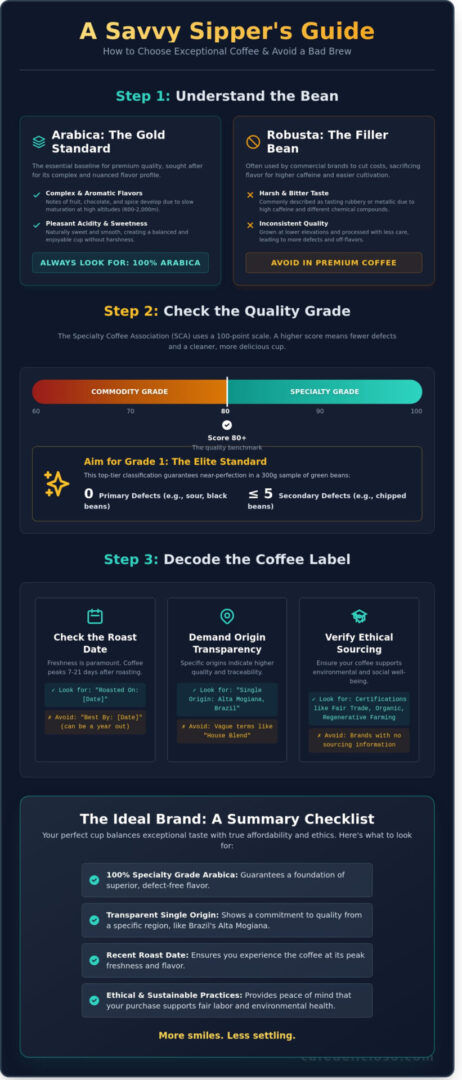
The journey to a perfect cup starts with the coffee bean species. While there are dozens of varieties, Arabica and Robusta dominate the global market. Arabica beans are the gold standard for anyone seeking an authentic, premium flavor. These plants thrive at high altitudes, typically between 600 and 2,000 meters. The cooler temperatures and lower oxygen levels at these heights slow the maturation of the coffee cherry. This patience allows complex sugars and nuanced acidity to develop, resulting in notes of chocolate, fruit, and spice.
Robusta beans are heartier and easier to grow at lower elevations, but they come with a cost to flavor. They contain nearly double the caffeine of Arabica, which often translates into a harsh, rubbery, or metallic bitterness. Many commercial brands use Robusta as a cheap filler to increase profit margins. To find your cup of joy, always look for “100 percent Arabica” on the label. At Café Delicioso, we focus on 100 percent Arabica beans from the Alta Mogiana region of Brazil. This ensures a smooth, naturally sweet profile that honors the land and the process. You can learn more about our specific sourcing on our our coffee page.
The Grading System: From Commodity to Specialty
The difference between a mediocre cup and an incomparable one often comes down to a single number. Professional tasters, known as Q-Graders, use a 100-point scale established by the Specialty Coffee Association (SCA) to evaluate quality. For a brand to be considered “Specialty Grade,” its beans must score 80 points or higher. This isn’t just a badge of honor; it is a guarantee of a clean, defect-free flavor profile. Low-grade commodity beans often score in the 60s or 70s, leading to sour or fermented off-flavors that ruin your morning.
The most elite brands aim for Grade 1 Specialty Coffee. This certification requires a grueling visual inspection process. In a 300-gram sample of green coffee beans, there can be zero primary defects. Primary defects include things like full black beans or sour beans, which can ruin an entire batch. Furthermore, the sample can have no more than five secondary defects, such as broken or chipped beans. This level of precision ensures that every roast is consistent and every sip is delicious. When you are researching how to choose a good coffee brand, prioritize those that transparently discuss their grading. It is the ultimate sign of a brand that values quality without compromise. More smiles. Less settling.
Decoding the Coffee Label: Origin and Roast Freshness
Reading a coffee bag shouldn’t feel like solving a complex puzzle. When you’re learning how to choose a good coffee brand, the label serves as your primary map to quality. Generic blends often hide lower-quality beans behind vague marketing terms like “house blend” or “breakfast roast” without mentioning where the coffee actually started. In contrast, premium brands prioritize transparency by telling you exactly where the beans grew. This clarity is the first step toward finding your personal cup of joy and ensuring you don’t settle for a mediocre experience.
The Power of Single Origin Transparency
Single origin coffee comes from one specific farm, estate, or a defined geographic region. Traceability is a hallmark of a trustworthy brand because it shows a deep love for the land and the people involved in the harvest. For example, beans from the Alta Mogiana region in Brazil are famous for their high altitude and natural sweetness. You can explore the details of these specific growing regions in this Brazilian Coffee Guide. According to the National Coffee Association’s guide, understanding these origins helps you predict the flavor profile before you even start brewing. Brands that name their specific cooperative, such as Cocapec, are usually more invested in ethical production and regenerative farming.
Roast Levels and Freshness Windows
Freshness is a non-negotiable factor for exceptional taste. Always look for a specific roast date on the bag. A “best by” date is a common red flag; coffee remains safe to consume for a long time, but its vibrant flavors begin to fade quickly after the roasting process. Most specialty beans reach their peak flavor between four and six weeks after roasting. During this window, the aromatic oils are most stable and flavorful. Light roasts typically preserve the bean’s original floral or fruity character. Dark roasts provide a bold, smoky profile with less acidity. Medium roasts offer a balanced experience that highlights the natural caramelization of the sugars. If a brand won’t tell you when the coffee was roasted, it’s a sign they might be prioritizing shelf life over quality.
Processing methods also play a massive role in what you taste in your cup. Natural process beans dry inside the coffee cherry, which often creates a heavy body and intense, jammy sweetness. Washed process beans have the fruit removed before drying, leading to a cleaner, more acidic profile that highlights the bean’s inherent traits. We believe that understanding our coffee and the care put into every harvest leads to more smiles and less settling. By paying attention to these small details on the label, you ensure your morning ritual remains authentic, delicious, and crafted with compassion.
The Ethics of the Bean: Why Sourcing and Sustainability Matter
When you are researching how to choose a good coffee brand, you’ll quickly find that taste is only half the story. In 2026, an ethical brand must be transparent about its entire supply chain. It isn’t just about a logo on a bag; it’s about a commitment to the land and the people who nurture it. Truly ethical coffee ensures that every person in the chain receives a living wage and that the farming methods actually improve the environment. This level of integrity creates a cup of joy that feels as good as it tastes.
Mastering how to choose a good coffee brand means looking for markers of responsibility. A brand that values ethics will openly discuss its sourcing partners and environmental impact. They don’t hide behind vague marketing terms. Instead, they provide concrete details about their cooperatives and cultivation methods. This transparency is the foundation of trust between the roaster and your morning ritual.
Regenerative Farming: Beyond Organic
Traditional organic certifications are a baseline, but regenerative farming goes much further. These practices focus on restoring soil health and increasing biodiversity rather than just avoiding prohibited substances. By using cover crops and natural compost, farmers can increase soil organic matter by up to 40 percent over five years. This creates a resilient ecosystem that traps carbon and retains water more effectively.
- Soil Restoration: Regenerative techniques rebuild the topsoil, which has been depleted by decades of industrial farming.
- Pesticide-Free Flavor: Growing coffee without synthetic pesticides protects local water sources and ensures the bean’s natural profile remains untainted by chemicals.
- EUDR Compliance: Responsible brands now adhere to the European Union Deforestation Regulation (EUDR). This ensures beans are not sourced from land deforested after December 31, 2020.
Compassionate Sourcing and Fair Treatment
Ethical sourcing is about long-term relationships, not just one-off transactions. Supporting cooperatives like Cocapec, which serves over 2,500 members in the Alta Mogiana region of Brazil, ensures stability for farming families. When a brand works directly with these organizations, they help provide technical assistance and social programs that benefit the entire community. This is the heart of what it means to be Crafted with Compassion.
This approach puts people first. By choosing brands that prioritize direct trade or cooperative partnerships, you ensure that a larger portion of the retail price stays with the growers. It’s a move away from predatory pricing models and toward a sustainable future for specialty coffee. You can find more details on these standards in our Ethical Coffee Guide. Love for the people and love for the land are what make a brand truly exceptional in a crowded market.
A Practical Guide to Selecting Your Flavor Profile
Finding your happy place starts with understanding what you actually enjoy in a cup. When you are learning how to choose a good coffee brand, you need to look beyond the flashy packaging and focus on the sensory details that create your daily ritual. It is about more smiles and less settling for mediocre beans. Selecting a brand involves a blend of technical knowledge and personal preference, ensuring every morning starts with a genuine cup of joy.
Matching Beans to Your Brew Method
Your equipment dictates your bean choice more than you might realize. For standard drip machines, a medium roast provides a balanced, consistent cup that handles the automatic brewing process well. If you prefer manual methods, you need a bean that shines under precise conditions. For those using a V60, a lighter roast often reveals hidden floral or tea-like complexities. You can learn the specifics of this technique in this Hario V60 Guide. Grind size flexibility is also vital. A brand that offers whole beans gives you the power to adjust for a coarse French press or a fine espresso, ensuring the coffee is always fresh and vibrant.
Understanding Flavor Notes
Flavor notes are not added syrups or artificial flavorings. They are natural expressions of the soil, climate, and processing methods. Brazilian beans from the Alta Mogiana region are famous for their chocolate and nutty profiles. These beans provide a smooth, low-acid experience that many find incomparable. If you want something vibrant and bright, you might look for African origins with citrus or berry notes. Experimenting with different regions is the best way to find your joy. Look for labels that specify the origin and the cooperative, as this level of transparency usually indicates a higher quality of specialty bean.
Strength and body are the next factors to consider. Strength refers to the concentration of dissolved coffee solids, while body is the physical weight or texture on your tongue. A bold Brazilian Arabica often feels creamy and substantial. If you want a deliciously strong cup, look for beans grown at altitudes between 800 and 1,200 meters. This specific elevation often results in a denser bean with a more pronounced body and a cleaner finish.
Evaluating the value proposition is the final step. Quality coffee is an investment in your daily happiness and health. When you compare brands, look at the price per ounce rather than the total bag price. A 12-ounce bag of specialty coffee might cost approximately 0.75 USD per cup, while a commodity brand costs 0.25 USD. That difference of 50 cents buys you ethical sourcing, regenerative farming practices, and a vastly superior taste profile. It is a small price for a product crafted with compassion and respect for the land.
Choosing Your Ideal Brand: The Cafe Delicioso Difference
Understanding how to choose a good coffee brand often leads back to one central question: why should you settle for less? Most supermarket options prioritize shelf life over flavor, but Cafe Delicioso bridges the gap between luxury quality and daily affordability. We source 100 percent Arabica beans directly from the Alta Mogiana region of Brazil. This area is famous for its high altitude and rich soil, resulting in a naturally sweet and bold profile. By utilizing a direct to consumer model, we bypass traditional retail markups and middleman delays. This ensures your beans arrive fresh while providing exceptional value that fits your morning routine.
Our Mission: More Smiles and Less Settling
Our philosophy is simple. We believe premium coffee belongs in every kitchen, not just high end cafes. This commitment is built on our core triad: Love for the People, the Land, and the Process. We partner with the Cocapec cooperative to ensure ethical labor practices and fair compensation for farmers. Our beans are grown using regenerative farming techniques that are 100 percent pesticide free, protecting the biodiversity of the Brazilian landscape. You can learn more about our commitment to ethical sourcing by visiting Our Mission page. We craft every batch with compassion because your cup of joy should never come at the expense of the planet or its people.
Taste the Difference in Quality
The search for the perfect roast ends when you experience the depth of authentic Brazilian Arabica. These beans offer a smooth, chocolatey finish that provides a powerful start to your day without the bitterness found in lower grade blends. If you are ready to upgrade your pantry, explore our latest roasts at the Cafe Delicioso Shop. To ensure you always make the right choice, use this final checklist when evaluating how to choose a good coffee brand for your household:
- Origin Transparency: Does the brand name a specific region like Alta Mogiana?
- Bean Variety: Is it 100 percent Arabica or a cheaper Robusta blend?
- Farming Practices: Are the beans pesticide free and grown via regenerative methods?
- Supply Chain: Does the brand use a direct model to ensure maximum freshness and value?
Choosing a brand means choosing a partner for your daily ritual. With Cafe Delicioso, you choose quality, integrity, and a better morning. We believe in providing more smiles and less settling, ensuring that every sip is as impactful as the last.
Elevate Your Daily Brew With Confidence
Your journey toward a better morning ritual starts with understanding exactly what goes into your mug. Finding the right beans means looking beyond generic packaging. You now know that 100 percent Pure Arabica beans offer a superior flavor profile compared to lower-grade alternatives. You also understand that geography defines taste. Beans sourced from the Alta Mogiana region in Brazil provide a distinct, high-quality experience that mass-produced labels simply can’t replicate. When you master how to choose a good coffee brand, you prioritize transparency. Look for regenerative farming practices that protect the soil and support the families who cultivate your favorite roast.
At Café Delicioso, we live by the promise of more smiles and less settling. We’ve simplified your search by focusing on exceptional quality and compassion in every batch. You don’t have to compromise on taste to get a strong, delicious cup. Our commitment to ethical production ensures every bean meets the highest standards for the 2026 coffee landscape. Take the final step in your coffee education by tasting the difference that authentic Brazilian heritage makes.
Experience premium Brazilian coffee and shop our collection today
It’s time to transform your morning routine into a genuine cup of joy.
Frequently Asked Questions
What is the most important thing to look for on a coffee bag?
The most important detail on a coffee bag is a specific roast date rather than a generic best by date. Freshness peaks between 7 and 21 days after roasting; after this window, the beans begin to lose their vibrant aromatic oils. You should also look for transparency regarding the specific region, such as Alta Mogiana in Brazil, which proves the brand tracks their beans back to a precise cooperative or farm.
Is expensive coffee always better than cheaper brands?
Price does not always guarantee superior quality because some companies inflate costs for luxury packaging or marketing campaigns. Instead, look for a Specialty Coffee Association score of 80 points or higher to ensure quality. You can find exceptional Brazilian Arabica that offers a premium experience at a fair price by choosing brands that work directly with cooperatives like Cocapec. This direct relationship cuts out unnecessary middlemen and keeps your cup of joy affordable.
How can I tell if a coffee brand is actually ethical?
You can verify a brand’s ethics by checking for compliance with specific environmental regulations like the EUDR or certifications from the Rainforest Alliance. Truly ethical brands share details about their regenerative farming practices and fair labor standards. We prioritize a love for the people by ensuring our Brazilian partners receive fair compensation. This commitment to compassion means your coffee supports both the land and the farmers who tend it.
What does single origin mean and why does it matter?
Single origin means your coffee beans come from one specific geographic location, such as a single farm or a distinct region like Alta Mogiana. This matters because it allows you to experience the authentic, incomparable flavors of that specific soil and climate. When you learn how to choose a good coffee brand, prioritizing single origin ensures you are tasting a clear, unblended profile rather than a mix of lower quality beans from various sources.
Does the roast date really affect the taste of my coffee?
The roast date is critical because coffee is a perishable agricultural product that loses 60 percent of its aroma within 15 days of exposure to oxygen. For the best experience, consume your beans within 4 weeks of the date stamped on the bag. After 30 days, the chemical compounds that create sweetness and acidity degrade; this results in a flat or bitter taste that lacks the vibrancy of a fresh roast.
Should I buy whole bean or ground coffee for the best flavor?
You should always choose whole bean coffee because the increased surface area of ground coffee leads to rapid oxidation and staleness. Grinding your beans just 60 seconds before brewing preserves the volatile oils that create a deliciously strong aroma. If you buy pre-ground coffee, it has likely lost its peak flavor profile before it even reaches your kitchen. Sourcing from a specialty roaster like Compound Coffee Co. is the best way to ensure every cup is a fresh, premium experience.
What is the difference between organic and pesticide free coffee?
Organic coffee follows specific government standards for soil and synthetic inputs, while pesticide free coffee is tested to ensure no chemical residues remain on the beans. Many Brazilian farms use regenerative farming techniques that exceed standard organic requirements without the high cost of official certification. We focus on pesticide free production to ensure your coffee is clean and safe. This approach protects the land while delivering a pure, exceptional taste.
How do I know if a coffee brand is good for espresso?
A good espresso brand typically offers a medium to dark roast that can stand up to the high pressure of an espresso machine. Look for beans from regions like Brazil that naturally feature low acidity and a heavy body. When researching how to choose a good coffee brand for your portafilter, check for tasting notes of cocoa or toasted caramel. These flavors create a rich crema and a balanced, incomparable shot that tastes great alone or with milk.