Feel Good Coffee Brands: The Best Ethical and Flavorful Choices of 2026
What if your morning ritual could support a regenerative farm in Alta Mogiana while delivering a punch of bold flavor that actually wakes you up? Most coffee lovers feel torn between choosing a brand that treats people fairly and one that actually tastes like premium specialty coffee. You shouldn’t have to settle for a weak, uninspiring cup just to ensure your beans were grown responsibly. Finding authentic feel good coffee brands shouldn’t feel like a confusing maze of complex certifications or compromises on quality. We believe in more smiles and less settling when it comes to your daily ritual.
This guide highlights the top ethical choices for 2026 that refuse to sacrifice strength for sustainability. We promise to help you discover coffee that is crafted with compassion and rooted in a deep love for the land and the people who tend it. You will gain a clear understanding of how regenerative farming impacts your daily brew and which Brazilian brands are leading the way in quality and transparency. From understanding the 2024 environmental regulations to finding your new favorite daily roast, we are showing you how to enjoy a truly exceptional cup of joy without any of the typical guilt.
Key Takeaways
- Learn to identify true feel good coffee brands by looking for transparency and a deep commitment to holistic compassion for people and land.
- Discover how to evaluate conscious brands by prioritizing regional specificity such as the Alta Mogiana region in Brazil.
- Understand why regenerative farming is essential for restoring soil health and capturing carbon while producing exceptional flavor.
- Gain practical steps to transition your morning ritual toward ethical choices and learn how to maintain the quality of your beans.
What Defines a Feel Good Coffee Brand in 2026?
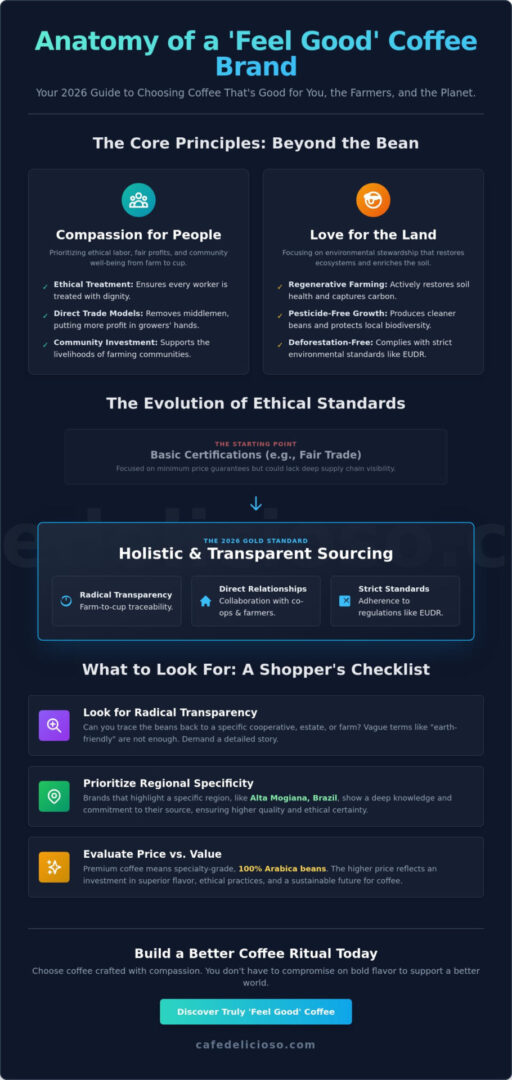
In 2026, a feel good coffee brand represents more than just a caffeine fix. It is a commitment to a transparent supply chain where every participant is treated with dignity. These brands prioritize ethical labor and environmental stewardship while refusing to compromise on flavor. For the modern drinker, the morning ritual is an emotional anchor. Starting the day with a cup of joy that supports regenerative practices provides a sense of well-being that lasts long after the caffeine wears off. Choosing feel good coffee brands means you are investing in a product that values people as much as the harvest.
The industry has shifted from basic fair trade models to a more holistic approach. This change focuses on a deep compassion for both the land and the communities that tend it. Modern excellence is now measured by how well a brand protects the soil and the livelihoods of its farmers. By sourcing Sustainable coffee, roasters ensure that their business model contributes to a healthier planet. Accountability is often found in single origin beans. When a brand can trace its coffee back to a specific cooperative, like those in the Alta Mogiana region of Brazil, it guarantees a level of quality and ethical certainty that mass produced blends cannot match.
The Intersection of Ethics and Excellence
Quality coffee naturally supports better farming practices because specialty grade beans require more care and attention. To achieve a premium experience, brands focus on 100 percent Arabica beans grown at optimal altitudes. This dedication to quality allows farmers to command higher prices for their labor. At Café Delicioso, our commitment to these standards is central to our mission of delivering excellence without compromise. Compassion throughout the production process ensures that every bean reaches its full flavor potential while honoring the hands that grew it.
Moving Beyond Basic Certifications
Labels like Fair Trade were once the gold standard, but in 2026, they are merely the starting point. Leading feel good coffee brands now cultivate direct relationships with roasters and cooperatives to ensure total transparency. This direct trade model removes unnecessary middlemen and puts more profit directly into the hands of the growers.
Current industry leaders also prioritize strict environmental standards to protect consumers and the earth. This includes:
- EUDR Compliance: Adhering to the European Union Deforestation Regulation that became mandatory for large operators on December 30, 2024.
- Pesticide-Free Growth: Utilizing natural farming methods to ensure the coffee is clean and safe for daily consumption.
- Regenerative Agriculture: Implementing techniques that restore soil health and increase biodiversity in coffee growing regions.
By focusing on these specific metrics, brands provide a cup of coffee that feels as good as it tastes. You don’t have to settle for mediocre flavor to support ethical causes. High integrity sourcing and bold, delicious flavor now go hand in hand.
Criteria for Evaluating Conscious Coffee Brands
Finding genuine feel good coffee brands requires looking past the surface of glossy packaging and clever slogans. Marketing terms like “natural” or “earth-friendly” often lack strict legal definitions; they can mislead even the most careful shoppers. To find real impact, you must look for concrete evidence of a brand’s commitment to its craft and its community. Transparency isn’t just a buzzword. It’s a detailed map of the journey from a specific farm to your retail shelf. When you can trace your beans back to a specific cooperative or estate, you’re looking at a brand that values honesty over hype.
Regional specificity is a major indicator of both quality and ethics. When a brand highlights the Alta Mogiana region in Brazil, they’re pointing to a specific micro-climate known for producing exceptional Arabica beans for over 100 years. This level of detail shows they know exactly where their coffee grows. It’s often the difference between a generic blend and a specialty product that supports local farmers. Many conscious shoppers are looking for sustainable and ethical alternatives to mass-produced coffee to ensure their morning ritual doesn’t come at the cost of the planet.
Evaluating price versus value is essential for a sustainable daily habit. A premium bag of coffee might have a higher upfront cost, but the value lies in the concentration of flavor and the ethical peace of mind. When you choose coffee that’s responsibly sourced, you’re investing in a product that lasts longer and tastes better. It’s about a Love for the Process. It’s about more smiles and less settling for mediocre beans that leave a bitter aftertaste. When researching feel good coffee brands in 2026, consumers should prioritize quality that justifies the investment.
Sourcing and Labor Practices
True conscious brands emphasize a deep Love for the People who grow the beans. In rural farming communities across Brazil, ethical labor practices provide more than just a fair wage; they offer stability and growth. You can verify claims of fair pay by looking for partnerships with established cooperatives like Cocapec, which has supported thousands of farmers since its founding in 1985. These organizations ensure safe working conditions and transparent financial records. Choosing brands that prioritize compassion ensures that your cup of joy supports a thriving community.
Environmental Stewardship and Farming Methods
The shift from traditional farming to regenerative techniques is vital for the future of coffee. This Love for the Land focuses on restoring soil health and biodiversity rather than depleting it. Pesticide-free coffee is significantly better for the ecosystem and your health, as it prevents harmful chemicals from entering the water supply. To understand how these choices affect your daily brew, you can explore our coffee and its ethical roots for a deeper dive into conscious sipping. Supporting these methods means you’re protecting the environment with every sip. If you’re ready to experience this quality firsthand, you can shop our specialty Brazilian beans today.
The Best Feel Good Coffee Brands for Your Morning Ritual
Selecting a coffee brand in 2026 involves more than just finding a caffeine fix. You need a brew that matches your ethics and your palate. The US market for feel good coffee brands has matured, offering transparent sourcing and exceptional taste in every bag. A truly ethical choice balances a high quality flavor profile with a commitment to the people who grow the beans and the land they inhabit. This curated selection focuses on brands that prioritize integrity without sacrificing the bold characteristics that make a morning cup so essential.
Cafe Delicioso: Bold Brazilian Strength
If you want a robust start to your day, Cafe Delicioso delivers a premium experience rooted in the Alta Mogiana region of Brazil. They source 100 percent pure Arabica beans through the Cocapec cooperative, ensuring that every batch meets rigorous quality standards. By utilizing regenerative farming techniques, the brand produces a clean, strong cup that actively restores the soil. This approach reflects their core values: Love for the People, Love for the Land, and Love for the Process.
The brand operates on a signature promise: More Smiles. Less Settling. This philosophy ensures that your daily ritual is crafted with compassion and free from the compromises of mass produced alternatives. Whether you prefer a dark roast or something more balanced, you can explore the specific flavor notes of their Brazilian blends to find your match. It is a cup of joy that supports pesticide free farming and ethical labor practices, making it a staple for any conscientious kitchen.
Leading Alternatives for Ethical Variety
Light roast enthusiasts should look for organic certified brands that use 100 percent chemical free processing. These roasters often focus on high altitude beans from Ethiopia or Peru, highlighting floral and citrus notes that shine in a pour over. These options are perfect for those who want a bright, complex acidity while supporting biodiversity and small scale farmers who avoid synthetic fertilizers.
Social missions drive many other impactful choices. Some brands dedicate 20 percent of their profits to animal rescue organizations, funding shelters and adoption programs across the country. Other companies focus on veteran support, providing vocational training and community resources for former service members. These initiatives turn a standard morning cup into a vehicle for tangible social change in local communities.
Sustainability also extends to the waste left behind. Innovative brands now offer BPI certified compostable packaging solutions, including pods and bags that disintegrate in under 180 days in home compost systems. This move eliminates a significant portion of the plastic waste traditionally associated with single serve coffee, ensuring your morning routine remains as green as the beans themselves.
Why Regenerative Farming is the Ultimate Feel Good Factor
Regenerative agriculture is no longer just a buzzword in the specialty coffee industry; it’s a vital commitment to the planet. Unlike traditional farming that often depletes the earth, regenerative methods focus on healing and restoring the ecosystem. By 2026, this approach has become the gold standard for feel good coffee brands that prioritize the environment as much as the brew. It’s about moving beyond sustainability to active restoration. This process turns coffee farms into powerful carbon sinks, pulling carbon dioxide from the atmosphere and storing it deep within the ground. When you choose coffee grown this way, you’re supporting a system that actively fights climate change with every harvest.
The transition to these practices involves a holistic view of the farm. Instead of treating a coffee plantation as a monoculture, regenerative farmers treat it as a living forest. This shift is essential for the longevity of the industry. It ensures that the land remains fertile and productive despite the shifting global climate. The focus on soil health is the foundation of everything we do at Café Delicioso, reflecting our deep Love for the Land.
Restoring the Land for Future Generations
A profound love for the land drives the farmers who embrace regenerative techniques. They understand that they are stewards of the soil for the next generation. By 2026, many leading estates in Brazil have successfully increased their soil organic matter by 3 percent through these methods. This increase significantly improves water retention and resilience against droughts. Key practices include:
- Cover Cropping: Planting diverse species between coffee rows to prevent erosion and fix nitrogen naturally.
- Composting: Utilizing coffee pulp and organic waste to create nutrient-dense fertilizers.
- Agroforestry: Integrating shade trees that provide habitat for local wildlife.
Biodiversity plays a critical role in protecting crops naturally. By inviting birds and beneficial insects back to the farm, these creatures act as a natural defense system against pests like the coffee berry borer. This balanced ecosystem means that regenerative farming avoids the need for harmful chemicals by allowing nature to manage itself. It’s a cleaner way to grow coffee that protects the health of the farmers and the consumers alike.
Flavor Benefits of Sustainable Soil
There is a direct, undeniable link between the health of the soil and the quality of the cup. Nutrient-rich soil produces more complex and delicious coffee cherries because the trees have access to a full spectrum of minerals. In the Alta Mogiana region of Brazil, the soil is famous for its deep red color and volcanic origins. When this soil is managed regeneratively, it enhances the natural characteristics of the beans, leading to a more vibrant and structured flavor profile.
The strength and boldness of Brazilian coffee are rooted in these soil characteristics. Healthy earth allows the coffee plant to develop higher sugar concentrations during the ripening process. This results in the creamy body and notes of chocolate and toasted nuts that define our beans. You can explore how these regional traits influence your daily brew by learning more about our coffee and its origins. For feel good coffee brands, the goal is always to provide a premium experience that doesn’t compromise on ethics or taste.
Experience the bold, ethical taste of Brazil in your own home. Shop our regeneratively grown coffee today and taste the difference that healthy soil makes.
How to Build a Better Coffee Ritual Today
Creating a ritual that supports your values starts with one simple choice. You don’t need to replace your entire pantry overnight to make a difference. Transitioning to feel good coffee brands is a journey of small, intentional swaps. Start by replacing your standard supermarket bag with a single origin selection that prioritizes regenerative farming and fair labor. This shift ensures your morning caffeine fix supports the people and the land behind the beans.
Once you invest in quality, protection is essential for maintaining those complex flavor profiles. Coffee beans are sensitive to oxygen, light, and moisture. Store your beans in an airtight, opaque container kept in a cool, dark place. Avoid the refrigerator; the constant temperature changes create condensation that ruins delicate oils. Most specialty beans reach their peak flavor between 7 and 21 days after roasting. By respecting the storage process, you honor the hard work of the farmers in regions like Alta Mogiana, Brazil.
Affordable Premium: Making the Switch
High quality coffee doesn’t have to be a luxury expense that breaks your monthly budget. You can find exceptional value by looking for brands that source directly from cooperatives. Direct sourcing cuts out unnecessary middlemen, ensuring more money goes to the growers while keeping prices fair for you. While whole beans are often praised for freshness, buying high quality ground coffee is a practical way to enjoy bold flavors without the cost of an expensive grinder. It provides the convenience you need on busy mornings while maintaining the rich, nutty notes of authentic Arabica. You can explore these accessible options by visiting the Café Delicioso shop for Brazilian selections that offer more smiles and less settling.
Optimizing Your Cup of Joy
To truly honor the origin of your beans, pay attention to your brewing variables. Since a cup of coffee is approximately 98 percent water, using a filtered source prevents chlorine or minerals from masking the natural sweetness. Aim for a water temperature between 195 and 205 degrees Fahrenheit. Water that is too hot can cause over-extraction, leading to a bitter taste that hides the bean’s character.
For those who want to experience the specific nuances of ethical feel good coffee brands, the Hario V60 is an excellent tool. This pour-over method allows for precision and clarity, highlighting the bright acidity and clean finish of premium beans. Whether you prefer a French Press for a heavy body or a pour-over for delicate notes, taking three minutes to focus on the process turns a routine task into a moment of genuine connection. Crafted with compassion, your coffee ritual should be the highlight of your day.
Elevate Your Morning Ritual with Conscious Choices
Choosing your morning brew in 2026 is about more than just a quick caffeine kick; it’s a commitment to the land and the people who nurture it. You now know that the most impactful feel good coffee brands prioritize regenerative farming and transparent sourcing. By selecting beans grown without pesticides, you support soil health and ensure a cleaner cup for your family. Exceptional coffee should be accessible to everyone, blending high ethical standards with a price point that makes sense for your daily life.
At Café Delicioso, we bring this vision to life through our 100 percent pure Arabica beans sourced from the renowned Alta Mogiana region in Brazil. Our process relies on regenerative farming practices to protect the environment while delivering a bold, smooth flavor profile. We believe in more smiles and less settling, ensuring you never have to choose between your values and a premium taste experience. Every bean is crafted with compassion and a deep love for the process. It’s time to transform your coffee routine into a meaningful ritual that honors the earth. Shop Café Delicioso on Amazon for a bold cup of joy and taste the difference that authentic quality makes. Your perfect morning is just one brew away.
Frequently Asked Questions
What exactly makes a coffee brand feel good?
A feel good coffee brand prioritizes transparency, ethical labor, and environmental stewardship throughout its entire supply chain. This means the brand ensures farmers receive living wages and works to protect the land through practices like regenerative agriculture. For Café Delicioso, it’s about love for the people and the land, ensuring every bag supports the 6000 plus members of the Cocapec cooperative in Brazil.
Is ethical coffee always more expensive than regular coffee?
Ethical coffee doesn’t always carry a higher price tag, though it reflects the true cost of sustainable production. While some specialty beans command a premium, many brands offer competitive pricing by working directly with cooperatives to eliminate unnecessary middlemen. This direct relationship allows roasters to pay farmers 20 percent above market rates while keeping consumer prices accessible for high quality Arabica beans.
How do I know if a coffee brand is actually pesticide free?
You can verify if a coffee is pesticide free by checking for USDA Organic certifications or specific laboratory reports on the brand’s website. At Café Delicioso, we maintain strict adherence to EUDR standards and ensure our beans from the Alta Mogiana region are grown without harmful chemicals. Reliable brands will provide transparency reports or batch testing data to prove their commitment to clean, healthy coffee.
What is the difference between direct trade and fair trade?
Fair trade is a formal certification that guarantees a minimum price floor for farmers, while direct trade involves a one on one relationship between the roaster and the producer. Direct trade often exceeds fair trade standards because it allows for specific quality incentives and personal oversight of farm conditions. By cutting out brokers, direct trade ensures that a larger portion of your purchase goes straight to the hands that grew the beans.
Can I find feel good coffee brands on Amazon or in local stores?
You can find many feel good coffee brands on Amazon and in local specialty grocery stores. However, purchasing directly from the brand’s website often provides the freshest roast dates and the most detailed information about the coffee’s origin. Many ethical roasters now use carbon neutral shipping options to ensure that your online order remains as environmentally friendly as the coffee itself.
Why is Brazilian coffee often associated with ethical farming?
Brazilian coffee is a leader in ethical farming because the country has established rigorous labor laws and sophisticated cooperative systems like Cocapec. These cooperatives provide technical assistance and social security to thousands of smallholder farmers in regions like Alta Mogiana. Brazil also leads in agricultural technology, with 2024 data showing a significant increase in the adoption of precision farming to reduce water waste.
Does regenerative farming change the taste of the coffee?
Regenerative farming enhances the taste of coffee by improving soil health and nutrient density, which leads to more complex flavor profiles. Healthy soil produces resilient plants that develop more sugars and acids in the cherry. This process results in a cup that’s naturally sweeter and more vibrant, showcasing the authentic characteristics of the Arabica bean without the need for artificial additives.
How can I verify the claims made by coffee brands?
You can verify brand claims by researching their sourcing partners and looking for published transparency reports. Check if the brand names the specific farm or cooperative they work with, such as the Alta Mogiana region in Brazil. Trustworthy companies will be open about their supply chain, providing dates, names of producers, and evidence of compliance with environmental regulations like the EUDR.