Best Low Acid Coffee Brands: A Guide to Gut-Friendly Brewing in 2026
Nearly 60 million Americans experience heartburn at least once a month, and for many, the primary culprit is the very ritual meant to start their day. You deserve a cup that brings more smiles and less settling, yet finding low acid coffee brands that do not trigger indigestion often feels like a frustrating trade-off for taste. We understand the disappointment of pouring a cup of what should be premium coffee, only to find it hollow, bland, or chemically processed. It is a common misconception that you must sacrifice the bold, authentic notes of a specialty roast just to soothe your gut.
This guide identifies the highest quality low acid coffee brands for 2026, focusing on those that prioritize both your digestive health and ethical sourcing. You will learn how to spot naturally low-acid beans from high-altitude regions like Alta Mogiana, Brazil, which often boast a pH level closer to 6.0 compared to the 4.8 found in mass-market cans. We will walk through the science of dark roasts, the benefits of pesticide-free farming, and the specific brewing methods that keep your morning ritual gentle. By the end, you will have the confidence to choose a brand that is crafted with compassion and tastes incomparably smooth.
Key Takeaways
- Understand how coffee pH levels and specific acids like chlorogenic acid impact your digestion so you can enjoy your morning ritual without discomfort.
- Learn why low altitude regions like Brazil produce beans that are naturally gentler on the stomach than high altitude crops.
- Discover the difference between chemically treated options and naturally low acid coffee brands to find a premium brew that supports your gut health.
- Master simple home brewing adjustments such as using the cold brew method or optimizing your grind size to significantly reduce acidity in every cup.
- Explore how pesticide free and regenerative farming techniques create an exceptionally smooth coffee experience that brings more smiles and less settling to your daily routine.
What Is Low Acid Coffee and Why Does It Matter?
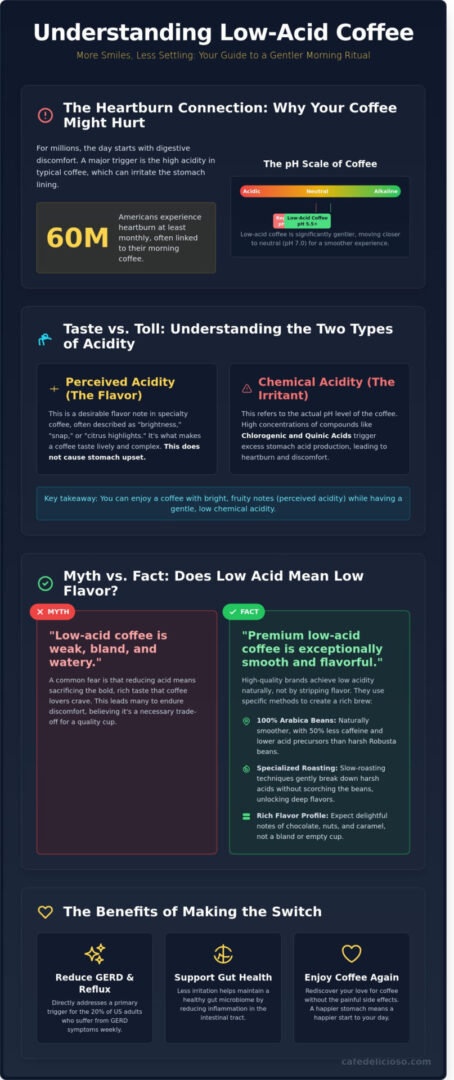
Your morning ritual should bring comfort, not a burning sensation in your chest. For many, the first sip of a standard roast triggers immediate digestive regret. This happens because most traditional coffees sit at a pH level between 4.85 and 5.10 on the logarithmic scale. Since 7.0 is neutral, these numbers represent a significant level of acidity that can irritate sensitive stomach linings. When you explore what is low-acid coffee? you find it typically refers to beans with a pH of 5.5 or higher, achieved through specific sourcing and roasting techniques.
Understanding the chemistry behind the cup is the first step toward a pain-free experience. Two primary compounds, chlorogenic acid and quinic acid, are the main culprits behind stomach upset. Chlorogenic acids (CGA) are antioxidants that break down during roasting into quinic acid. While these compounds contribute to the coffee’s profile, high concentrations lead to excessive gastric acid production. By selecting specific low acid coffee brands, you can enjoy your cup of joy without the chemical bite that disrupts your day.
Many drinkers confuse perceived acidity with chemical acidity. Perceived acidity is a flavor note, often described as brightness, snap, or citrus highlights. It’s a prized quality in specialty coffee. Chemical acidity, however, refers to the actual pH level. It’s entirely possible to have a coffee that tastes bright and fruity while maintaining a stomach-friendly pH balance. This distinction allows coffee lovers to keep the complex flavors they crave while protecting their digestive health. More smiles, less settling for bland alternatives.
Common Symptoms of Coffee Sensitivity
The American College of Gastroenterology reports that 20% of adults in the United States suffer from GERD symptoms weekly. For these individuals, high-acid coffee acts as a direct trigger for acid reflux and heartburn. The irritation isn’t just about the liquid’s pH; high acid levels signal the stomach to produce even more digestive acid, creating a painful cycle. Many people blame caffeine for their jitters or stomach pain, but studies show that the acid profile is often the hidden offender.
Switching to a lower-acid option helps maintain a healthy gut microbiome by reducing inflammation in the intestinal tract. When the stomach isn’t constantly fighting off high-acid triggers, it can better process nutrients and maintain a balanced bacterial environment. This change is especially beneficial for the 60 million Americans who experience heartburn at least once a month. Choosing a gentle roast ensures your coffee ritual remains a source of happiness rather than a health hurdle.
The Myth of Low Acid Means Low Flavor
A common misconception suggests that removing acid results in a weak or watery brew. This couldn’t be further from the truth. Premium low acid coffee brands focus on high-altitude Brazilian beans and specialized roasting profiles to preserve body and depth. By using 100 percent Arabica beans, roasters tap into a naturally smoother bean variety. Arabica contains roughly 50% less caffeine and significantly lower acid precursors than the harsher Robusta beans often found in grocery store blends.
Exceptional coffee comes from a love for the process. Slow-roasting techniques allow the heat to break down chlorogenic acids more effectively without scorching the bean. This results in a profile rich in chocolate, nut, and caramel notes. You don’t have to compromise on the bold statement of a strong Brazilian coffee just to save your stomach. Taste the difference in quality by choosing roasts that prioritize both your palate and your well-being. It’s about finding that happy place where flavor and comfort coexist perfectly.
The Science of Smooth: How Origin and Altitude Affect Acidity
Coffee acidity isn’t just about a pH number on a scale; it’s a direct reflection of where and how the bean grows. Altitude plays a massive role in this chemical development. When coffee grows at high elevations, such as 2,000 meters in the mountains of Ethiopia or Colombia, the air is thinner and the temperatures are cooler. This environment forces the coffee cherry to mature slowly. This slow growth builds complex sugars and organic acids like citric and malic acid. While specialty coffee enthusiasts often enjoy that bright “zing,” it can be a source of discomfort for those with sensitive stomachs.
Low altitude regions produce a different chemical profile entirely. In these warmer climates, coffee plants grow faster and the beans develop with a much lower concentration of these sharp organic acids. The chemical composition of coffee acids changes significantly based on the soil’s mineral content and the local climate. Volcanic soils in certain regions can yield high phosphoric acid levels, whereas the plateau regions of South America offer a more balanced mineral base. This results in beans that are naturally smoother from the moment they’re harvested. When evaluating low acid coffee brands, the origin story is the most important chapter to read.
Processing also dictates your morning comfort. The washed process, common in high-acid regions, removes the fruit immediately after picking. This highlights the bean’s inherent acidity. The natural dry process allows the bean to dry inside the cherry for up to 30 days. This method allows the bean to absorb sweetness from the surrounding fruit mucilage, which effectively masks and reduces the sharp acidic notes. This traditional method is a cornerstone of our love for the process, ensuring every bean retains its natural integrity without the harsh bite.
Why Brazilian Coffee Is the Gold Standard for Low Acid
The Alta Mogiana region in Brazil sits at an ideal elevation between 800 and 1,100 meters. This sweet spot allows the beans to develop a full, creamy body without the aggressive acidity found in high-altitude varieties. Our partnership with the Cocapec cooperative ensures that these beans are grown with a deep love for the land and regenerative farming practices. Brazilian Arabica is famous for its nutty and chocolatey profile. It offers a heavy mouthfeel that feels like a warm hug for your palate. When you choose authentic Brazilian beans, you’re choosing a coffee that’s naturally kind to your digestion. It is the perfect foundation for anyone seeking a premium experience without the typical stomach irritation found in other low acid coffee brands.
The Role of the Roasting Process
Roasting is the final stage of acid reduction. During the roast, heat triggers a chemical breakdown of chlorogenic acids. A slow, 15 minute roast can reduce total acidity by up to 50 percent compared to a quick light roast. Darker roasts are traditionally easier on the stomach because the prolonged heat exposure destroys the compounds that trigger gastric distress. We believe in roasting for balance. We want to lower the acid while keeping the specialty flavor notes like caramel and toasted nuts intact. This ensures you get more smiles and less settling with every brew. It’s about crafting a cup of joy that’s as bold as it is compassionate to your body.
Natural vs Treated: Choosing the Right Low Acid Coffee Brands
Finding a cup of joy that doesn’t trigger digestive discomfort requires understanding how coffee reaches its final acidity level. Not all low acid coffee brands are created equal. Some brands rely on the inherent biology of the bean, while others use industrial processing to strip away acids after the harvest. For coffee lovers who value purity and flavor, the difference between these two methods is everything. Naturally low acid beans are grown in specific conditions, typically at lower altitudes like the Alta Mogiana region in Brazil. These beans develop a smoother profile with 25 to 30 percent less chlorogenic acid than high-altitude varieties, offering a gentle experience without any extra processing.
Treated coffees take a different path. These brands often start with standard, high-acid beans and apply heat, steam, or chemical solvents to neutralize the pH level. While this effectively lowers acidity, it often compromises the soul of the coffee. When you choose coffee that is naturally low in acid, you’re choosing a product that respects the land and the process. This approach ensures you get more smiles and less settling, allowing the authentic notes of chocolate and nut to shine through without the metallic aftertaste often found in treated alternatives.
The Problem with Chemically Treated Coffee
Many mass-market brands use chemical solvents like ethyl acetate or methylene chloride to strip the waxy outer layer of the green coffee bean. This process removes the acids but also destroys the delicate aromatic oils that define specialty coffee. Research from 2025 indicates that chemical treatments can reduce the antioxidant profile of the bean by up to 40 percent. Choosing natural options is the safer choice for sensitive systems because it avoids potential chemical residues. A clean, natural bean provides a predictable, gut-friendly experience every single morning.
Evaluating Brand Transparency and Ethics
Transparency is the ultimate indicator of quality. When a brand is open about its sourcing, it shows a deep love for the people and the land. In 2026, the best low acid coffee brands are those that provide batch-specific pH testing and clear origin data. High-quality bean sorting is also vital; removing defective or moldy beans significantly reduces stomach irritation. Ethical labor practices and regenerative farming are not just buzzwords. They are pillars of quality. You can read our mission to see how ethical sourcing and pesticide-free farming impact the final quality of your brew. This commitment to compassion ensures that every sip supports both your health and the farmers who grow these exceptional beans.
Reading labels effectively is your best defense against digestive distress. Look for specific markers like “pesticide-free,” “non-GMO,” and “low altitude grown.” Truly premium brands will often list a pH level between 5.5 and 6.0, which is significantly higher and less acidic than the 4.7 pH found in standard commercial roasts. Avoid vague terms like “stomach-friendly” unless they are backed by specific sourcing details. By focusing on brands that prioritize natural cultivation over chemical intervention, you can enjoy a bold, strong cup of Brazilian coffee that loves you back. It is about finding that perfect balance of strength and softness in every bag.
5 Tips for Brewing the Perfect Low Acid Cup at Home
Your morning ritual should bring you peace, not a stomach ache. Even when you choose the best low acid coffee brands, how you brew those beans determines the final pH level of your drink. Brewing is a chemical reaction. By controlling the variables, you can ensure your cup stays gentle on your digestive system while remaining deliciously strong.
Start by selecting a coarse grind size. Fine grinds increase the surface area of the coffee, which allows hot water to extract bitter quinic and chlorogenic acids more rapidly. A coarse grind, similar to the texture of sea salt, slows down this extraction process. This simple adjustment prevents over-extraction, keeping the flavor profile smooth and the acid levels low. It’s a small change that makes a massive difference for your gut health.
Monitoring your water temperature is another vital step. Water that is too hot will scorch your beans and release harsh acidic compounds. Aim for a temperature between 195 and 205 degrees Fahrenheit. If you don’t have a thermometer, let your kettle sit for about 60 seconds after it reaches a boil before pouring. This slight drop in temperature protects the delicate oils in the bean and prevents that localized “burnt” acidity that often triggers heartburn.
Use a paper filter instead of a metal mesh one. Paper filters are excellent at trapping oily compounds like cafestol and kahweol. While these oils contribute to the body of the coffee, they can also increase the perceived acidity and heaviness of the drink. A paper filter creates a cleaner, lighter cup that is much easier for your body to process. Always rinse the filter with hot water first to remove any papery taste before you add your grounds.
Freshness is non-negotiable for optimal digestion. Stale beans undergo oxidation, which changes the chemical structure of the oils and increases bitterness. We believe in a Love for the Process, which means roasting in small batches to ensure you receive beans at their peak. Choosing a brand that prioritizes fresh roasted dates ensures you’re getting the most antioxidants with the least amount of digestive irritation. Experience the smooth, stomach-friendly flavor of our premium Brazilian coffee today.
Cold Brew: The Ultimate Low Acid Hack
Cold brew is the gold standard for sensitive stomachs. Research indicates that cold water extraction results in 60 percent less acid than traditional hot brewing methods. Because heat is never applied, the chemical breakdown that releases harsh acids never occurs. To make it, combine coarse grounds with filtered water and let them steep for a full 24 hours at room temperature. This long, slow process creates a rich concentrate. You can dilute this concentrate with hot water for a warm cup or enjoy it over ice for a silky, gentle experience that honors the bean’s natural sweetness.
Water Quality and Its Impact on pH
The water you use is just as important as the beans. Hard water contains high levels of calcium and magnesium, which can sometimes buffer acids but often leaves your coffee tasting flat or metallic. Soft water, on the other hand, can make coffee taste overly bright or sharp. Using filtered water ensures the beans shine without added minerals or chlorine interfering with the pH. You can check your tap water with a simple pH strip from a hardware store. If your water falls below a 7.0 pH level, it’s already acidic before you even add the coffee. Using a basic charcoal filter pitcher can neutralize your water and provide a clean canvas for your favorite low acid coffee brands to perform their best.
Experience More Smiles and Less Settling with Café Delicioso
Coffee should be the highlight of your morning, not a source of physical discomfort. For many, the search for the perfect brew ends in frustration because high acidity levels lead to heartburn or digestive issues. Finding the right fit among low acid coffee brands can feel like a chore, but it doesn’t have to be. Our single-origin Brazilian Arabica beans are naturally gut-friendly because of the specific conditions in which they grow. Unlike beans grown in high-altitude volcanic soil, our coffee thrives in the temperate climate of Alta Mogiana, which naturally produces a bean with lower chlorogenic acid levels.
This botanical advantage means we don’t rely on chemical treatments or steam processing to lower the pH level. Instead, we lean on the inherent quality of the land. When you drink Café Delicioso, you’re experiencing a cup that’s gentle on your stomach while remaining incredibly bold in flavor. We believe in “More Smiles. Less Settling.” This means you get the kick you need to seize the day without the lingering discomfort that often follows a standard cup of joe. Our process ensures that every sip is smooth, inviting, and consistently delicious.
- Natural Low Acidity: Sourced from altitudes of 800 to 1,200 meters, our beans are naturally easier on the digestive system.
- Pesticide-Free Integrity: We strictly avoid synthetic chemicals to ensure a clean, pure experience in every mug.
- Bold Strength: We prove that low acid doesn’t have to mean weak flavor; our roast profile remains strong and satisfying.
- Affordable Premium: We bridge the gap between expensive specialty roasts and everyday grocery store options.
Crafted with Compassion in Alta Mogiana
Our commitment to quality starts with our partnership with the Cocapec cooperative. This organization represents over 500 local farmers who share our “Love for the Land.” By utilizing regenerative farming techniques, these producers restore the soil and protect local biodiversity. This isn’t just about ethics; it’s about the bean. Healthy soil creates a nutrient-dense coffee cherry, resulting in a deeper flavor profile. You can explore our coffee for more details on our unique process and how we maintain 100 percent compliance with environmental regulations. Our dedication to ethical labor and sustainable practices ensures that every bag supports a healthier planet and a more vibrant farming community.
Your Cup of Joy Awaits
Café Delicioso stands as a leader among low acid coffee brands because we refuse to compromise on the sensory experience. We’ve mastered the art of balancing a robust, full-bodied profile with a finish so smooth it feels like a treat. You don’t have to choose between your health and your love for a strong brew anymore. It’s time to stop settling for stomach pain and start enjoying your morning ritual again. We invite you to shop our collection and find your next favorite ritual. Experience the difference that authentic Brazilian heritage and compassionate crafting can make in your daily life. Your body and your taste buds will thank you for making the switch to a coffee that truly cares.
Choose a Smoother Morning and a Happier Gut
Finding the right balance in your morning ritual shouldn’t feel like a compromise. You’ve learned that the secret to a gentle cup lies in the science of the bean. Selecting the best low acid coffee brands starts with looking at the source. Beans grown in the Alta Mogiana region of Brazil provide a naturally smoother profile without the harsh chemical treatments used by some commercial roasters. By pairing the right origin with mindful brewing techniques like using slightly lower water temperatures or trying a cold brew method, you can enjoy your favorite drink without the digestive discomfort.
At Café Delicioso, we believe nothing should come between you and your cup of joy. Our 100 percent Pure Arabica is sourced directly from the Alta Mogiana region. We prioritize regenerative farming and pesticide-free processes to ensure every sip is as clean as it is delicious. You get affordable, premium quality that honors the land and the people who farm it. It’s time to experience more smiles and less settling with a brew that loves you back.
Shop Café Delicioso: Premium Low Acid Brazilian Coffee
Your perfect, gut-friendly coffee experience is just one brew away. We can’t wait for you to taste the difference that compassion and quality make in every single mug.
Frequently Asked Questions
Is low acid coffee better for people with GERD?
Low acid coffee is significantly better for individuals with GERD because it helps maintain a higher pH level in the digestive tract. Standard coffee typically has a pH of 4.7, while low acid varieties sit between 5.5 and 6.0. A 2014 study published in Alimentary Pharmacology and Therapeutics indicated that reducing dietary acid helps 75 percent of patients manage their reflux symptoms. Choosing a gentler brew means you can enjoy your cup of joy without the painful burning of heartburn.
Does dark roast coffee have less acid than light roast?
Dark roast coffee generally contains less acid than light roast because the prolonged roasting process breaks down the beans’ natural chemical compounds. During the 13 to 15 minutes required for a dark roast, coffee develops N-methylpyridinium, a compound that actually signals the stomach to produce less acid. Research from the American Chemical Society shows that dark roasts can contain up to twice the amount of this beneficial compound compared to lighter, more acidic roasts.
Can I make regular coffee less acidic at home?
You can easily reduce the acidity of standard coffee by adding a pinch of baking soda or using a paper filter during brewing. Adding just 0.25 teaspoons of baking soda to a full carafe neutralizes acids without compromising the bold Brazilian flavor you love. Paper filters are also effective because they trap cafestol and kahweol. These oily substances trigger acid production in about 30 percent of coffee drinkers, so filtering them out creates a much smoother experience for your stomach.
What is the least acidic coffee brewing method?
Cold brewing is the most effective method for creating a low acid drink, as it reduces acid extraction by roughly 67 percent compared to traditional hot methods. Since cold water doesn’t extract the same volatile oils as boiling water, the resulting concentrate is naturally sweeter and heavier in body. If you prefer hot coffee, use a French press with a coarse grind. Steeping for exactly 4 minutes allows for a rich flavor without the harshness found in drip machines.
Are all organic coffee brands low in acid?
Organic certification does not guarantee that a coffee is low in acid. The organic label simply confirms the beans grew without synthetic pesticides or fertilizers, often on regenerative farms like our partners in Brazil. While organic practices are essential for the land and the people, acidity is actually determined by the bean’s altitude and roasting profile. A high altitude organic bean from Ethiopia will still be significantly more acidic than a low altitude bean from a traditional Brazilian estate.
How do I know if a coffee brand is naturally low acid?
You can identify naturally low acid coffee by looking for beans grown at elevations below 3,500 feet. Coffee plants grown at lower altitudes, such as those in the Alta Mogiana region, mature faster and develop a more alkaline chemical composition. When you are shopping for low acid coffee brands, prioritize labels that mention natural processing or sun-drying. These traditional methods preserve the bean’s natural sugars, resulting in an incomparable smoothness that is much easier on your digestive system.
Does low acid coffee have less caffeine?
Most low acid coffees contain the same amount of caffeine as standard roasts because caffeine levels are tied to the bean species rather than the pH level. A typical 8 ounce serving of Arabica coffee provides about 95 milligrams of caffeine regardless of its acidity. Some brands use a steam treatment to strip away acids which can reduce caffeine by 10 percent; however, choosing naturally low acid beans ensures you get the energy you need. It’s the perfect way to enjoy more smiles and less settling.
Why does Brazilian coffee taste smoother than others?
Brazilian coffee tastes smoother because the beans are often processed using the pulped natural method, which allows the fruit’s sugars to caramelize on the bean. This process creates a chocolatey, nutty profile with very low perceived acidity compared to the citrusy notes found in Central American varieties. Our specialty beans from the Cocapec cooperative provide an authentic experience that reflects our love for the process. You get a heavy-bodied, premium cup that feels like a warm hug for your palate.