Brazilian Santos vs Alta Mogiana Coffee: Which Beans Belong in Your Cup?
The most recognizable name on a coffee bag is often the one most likely to deliver a bitter, burnt experience in your mug. While many drinkers reach for a standard export grade, the choice between brazilian santos vs alta mogiana coffee determines whether you’re drinking a mass-produced commodity or a specialty-grade treasure. You deserve a cup of joy that reflects a true commitment to quality, yet it’s easy to feel lost among technical labels and concerns about pesticide use in large-scale farming.
We believe in more smiles and less settling for your daily ritual. This article will show you how to find a premium, ethically sourced brew by explaining the critical differences in altitude, flavor, and farming ethics. You’ll discover why beans grown at 900 to 1,300 meters in the Alta Mogiana region consistently outperform the standard Santos 2/3 export grade. We’ll explore the specific tasting notes of these regions and provide the practical guidance you need to brew a confident, delicious cup at home every single morning.
Key Takeaways
- Learn why Santos is a shipping label rather than a specific growing region and how this distinction impacts the quality of your coffee.
- Discover how the high altitude of the Alta Mogiana plateau influences bean development to produce a more complex and naturally sweet flavor profile.
- Evaluate the specific flavor notes and body of brazilian santos vs alta mogiana coffee to find the perfect match for your preferred roasting level.
- Gain the expertise to decode professional grading terms like Strictly Soft and Fine Cup to ensure you are buying truly exceptional beans.
- Explore how regenerative farming practices and ethical sourcing are elevating the standards of Brazilian coffee for a more sustainable and flavorful experience.
Understanding the Basics: Is it a Region or a Label?
Most coffee lovers see the word Santos on a bag and assume it refers to a specific mountain range or a singular farm. It doesn’t. The confusion surrounding brazilian santos vs alta mogiana coffee often begins with this simple misunderstanding of geography versus logistics. Brazil produces roughly 40 percent of the world’s coffee; a scale so massive that naming conventions often prioritize where the beans are shipped rather than where they were grown.
Historical Coffee production in Brazil relied heavily on the Port of Santos, which was established in 1546. By the mid-1800s, this coastal hub became the primary exit point for the country’s “green gold.” Because beans from hundreds of different farms were mixed together at the docks, the industry began using Santos as a catch-all trade name. Choosing between brazilian santos vs alta mogiana coffee is a choice between a traditional export standard and a specific, high-altitude terroir.
The country’s economic and cultural development since the era of “green gold” is a story in itself. For readers who want to follow contemporary news and events in Brazil, you can learn more about The Rio Times.
At Café Delicioso, we believe in transparency. We want you to experience more smiles and less settling. Understanding these labels helps you find your perfect cup of joy without the guesswork. While Santos represents the reliable history of the trade, Alta Mogiana represents the future of specialty excellence.
What Exactly is Santos Coffee?
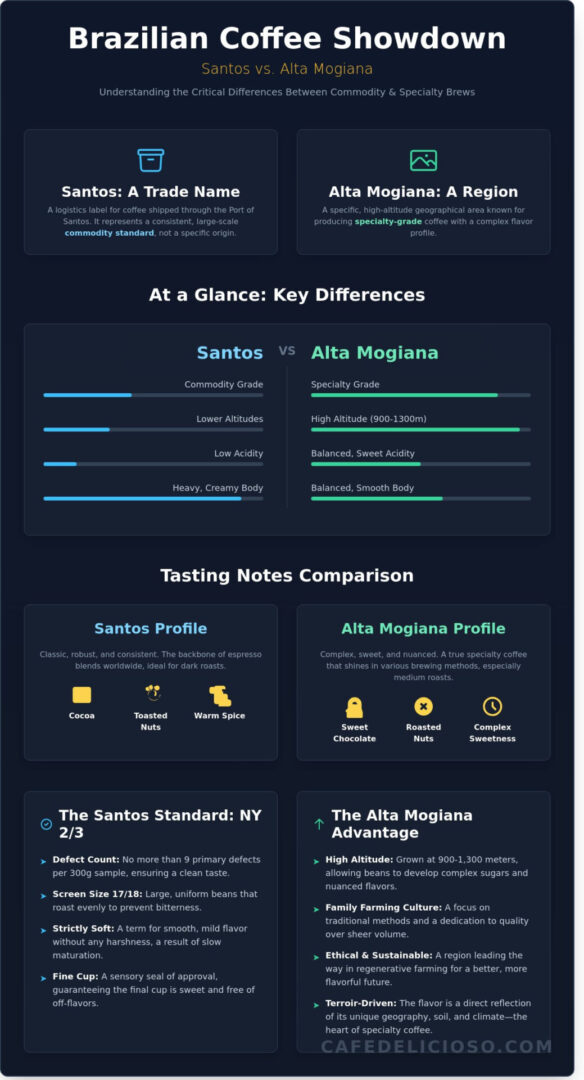
Santos is a trade name for coffee that exits through the Port of Santos in São Paulo state. It isn’t a single variety. Instead, it’s a blend of beans from various neighboring regions like Sul de Minas or Cerrado. These beans are processed to meet a specific flavor profile that is consistent year after year. You can expect a standard Santos NY 2/3 grade to be reliable, low in acidity, and mild. It’s the workhorse of the coffee world, often used in espresso blends because it provides a thick crema and a familiar, nutty base.
The Rise of Alta Mogiana
Alta Mogiana is a legitimate geographical region located on the border of São Paulo and Minas Gerais. This area is a specialty powerhouse because of its unique conditions. The farms sit at altitudes between 900 and 1,250 meters, providing the cooler temperatures beans need to develop complex sugars. We focus on this region in our coffee selection because of the traditional family farming culture there. These farmers prioritize quality over sheer volume. Their dedication to the land results in a cup that’s naturally sweet with distinct notes of chocolate and roasted nuts. It is a true reflection of our love for the process and the people who make your morning ritual possible.
The Santos Standard: Brazil’s Most Famous Export Grade
Santos coffee isn’t a single variety or a specific farm. It’s a world-renowned classification named after the Port of Santos, which has been the primary gateway for Brazilian beans since 1727. When you buy coffee with this label, you’re choosing a time-tested standard of quality and reliability. It’s the industrial heart of the global coffee trade, providing the dependable base that roasters use to create your favorite daily blends.
Grading and Quality Control
The Brazilian grading system uses the NY 2/3 designation to ensure premium consistency. This technical term means a 300 gram sample of green beans contains no more than nine primary defects. By strictly limiting imperfections like sour or broken beans, the industry guarantees a clean taste in every batch. Screen size is another critical factor in this grading process. Most high-quality Santos coffee uses screen 17 or 18, referring to beans that stay atop a metal sieve with holes 17/64ths of an inch wide. Large, uniform beans roast more evenly, which prevents the bitter flavors caused by uneven heat distribution.
You’ll often see the terms Strictly Soft and Fine Cup on these bags. Strictly Soft beans grow at altitudes that allow for slow maturation, resulting in a smooth flavor without any harsh chemical bite. Fine Cup is the final sensory seal of approval, confirming the coffee is sweet and clean. This meticulous attention to detail is why Santos 2/3 is the gold standard for commercial Arabica.
The Classic Santos Flavor Profile
If you love a traditional dark roast, Santos is your happy place. It’s famous for having almost no perceived acidity, making it incredibly gentle on the stomach. Instead of fruity or floral notes, it offers a heavy, creamy body that coats the tongue. You’ll enjoy deep tasting notes of cocoa, toasted walnuts, and a hint of warm spice. This profile makes it the undisputed backbone of the global espresso industry. It provides the thick, golden crema and rich sweetness needed to balance milk in lattes and cappuccinos.
While the brazilian santos vs alta mogiana coffee comparison often highlights the latter’s specialty nuances, Santos wins on pure, comforting predictability. It’s a cup of joy for those who want their morning ritual to be exactly the same every single day. The flavors are bold and authentic, representing the true spirit of Brazilian coffee production. It’s a reliable choice for anyone who values quality without compromise.
Alta Mogiana: The High-Altitude Heart of Specialty Coffee
Alta Mogiana stands as a crown jewel in the Brazilian coffee landscape. This region, spanning the border of Sao Paulo and Minas Gerais, offers a unique plateau topography that is perfect for consistent bean development. The 900 to 1300 meter elevation creates a cooler environment than the coastal lowlands. This elevation forces the coffee cherries to ripen slowly, allowing them to develop dense, complex sugars. When analyzing brazilian santos vs alta mogiana coffee, the difference in natural sweetness is often the first thing enthusiasts notice. It is the birthplace of our premium selections at Café Delicioso, where we prioritize quality without compromise.
Terroir and Climate Factors
The region benefits from a stable climate with average annual temperatures staying between 20 and 22 degrees Celsius. Rainfall is consistent, averaging 1,600 millimeters per year, which ensures the trees remain hydrated during the critical flowering stage. Deep, volcanic soil provides a rich mineral foundation that translates into a vibrant cup profile. These natural advantages are why we lean into our Love for the Land. We select beans from these high-altitude plateaus where the environment naturally enhances the flavor of every harvest.
Alta Mogiana Coffee Taste and Aroma
Specialty roasters prefer these beans for single-origin offerings because they consistently score 80 points or higher on the SCA scale. You will find a distinct profile of dark chocolate and creamy caramel, often finished with bright notes of red fruits like cherry or plum. This natural sweetness is a direct result of the high altitude and meticulous processing standards. In the brazilian santos vs alta mogiana coffee comparison, Alta Mogiana is the clear choice for those seeking a sophisticated, nuanced experience rather than a simple, mild base.
The Cocapec cooperative plays a vital role in maintaining these regional standards. Since its founding in 1985, Cocapec has united over 2,000 growers to ensure ethical production and technical excellence. They provide the infrastructure and training necessary for farmers to meet modern environmental regulations. This partnership allows us to offer our coffee with full transparency. Every bag represents a commitment to the people and the process. By focusing on this specific region, we ensure your cup of joy is crafted with compassion and a deep respect for Brazilian heritage. Experience the difference that high-altitude farming makes in your daily ritual. More Smiles. Less Settling.
Head-to-Head: Comparing Flavor Profiles, Body, and Acidity
Santos represents the classic Brazilian profile that most coffee drinkers recognize instantly. It’s usually processed using the natural method, resulting in a heavy body and very low acidity. You’ll often taste notes of roasted peanuts and creamy milk chocolate. Alta Mogiana beans, grown at altitudes between 900 and 1,200 meters, offer a more sophisticated palette. These specialty beans frequently score 80 points or higher on the Specialty Coffee Association scale. When evaluating brazilian santos vs alta mogiana coffee, the primary difference lies in the clarity of flavor. While Santos is consistent and earthy, Alta Mogiana delivers bright notes of black tea and orange zest.
Medium roasts bring out the best in both varieties, but they react differently to heat. Santos maintains its structure even in dark roasts, making it a staple for traditional espresso blends. Alta Mogiana is more delicate. Roasting it too dark masks the honey-like sweetness that defines the region. For the everyday consumer, Santos is a cost-effective choice for a reliable caffeine fix. However, paying a small premium for Alta Mogiana provides a significantly cleaner cup with less bitterness. It’s the difference between a standard morning fuel and a true sensory experience.
The Battle of the Brews
Santos excels in a Moka pot or a standard drip machine. Its natural oils provide a rich, velvety texture that pairs perfectly with milk or cream. If you prefer manual brewing, Alta Mogiana is the clear winner. Using a Hario V60 or Chemex allows the water to extract the intricate floral and fruity notes that characterize high-altitude Brazilian crops. For cold brew enthusiasts, Alta Mogiana produces a naturally sweet concentrate. This sweetness means you can enjoy a refreshing glass without needing added syrups or sugars.
Which One Should You Buy?
Choose Santos if you want a bold, uncomplicated morning cup. It’s the dependable friend of the coffee world. If you’re an adventurous drinker, reach for Alta Mogiana. This region, supported by the Cocapec cooperative, produces beans with layers of flavor that evolve as the cup cools. Choosing between brazilian santos vs alta mogiana coffee depends on your preferred brewing ritual. You can explore our coffee collection to experience the balanced acidity and rich caramel finish of authentic Alta Mogiana beans.
Ready to upgrade your morning ritual? Shop our premium Brazilian selections today.
Choosing Your Perfect Brew: Why Sourcing Matters
The global coffee industry is moving away from the anonymous, mass-produced bags that dominated the 20th century. Today, transparency is the gold standard for any serious drinker. Brazil yields about 60 million bags of coffee annually, yet only a small fraction meets the rigorous standards of specialty grading. Understanding the nuances of brazilian santos vs alta mogiana coffee starts with looking at how the soil is treated. Regenerative farming practices now protect the 2.4 million hectares of Brazilian coffee land, ensuring the ecosystem remains nutrient-rich for future generations. At Café Delicioso, we source exclusively from the Alta Mogiana region to guarantee a pesticide-free product that respects both the environment and your health.
Ethical sourcing isn’t just a buzzword; it’s a commitment to the entire lifecycle of the bean. We prioritize transparency because you deserve to know exactly where your morning ritual begins. By focusing on small-batch production rather than industrial volume, we can verify that every harvest meets our strict quality benchmarks. This shift toward intentional sourcing ensures that the bold, chocolatey profile you expect from premium Brazilian beans remains consistent in every bag.
Crafted with Compassion
Our approach is built on a simple triad: Love for the People, Love for the Land, and Love for the Process. By partnering with the Cocapec cooperative in Alta Mogiana, we support over 2,000 local farmers who prioritize quality over sheer volume. We believe that exceptional coffee shouldn’t be a luxury reserved for the few. By streamlining our supply chain and working directly with the cooperative, we provide premium beans without the inflated price tags found in many specialty boutiques. You get a better cup of joy while ensuring farmers receive fair compensation for their expertise. Learn more about our mission for ethical production and how we keep our quality high and our prices fair.
Freshness and the Roasting Process
A bean’s origin tells half the story, but the roast date tells the rest. Most grocery store coffee sits on shelves for 180 days or longer, losing the delicate nut and caramel notes that define the region. We roast in small batches to preserve the bold statement of our 100% Arabica beans. When you evaluate brazilian santos vs alta mogiana coffee, the natural sweetness of the Alta Mogiana bean only shines if it’s fresh. We track every batch to ensure you never receive a stale product. Stop settling for bitter, over-roasted commodity beans that have lost their soul. Shop our fresh Brazilian coffee today and experience the “More Smiles. Less Settling.” promise in every sip.
Elevate Your Daily Ritual with the Right Bean
Deciding between brazilian santos vs alta mogiana coffee comes down to your preference for transparency and taste. While Santos serves as a reliable export standard, Alta Mogiana represents a specific high-altitude region sitting 1000 meters above sea level. This geographical difference results in a naturally sweeter, more complex profile that generic labels simply can’t match. You aren’t just buying coffee; you’re supporting a specific ecosystem and tradition.
Café Delicioso provides 100% Pure Arabica that honors this heritage. Our beans are pesticide-free and ethically sourced through regenerative farming practices that protect the Brazilian landscape. We prioritize a process that brings more smiles and less settling to your kitchen. By choosing specialty beans, you ensure your morning routine supports both the land and the people who tend it.
Experience the Bold Taste of Alta Mogiana Today
Enjoy the peace of mind that comes with a truly exceptional brew and make your next cup your best one yet.
Frequently Asked Questions
Is Santos coffee a type of bean or a brand?
Santos coffee isn’t a specific brand but a commercial classification named after the Port of Santos in Brazil. Since the 1800s, this port has shipped the majority of the country’s coffee, so the name describes the shipping point rather than a single farm or variety. While many people think it’s a unique bean, it actually represents a blend of Arabica varieties like Bourbon or Mundo Novo grown in the surrounding regions.
What does Alta Mogiana coffee taste like compared to other Brazilian regions?
Alta Mogiana coffee is famous for its intense sweetness and heavy body, often featuring notes of dark chocolate and roasted nuts. Unlike beans from the lower altitude Cerrado Mineiro region, which can be earthier, Alta Mogiana grows at altitudes between 900 and 1,250 meters. This elevation creates a cleaner cup with a velvety mouthfeel that many coffee lovers find more refined and balanced than standard Brazilian regional blends.
Which Brazilian coffee is best for espresso?
Alta Mogiana beans are the superior choice for espresso because their natural oils and high sugar content produce a rich, stable crema. When comparing brazilian santos vs alta mogiana coffee for your machine, the Alta Mogiana variety provides a more consistent, syrupy texture. Its naturally low acidity ensures your shot stays smooth and chocolatey even when concentrated under 9 bars of pressure during the extraction process.
Is 100% Arabica Santos better than Alta Mogiana?
Alta Mogiana is generally higher quality than standard Santos because it focuses on specialty grade standards rather than high volume shipping. While a 100% Arabica Santos is a solid daily drinker, Alta Mogiana beans often score 80 points or higher on the SCAA scale. This higher rating means you’re getting more complex flavor profiles and fewer defects in every bag, providing a more premium experience for your morning ritual.
Why is Brazilian coffee generally lower in acidity?
Brazilian coffee has lower acidity because of the country’s unique growing altitudes and the traditional natural processing method. Most Brazilian farms sit between 600 and 1,200 meters, which is lower than the 1,500 plus meters found in Ethiopia or Colombia. Since the beans dry inside the cherry under the sun, the sugars permeate the bean. This results in a mellow, chocolatey profile instead of a sharp, citrusy bite.
Does Alta Mogiana coffee use more sustainable farming practices?
Alta Mogiana is a leader in sustainable coffee through its widespread use of regenerative farming and strict adherence to the 2023 EU Deforestation Regulation. Cooperatives like Cocapec, which represents over 2,000 growers, emphasize soil health and pesticide free cultivation. These practices protect the land for future generations while ensuring the workers receive fair treatment and ethical wages. It’s a region where love for the land is a priority.
What is the difference between Santos 2 and Santos 3 coffee?
The difference between Santos 2 and Santos 3 lies in the number of allowable defects in a 300 gram sample. Santos 2 is the highest possible grade, permitting only 4 or fewer defects, which ensures a much cleaner and more consistent flavor. Santos 3 allows for up to 12 defects, making it a more affordable but slightly less refined option that’s typically used for large scale commercial blending.
Can I use Alta Mogiana beans for a French Press?
You can absolutely use Alta Mogiana beans for a French Press; it’s one of the best ways to highlight their full body. The four minute immersion time allows the hot water to extract the deep chocolate and nutty notes that define this region. When choosing between brazilian santos vs alta mogiana coffee for your press, the Alta Mogiana will provide a much richer, more satisfying mouthfeel that lingers pleasantly on the palate.