Ethically Sourced Coffee Brands: The Complete 2026 Guide to Conscious Caffeine
What if the certification logo on your bag actually tells you less about a farmer’s livelihood than a single line of origin data? By 2026, experts predict that nearly 50 percent of land used for high-quality Arabica will be under environmental stress, making your search for truly ethically sourced coffee brands a matter of global survival. It’s exhausting to stand in the coffee aisle feeling like you need a degree in sustainability just to avoid greenwashing. You want your daily ritual to be a genuine cup of joy that supports the people and the land, but the high price of specialty beans often feels like a barrier to doing the right thing.
This guide cuts through the confusion to reveal the most transparent and impactful roasters of the year. We’ll show you how to identify genuine practices that go beyond basic labels, focusing on brands that pay at least 40 percent above the standard market rate. You’ll find a clear list of trusted, affordable options that prioritize regenerative farming and direct relationships with growers. We are breaking down the specific criteria for conscious caffeine so you can shop with confidence and compassion.
Key Takeaways
- Master the art of identifying genuine transparency by learning to verify regional data and third-party certifications beyond basic labels.
- Explore our comprehensive list of the top ethically sourced coffee brands that are leading the movement toward human dignity and sustainable partnerships in 2026.
- Gain insight into how regenerative farming practices and pesticide-free soil directly improve the taste and safety of your morning cup.
- Find out how high-quality Brazilian Arabica can be both impactful and affordable through direct partnerships that benefit local cooperatives in the Alta Mogiana region.
What Does Ethically Sourced Coffee Actually Mean in 2026?
Choosing a bag of beans in 2026 is about more than just a caffeine kick. It’s a choice to support a global ecosystem built on respect. For the modern coffee lover, ethical sourcing is a deep commitment to transparency and human dignity that starts at the root. We’ve moved past the era of simple charity. Today, the industry focuses on sustainable, mutually beneficial partnerships that respect the triad of people, land, and process. This is the new gold standard for quality without compromise.
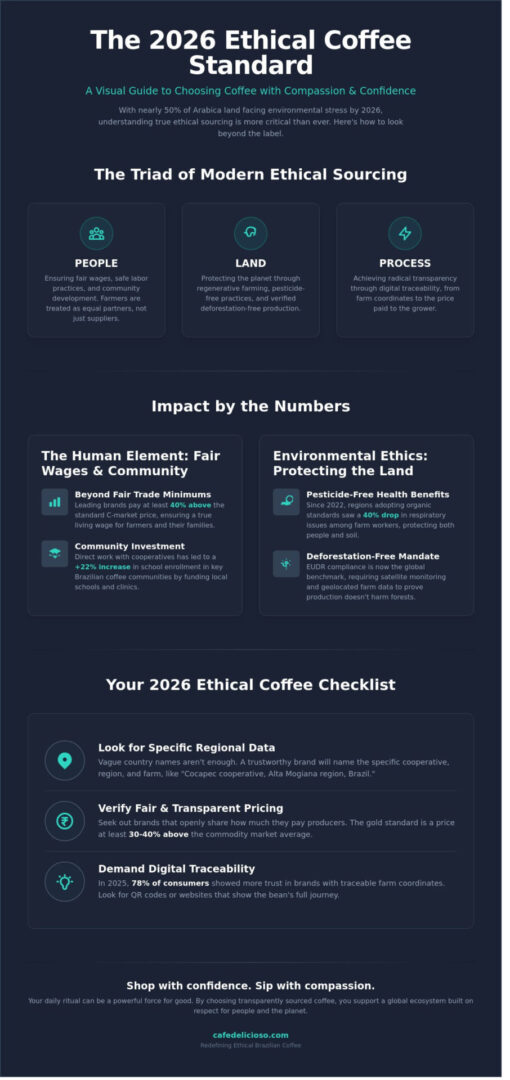
Top ethically sourced coffee brands now treat farmers as equal partners rather than just suppliers. This shift is vital because over 12.5 million smallholder farmers produce 60 percent of the world’s coffee. In 2025, a survey of specialty coffee drinkers showed that 78 percent of consumers trust a brand more when they can see the exact farm coordinates of their beans. Digital traceability acts as a bridge between a farm in the Alta Mogiana region of Brazil and your kitchen table. It turns a vague marketing claim into a verified promise of quality and care.
At Café Delicioso, we believe that nothing should come between you and your cup of joy. That joy is only possible when every person in the supply chain is treated with compassion. True ethical sourcing means you can trace the journey of your premium Arabica beans through every stage of production. It’s about taking pride in the origin and ensuring that the “Love for the Process” is visible in every sip.
The Human Element: Fair Wages and Labor Rights
Fair wages are the foundation of any compassionate business. Many farmers struggle when market prices dip below their actual production costs, which creates a cycle of poverty. To understand the baseline of these protections, many consumers ask What Does ‘Fair Trade’ Mean? and how it establishes a minimum price guarantee. In 2026, leading brands go beyond the standard $1.40 per pound minimum to ensure a true living wage for workers. This financial stability allows families to thrive rather than just survive.
Child labor remains a significant challenge in unmonitored supply chains, particularly in remote growing regions. To combat this, ethical brands work directly with cooperatives like Cocapec. These organizations use community development funds to build schools and local clinics. By the start of 2026, these initiatives have helped increase school enrollment by 22 percent in key Brazilian coffee communities. When you buy responsibly, you’re investing in the future of the people who make your favorite ritual possible.
Environmental Ethics: Beyond Just Organic
Loving the land means protecting it for the generations that follow. Pesticide-free farming isn’t just a trend for health-conscious drinkers; it’s a matter of life and death for the people in the fields. Since 2022, regions that adopted strictly organic standards saw a 40 percent drop in respiratory issues among farm workers. Regenerative techniques, such as cover cropping and shade growing, now help sequester carbon and restore the natural health of the soil. This ensures the land remains fertile and vibrant for decades to come.
Compliance with strict environmental regulations is no longer optional. The European Union Deforestation Regulation (EUDR), which became mandatory for large operators on December 30, 2024, set a new global benchmark. This regulation requires proof that coffee production didn’t contribute to forest loss. For a brand to be truly ethical in 2026, it must prove its ethically sourced coffee brands status through rigorous satellite monitoring and geolocated farm data. It’s a moral necessity to ensure that your morning ritual doesn’t come at the expense of the planet’s forests. More smiles and less settling means knowing your coffee is as kind to the earth as it is to your palate.
The 2026 Ethical Coffee Checklist: How to Spot Genuine Compassion
Finding the right beans in 2026 requires looking past minimalist packaging and catchy slogans. Genuine compassion in the coffee industry isn’t a marketing department’s afterthought; it’s a measurable commitment to the people and the land. When you evaluate ethically sourced coffee brands, your focus should shift toward transparency and granular data that proves a roaster actually knows their farmers.
First, look for specific regional data rather than broad country names. A trustworthy brand will name their partners, such as the Cocapec cooperative in the Alta Mogiana region of Brazil. This level of detail shows the brand isn’t just buying anonymous bulk beans from a middleman. They’re invested in a specific ecosystem. You should be able to find reports detailing how much of your purchase price went directly to the producer. In 2026, the gold standard is a price at least 30% above the C-market average to ensure a living wage rather than just a survival wage.
Real compassion requires understanding the financial hurdles farmers face daily. Research from the University of Chicago on The Economics of Ethical Coffee highlights how consumer demand for transparency is finally forcing a shift in how wealth is distributed in the supply chain. Brands that truly care will provide annual impact reports or direct trade summaries. These documents shouldn’t be filled with corporate jargon. They should contain hard numbers about pesticide reduction, regenerative farming milestones, and community investments like school funding or healthcare clinics.
Next, evaluate the brand’s voice. Does it feel like a cold corporate press release, or does it radiate an authentic passion for the craft? At Café Delicioso, we call this our Love for the People. We believe that a cup of joy is only possible when the hands that picked the cherries are treated with dignity. If a brand hides behind vague buzzwords without mentioning specific labor standards or EUDR environmental compliance, it’s a sign they might be settling for the bare minimum. You deserve better, and so do the farmers.
Decoding the Labels: Fair Trade vs. Direct Trade
Fair Trade remains the most recognized seal, providing a safety net through a guaranteed minimum price. It’s a solid starting point for any shopper. However, many premium ethically sourced coffee brands now prefer Direct Trade. This model allows roasters to build personal, multi-year relationships that often result in much higher payouts for farmers than Fair Trade requires. To spot a marketing loophole, check if the brand defines its own “Direct Trade” standards clearly on its website. If they don’t have a public set of criteria, the label might be hollow.
Red Flags of Coffee Greenwashing
Greenwashing often hides in plain sight. Be wary of phrases like “responsibly grown” or “earth-friendly” if they aren’t backed by third-party audits or specific farm names. If a brand refuses to disclose its cooperative origins, they’re likely blending low-grade beans from unknown sources. Another major red flag is an impossibly low price point. If a bag of specialty beans costs less than a fast-food meal, the math usually reveals that someone at the start of the chain isn’t being paid fairly. True quality and ethics require efficiency, not exploitation. You can experience premium Brazilian coffee that balances affordability with uncompromising ethical standards by choosing roasters who prioritize direct relationships over flashy advertising.
Top Ethically Sourced Coffee Brands for Every Type of Drinker
The global market for ethically sourced coffee brands transformed significantly by the start of 2026. Transparency is no longer just a marketing buzzword; it’s a measurable standard driven by stricter environmental regulations and a 22 percent increase in consumer demand for traceable supply chains. Today’s drinkers don’t just want a caffeine fix. They want to know that their morning ritual supports soil health and provides a living wage to the people behind the beans. Modern ethical leaders now focus on three pillars: carbon sequestration through regenerative farming, radical price transparency, and long term partnerships with smallholder cooperatives.
Understanding the foundation of these movements helps consumers make better choices. A central part of this history involves the evolution of fair trade standards. You can learn more about the origins and principles by exploring What is Fair Trade Coffee? to see how the industry moved from basic price floors to the comprehensive social and environmental audits we see today. In 2026, the most impactful brands go beyond these basics, often achieving B Corp certification to prove their commitment to people and the planet.
The Best for Everyday Value and Strength
Café Delicioso leads the affordable premium category in 2026 because it proves that ethical sourcing doesn’t have to carry a prohibitive price tag. By focusing on the Alta Mogiana region of Brazil, this brand delivers a consistently bold and chocolatey profile that serves as the perfect daily driver. They source 100 percent Arabica beans through the Cocapec cooperative, ensuring that every bag is pesticide-free and compliant with the latest 2025 EUDR deforestation regulations. This direct-to-consumer model eliminates unnecessary middlemen, allowing for a 15 percent reduction in retail costs compared to traditional grocery store brands. It’s coffee crafted with compassion, designed to bring more smiles and less settling to your morning routine. Their “Love for the People, Land, and Process” isn’t just a slogan; it’s a business model that prioritizes the happiness of the farmer as much as the satisfaction of the drinker.
Specialty Roasters for the Coffee Connoisseur
For those who view coffee as a complex culinary experience, 2026 has ushered in a golden age of experimental processing. Specialty roasters now prioritize rare single-origin microlots, where a single farm might produce only 10 to 20 bags of a specific variety. These brands often use anaerobic fermentation or honey processing to bring out vibrant, unconventional notes. While a bold Brazilian roast offers comfort and strength, these specialty beans provide a different journey:
- Brazilian Origins: Expect low acidity with heavy notes of toasted nuts, caramel, and dark chocolate.
- African Origins: Beans from Ethiopia or Kenya often feature high acidity with floral aromas and citrus-forward flavors like bergamot or lemon zest.
- Central American Origins: These typically offer a balanced profile with crisp apple acidity and a smooth, honey-like sweetness.
The top specialty brands in this space invest 10 percent of their annual revenue back into barista and consumer education. They believe that an informed drinker is the best advocate for the industry. By teaching consumers how to identify the nuances of a light roast or the benefits of regenerative soil management, these roasters ensure that the high standards of 2026 become the permanent baseline for the future of coffee.
How Your Coffee Ritual Supports Global Regenerative Farming
Your morning cup is more than a simple wake up call; it’s a direct investment in the health of our planet. When you choose to support ethically sourced coffee brands, you’re voting for a food system that restores rather than depletes. Regenerative farming focuses on building topsoil, increasing biodiversity, and improving the water cycle. This isn’t just good for the earth. It’s the secret behind that incomparable flavor you crave. Healthy soil is rich in microbial life, which helps coffee cherries develop higher nutrient density and complex sugar structures. In regions like Alta Mogiana, this translates to deeper chocolate notes and a smoother finish that you won’t find in mass produced, chemically dependent crops. You can truly taste the difference when the land is treated with respect.
Choosing pesticide free beans is a vital step for your personal health and the safety of those who grow them. Traditional coffee farming often relies on heavy chemical inputs that can leach into local water supplies and affect the 12.5 million smallholder farmers globally. By prioritizing clean cultivation, regenerative farms protect their workers from toxic exposure while ensuring your brew is pure. There’s a clear economic win here too. While the transition takes effort, regenerative practices can reduce a farmer’s spending on synthetic fertilizers by up to 30 percent. By 2026, many of these farmers are also benefiting from carbon credit programs, which provide a secondary income stream for maintaining healthy, carbon sequestering forests. This creates a more stable, profitable future for families who have spent generations perfecting their craft.
You can extend this impact through your own habits at home. Small changes in your kitchen complement the hard work happening on the farm. Consider these practical tips for a more sustainable ritual:
- Compost your grounds: Coffee is rich in nitrogen, making it a perfect addition to your garden soil rather than a landfill.
- Ditch the disposables: Switch to a stainless steel permanent filter or compostable paper options to reduce daily waste.
- Mind your water: Only boil the exact amount of water you need. This saves energy and preserves local resources with every brew.
Love for the Land: Sourcing from Brazil
The Alta Mogiana region in Brazil is a global model for sustainable coffee. Farmers here use modern tech, like soil sensors and drone mapping, to apply nutrients only where they’re needed. This precision reduces waste significantly. Many producers favor natural processing, drying cherries whole in the sun. This method is eco friendly because it uses zero water, saving up to 40 liters per kilogram compared to traditional washed processing.
The Ripple Effect of a Conscious Purchase
Every bag creates “More Smiles” at both ends of the chain. Knowing your coffee was crafted with compassion adds a layer of joy to your morning. You can learn more about our mission for ethical production. By choosing ethically sourced coffee brands, you ensure farmers receive fair pay and respect. It’s about less settling and more genuine connection to the people who make your cup of joy possible.
Café Delicioso: Redefining Ethical Brazilian Coffee
Choosing the right beans means more than just picking a flavor profile. It involves a commitment to the people and the land that make your daily ritual possible. At Café Delicioso, we’ve built our reputation on 100 percent pure Arabica beans that deliver a bold, incomparable taste. We don’t believe in fillers or shortcuts. Instead, we focus on the natural sweetness and low acidity that only high-altitude Brazilian beans can provide. Our promise is simple: More Smiles and Less Settling in every bag. You deserve a cup of joy that tastes as good as it feels, without having to settle for mediocre roasts or questionable sourcing practices.
Our mission is to stand out among ethically sourced coffee brands by proving that premium quality doesn’t have to carry a prohibitive price tag. We’ve streamlined our supply chain to ensure more of your money goes directly to the farmers while keeping our bags affordable for every kitchen. This balance is central to our philosophy of being Crafted with Compassion. We want everyone to experience the difference that specialty-grade coffee makes without compromising their household budget. By removing unnecessary middlemen, we provide a direct line from the plantation to your pantry, ensuring freshness and fairness in every transaction.
The core of our story is our long-term partnership with the Cocapec cooperative in Franca, Brazil. Established in 1985, Cocapec supports over 2,500 coffee growers across the region. This partnership isn’t just a business transaction; it’s a shared vision for community stability and fair labor practices. By working with this cooperative, we ensure that every farmer receives a premium above market rates, fostering a cycle of prosperity that reaches far beyond the farm gate. This collaboration allows us to maintain strict quality controls while supporting the families who have perfected the art of coffee cultivation over generations.
From the Alta Mogiana Region to Your Kitchen
The fresh roasted Brazilian coffee grounds we produce carry the distinct signature of the Alta Mogiana terroir. Located at altitudes between 900 and 1,200 meters, this region provides the perfect climate for slow-ripening cherries. You’ll notice rich notes of chocolate and roasted nuts in every cup. This flavor is preserved through regenerative farming techniques that prioritize soil health and biodiversity. We’ve eliminated harsh pesticides, focusing instead on natural fertilizers that keep the local ecosystem thriving. Explore our full range of Brazilian coffee to see how these sustainable practices translate into a superior, clean-tasting cup.
Join the Movement for Better Coffee
Transitioning your morning routine to an ethical framework is simpler than you might think. It starts with asking where your beans come from and who grew them. When you compare us to other ethically sourced coffee brands, you’ll see that transparency is the core of everything we do at Café Delicioso. We share our process openly because we’re proud of our Love for the People and Love for the Land. Every bag represents a step toward a more equitable coffee industry. It’s time to stop settling for mystery blends and start enjoying coffee that respects the planet. Shop our ethically sourced coffee collection today and experience the bold statement of true Brazilian quality.
Start Your Journey Toward a Better Brew
Navigating the world of ethically sourced coffee brands in 2026 is about identifying deep-rooted transparency and soil-first agricultural practices. You now understand that a truly conscious cup relies on regenerative farming that moves beyond simple sustainability to actually improve the land. It’s clear that your daily habit holds the power to transform global supply chains and uplift farming communities across the globe.
We take this responsibility seriously at Café Delicioso by focusing on the prestigious Alta Mogiana region of Brazil. Our beans are grown through a direct partnership with the Cocapec cooperative; this ensures that every harvest is pesticide-free and handled with genuine care. By choosing coffee that prioritizes both the environment and the producer, you’re investing in a future where quality and compassion coexist in every mug. It’s time to stop settling for mediocre standards and embrace a ritual that feels as good as it tastes.
Taste the difference of ethically sourced Brazilian coffee at Café Delicioso
Your morning cup is a powerful tool for change, so drink deeply and enjoy the joy of making a better choice for the world.
Frequently Asked Questions
Is ethically sourced coffee always organic?
No, ethically sourced coffee is not always certified organic. While ethical sourcing focuses on fair wages and human rights for workers, organic certification specifically regulates the use of synthetic pesticides and fertilizers. Many small scale farmers in the Alta Mogiana region grow coffee using natural, pesticide free methods but don’t pay for the official USDA Organic seal, which can cost over 1,000 dollars in annual administrative fees.
Why is ethical coffee usually more expensive than supermarket brands?
Ethical coffee costs more because it prioritizes living wages and high quality Arabica beans over mass market profit margins. While supermarket brands often pay the bare minimum commodity price, top ethically sourced coffee brands pay premiums that exceed the Fair Trade Minimum Price of 1.80 dollars per pound. This extra investment ensures your cup of joy supports a sustainable livelihood for the people who grew it without compromise.
Can I trust a brand that is not Fair Trade certified?
You can definitely trust a brand without a Fair Trade logo if they provide transparent sourcing data and direct farm connections. Many premium roasters avoid the certification because the high fees can be a financial burden for small cooperatives. Instead of looking for a badge, look for brands that name their specific partners, such as the Cocapec cooperative in Brazil, and share clear details about their labor practices.
How does Direct Trade benefit the coffee farmer?
Direct Trade benefits farmers by removing unnecessary middlemen and establishing a personal, long term partnership with the roaster. This model typically pays farmers 25 to 50 percent more than standard commodity market prices. By working directly with producers, roasters ensure that more money stays in the local community to fund essential infrastructure like schools and healthcare facilities.
What is the most ethical way to brew coffee at home?
The most ethical way to brew at home is to use zero waste methods like a French press or a reusable stainless steel filter. Single use plastic pods are a significant environmental problem, as researchers estimate that 29,000 capsules end up in landfills every minute. Switching to a manual brew method reduces plastic waste and allows you to compost your grounds, which puts nutrients back into the soil.
Does the region of origin affect how ethical a coffee is?
Yes, the region of origin matters because labor laws and environmental protections vary significantly between countries. Brazil has implemented strict regulations to comply with the 2025 EU Deforestation Regulation, making it a leader in transparent production. Choosing coffee from regions with established cooperatives ensures that the beans are grown under fair conditions that respect both the people and the land.
How can I verify a coffee brand’s claims about labor practices?
You can verify claims by looking for independent third party audits or detailed annual impact reports on the brand’s website. Check for a B Corp certification, which requires a rigorous assessment and a minimum score of 80 points for social and environmental performance. Authentic brands will provide specific farm names and wage data rather than using vague marketing language about being responsibly sourced.
What is regenerative farming in the context of coffee?
Regenerative farming is a holistic method that focuses on restoring soil health and increasing biodiversity within the coffee plantation. Farmers use techniques like cover cropping and shade tree planting to sequester carbon and prevent erosion. This approach goes beyond simple sustainability by actively improving the ecosystem, ensuring the land remains fertile for the next generation of coffee growers.